Kaneohe Bay
Kaneohe Bay is a bay located on the northeastern shore of Oahu in Hawaii, U.S. Known as a major tourist destination, it features clear, shallow waters and…
What is Kaneohe Bay?
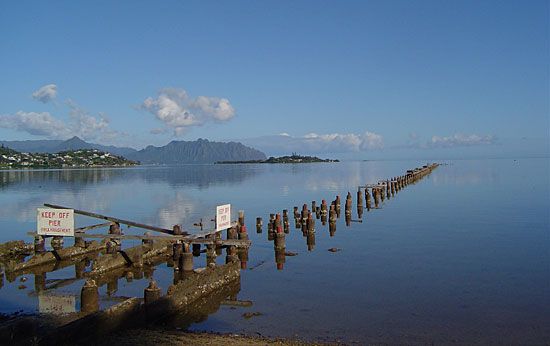
Kaneohe Bay is a bay located on the northeastern shore of Oahu in Hawaii, U.S. Known as a major tourist destination, it features clear, shallow waters and vibrant coral formations. The bay’s 20-mile shoreline is historically significant, rimmed with ancient royal fishponds such as Waikalua Loko.1
The area serves as a hub for both research and military activity. Moku O Loe, or Coconut Island, hosts the University of Hawaii’s Institute of Marine Biology, while the Mokapu Peninsula, which forms the bay’s eastern shore, is the site of a U.S. Marine Corps base. Nearby, the town of Kaneohe sits between the Koolau Range and the bay, transitioning from its historical roots as a royal residence and agricultural center to a modern residential community. Additionally, the nearby Moku Manu serves as a refuge for various bird species.12
How do ancient Hawaiian fishponds work?
Sorry, the Britannica knowledge base does not contain information regarding the specific mechanics of how ancient Hawaiian fishponds work.
What is the role of the Hawaii Institute of Marine Biology?
The Hawaii Institute of Marine Biology, which is part of the University of Hawaii, is located on Moku O Loe, also known as Coconut Island, within Kaneohe Bay. While the provided search results confirm the institute’s location, they do not contain specific information regarding its research role or scientific objectives.1
Why are coral reefs important to Hawaii’s ecosystem?
Coral reefs are vital to the ecosystem of Hawaii and other regions because they harbor a vast diversity of fishes and other sea life, providing numerous individual habitats essential for marine biodiversity. In areas like Kaneohe Bay, these vivid underwater coral formations serve as a cornerstone of the local environment.15
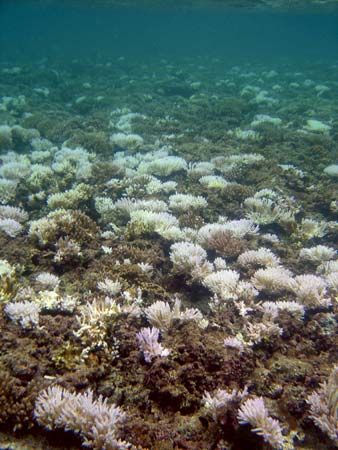
Beyond their biological importance, coral reefs provide significant economic value as major tourist attractions. However, these systems are fragile; human activities such as overharvesting through commercial fishing, physical damage from destructive fishing practices, and environmental stressors like pollution, sedimentation, and coral bleaching pose severe threats to their survival. Protecting these reefs is an ethical imperative, as their destruction leads to the loss of critical habitats and the collapse of complex community dynamics.16
Sources
- Kaneohe Bay — Encyclopædia Britannica
- Kaneohe — Encyclopædia Britannica
- Polynesian culture - Fishing — Encyclopædia Britannica
- Kili — Encyclopædia Britannica
- coral reef - Other threats — Encyclopædia Britannica
- coral reef - Coral bleaching — Encyclopædia Britannica
Published on · 2 min read