King Sound
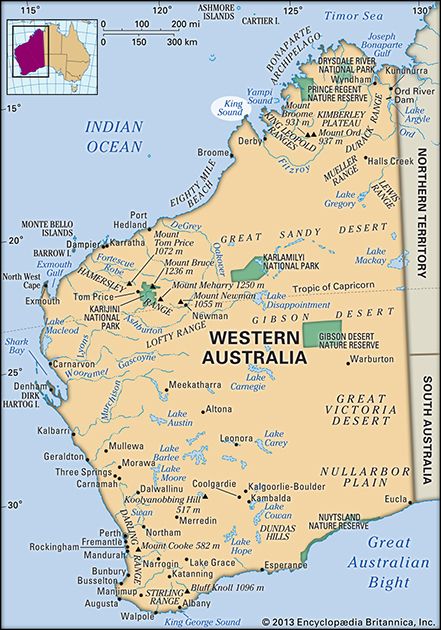
King Sound is an inlet of the Indian Ocean located in northern Western Australia. Measuring approximately 90 miles by 35 miles (145 km by 56 km), the sound…
What is King Sound?
King Sound is an inlet of the Indian Ocean located in northern Western Australia. Measuring approximately 90 miles by 35 miles (145 km by 56 km), the sound is flanked by Cape Leveque to the west and the Buccaneer Archipelago to the east.1
Several rivers, including the Fitzroy, Meda, Lennard, May, and Robinson, empty into the inlet. The port of Derby is situated on a peninsula along its western shore. Navigation in the area is notably difficult due to the presence of numerous shoals, reefs, and a significant tidal range of up to 35 feet (11 metres). The sound was explored in 1838 by the crew of the HMS Beagle and named in honor of the surveyor Phillip Parker King.1
What is the significance of the Buccaneer Archipelago?
The Buccaneer Archipelago is a significant group of 800 to 1,000 islands and islets located in Yampi Sound, an embayment of the Indian Ocean off the coast of northern Western Australia.2
The archipelago holds historical and economic importance for several reasons:
- Mineral Resources: The islands of Cockatoo and Koolan are the most notable, as they contain rich iron-ore deposits discovered around 1880. These sites were extensively mined throughout the second half of the 20th century.2
- Exploration History: The island group was named in honor of the English buccaneer and explorer William Dampier, who first sighted the islands in 1688.2
- Geographic Context: Situated at the entrance to King Sound, the archipelago serves as a prominent landmark near the mainland port of Derby.2
How do extreme tides affect local wildlife?
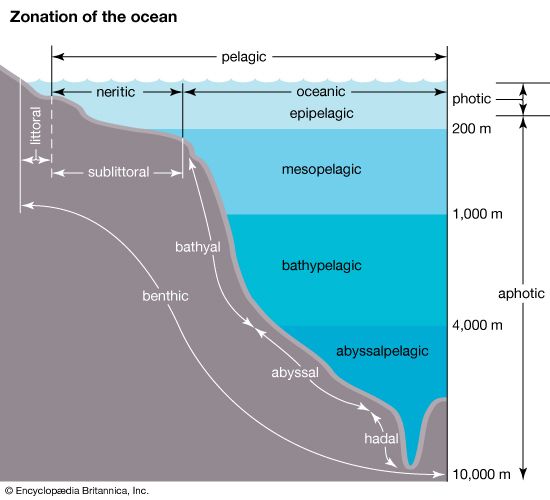
Extreme tides create dynamic environments that significantly influence local wildlife by forcing organisms to adapt to alternating periods of submergence and exposure. In the littoral zone, where these fluctuations are most pronounced, the physical conditions—such as temperature, salinity, and acidity—vary more widely than in almost any other marine environment.34
Wildlife in these areas has evolved specialized survival strategies:
- Burrowing and Mobility: On tidal flats, the nutrient-rich mud supports large populations of mobile and burrowing animals, including crabs, mollusks, and worms, which can retreat into the substrate during low tide.34
- Anchoring: Organisms on wave-swept rocky shores often develop mechanisms to remain firmly cemented or anchored to the substratum to withstand tidal currents and wave energy.4
- Specialized Root Systems: In coastal wetlands, mangroves utilize specialized structures like prop roots and pneumatophores to stabilize themselves and facilitate gas exchange in oxygen-poor, saline soils.5
These ecosystems are highly productive, providing essential habitats for diverse species that thrive despite the challenging, ever-changing conditions.34
What is the history of the port town of Derby?
The port town of Derby, located in northern Western Australia, was founded in 1883 to serve the surrounding pastoral district. It was named after Edward Henry Stanley, 15th earl of Derby, who served as the British secretary of state for the colonies at the time.6
The town experienced significant growth during the 1885 Kimberley gold rush in the hinterland. Historically, Derby functioned as the primary port for the West Kimberley cattle industry, where beef from the Fitzroy River valley and King Leopold Ranges was processed and shipped. To manage the challenges of a 35-foot (11-metre) tidal range, a 1,800-foot (550-metre) jetty was constructed.6
Although the wharf was closed between 1980 and 1997, it eventually reopened as an export facility for lead and zinc ores. Today, the town serves as a hub for the region’s Royal Flying Doctor Service and provides government services to local Aboriginal communities.6
Sources
- King Sound — Encyclopædia Britannica
- Buccaneer Archipelago — Encyclopædia Britannica
- tidal flat — Encyclopædia Britannica
- littoral zone — Encyclopædia Britannica
- mangrove: Top Questions — Encyclopædia Britannica
- Derby — Encyclopædia Britannica
- Derby — Encyclopædia Britannica
- Derbyshire — Encyclopædia Britannica
Published on · 3 min read