Coral Bleaching
Coral bleaching is a critical environmental issue that poses a severe threat to marine biodiversity. Because coral reefs serve as the foundational habitat…
What are the long-term consequences of coral bleaching on marine biodiversity?
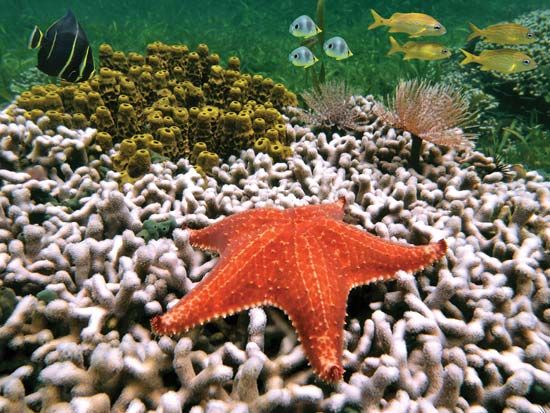
Coral bleaching is a critical environmental issue that poses a severe threat to marine biodiversity. Because coral reefs serve as the foundational habitat for approximately 25 percent of all marine species, their degradation has profound long-term consequences.1
When corals die due to prolonged bleaching, the loss of these structural foundations leads to a precipitous decline in populations of reef-dependent fishes and other marine life that rely on them for food and shelter. Key long-term impacts include:1
- Local Extinctions: The loss of habitat may cause certain species to become extinct locally, as critical components of the ecosystem are permanently removed.1
- Structural Shifts: Degraded reefs are highly vulnerable to colonization by invasive species, such as seaweed, which can fundamentally alter the reef’s structure and prevent recovery.1
- Ecosystem Collapse: If the damage is widespread, the ecosystem may lose its ability to recover, as the biological complexity required for regeneration is no longer present.12
Protecting these ecosystems is a moral imperative, as their collapse threatens the survival of countless species and the livelihoods of human communities that depend on them.3
Which regions of the world are most affected by coral bleaching?
Coral bleaching is a global phenomenon, but certain regions have experienced particularly extensive and well-documented devastation. Since the 1980s, significant bleaching events have been recorded in the east Pacific and the Caribbean.2
Other notable regions and areas frequently affected include:
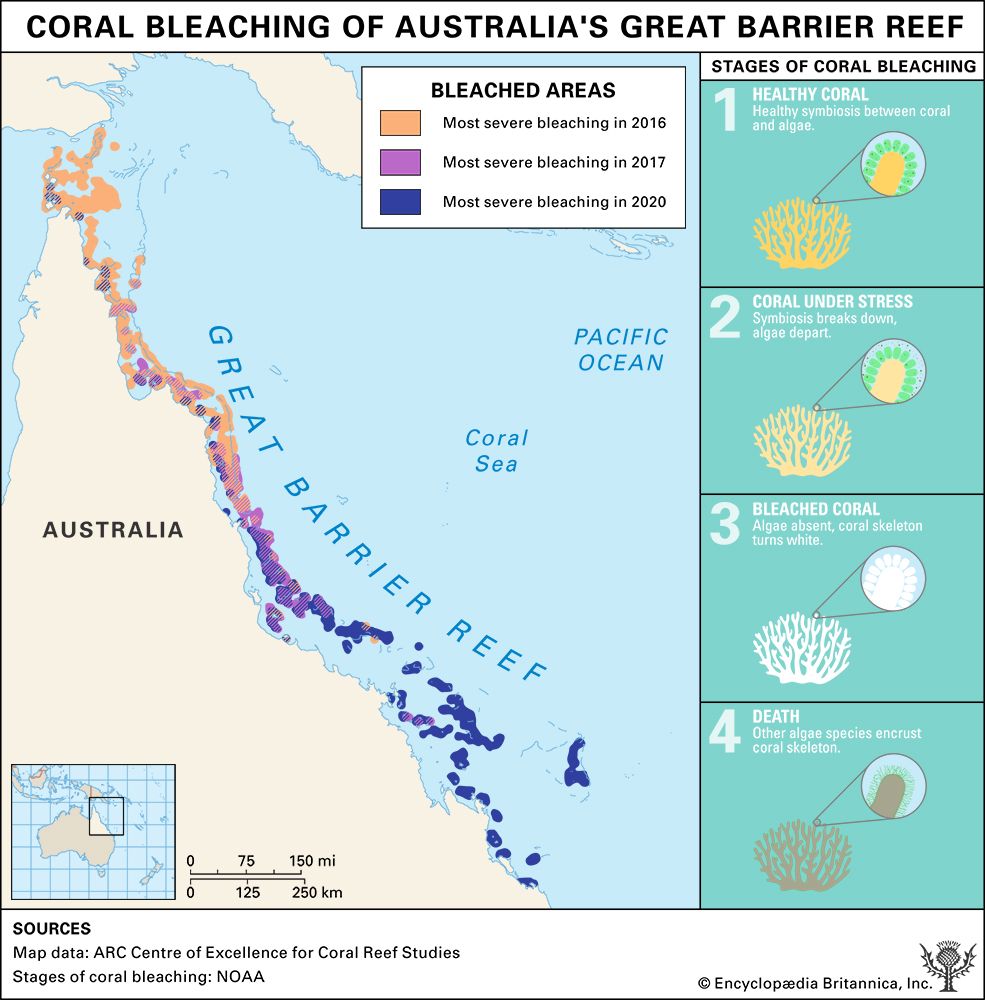
- The Great Barrier Reef: Located off the northeastern coast of Australia, this massive reef complex has faced increasingly frequent and severe mass bleaching events since 1998, with particularly brutal impacts recorded in its northern sectors.46
- The Coral Triangle: Spanning the waters of Indonesia, Malaysia, the Philippines, East Timor, Papua New Guinea, and the Solomon Islands, this region contains about one-third of the world’s coral reefs. Approximately 95 percent of these reefs are considered at risk from threats including thermal stress and bleaching.7
- Pacific and Atlantic Locations: Severe bleaching has also been documented in areas near Hawaii, Florida, Guam, the Northern Mariana Islands, and Kiribati.6
These events are primarily driven by rising seawater temperatures, often exacerbated by El Niño cycles, though local factors like pollution and ocean acidification also contribute to the stress on these ecosystems.267
How do rising ocean temperatures contribute to coral bleaching?
Rising ocean temperatures are a primary driver of coral bleaching, a process that disrupts the essential symbiotic relationship between corals and their photosynthetic algae, known as zooxanthellae.12
When seawater temperatures remain elevated for prolonged periods, the following physiological chain reaction occurs:
- Toxic Stress: Exposure to increased heat and solar irradiance causes zooxanthellae to produce abnormally high quantities of reactive oxygen species. These molecules are toxic to both the algae and their coral hosts.1
- Breakdown of Symbiosis: To mitigate this toxicity, the coral host expels the zooxanthellae or the algae lose their photosynthetic pigments. This results in the characteristic “whitening” of the coral skeleton.17
- Loss of Energy: Because zooxanthellae provide food for the coral and assist in skeleton formation through photosynthesis, their departure deprives the coral of vital energy.17
- Mortality: If the stress persists and the zooxanthellae do not recolonize the coral within a few months, the coral colony will likely die.17
This process is a major consequence of global warming, as the oceans absorb the vast majority of excess heat trapped by greenhouse gas emissions.2
What is coral bleaching and what causes it?
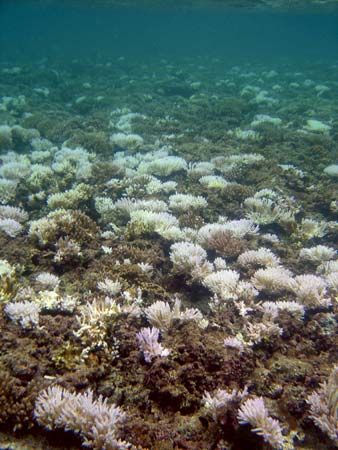
Coral bleaching is the whitening of coral caused by the loss of its symbiotic algae, known as zooxanthellae, or the degradation of the algae’s photosynthetic pigment the algae’s photosynthetic pigment. This process signifies a breakdown of the vital symbiotic relationship between the coral polyp and the algae, which provides the coral with essential energy and aids in skeleton formation.1107
Bleaching is triggered by various environmental stressors, most notably:
- Temperature and Light: Prolonged increases in seawater temperature, often exacerbated by global warming and El Niño, combined with high solar irradiance, cause the algae to produce toxic reactive oxygen species.101
- Chemical and Physical Changes: Ocean acidification, pollution, increased sedimentation, and chemicals from sunscreens can also induce bleaching.10
- Human Activity: Exposure to substances like sodium cyanide, used in fishing, further contributes to the phenomenon.10
If the stress persists and the zooxanthellae do not return, the coral colony may die, leading to the collapse of the coral reef ecosystem.101
Sources
- Coral bleaching — Encyclopædia Britannica
- coral reef - Coral bleaching — Encyclopædia Britannica
- ocean acidification — Encyclopædia Britannica
- How and Where Coral Bleaching Is Affecting the Great Barrier Reef — Encyclopædia Britannica
- coral reef - Threats to coral reefs — Encyclopædia Britannica
- Global warming - Environmental consequences of global warming — Encyclopædia Britannica
- Coral Bleaching: A Threat to Our Reefs — Encyclopædia Britannica
- Coral Triangle — Encyclopædia Britannica
- ocean warming — Encyclopædia Britannica
- 14 Questions About Aquatic Animals Answered - Is coral a plant or an animal? — Encyclopædia Britannica
Published on · 4 min read