Kanha National Park
Kanha National Park, located in Madhya Pradesh, India, is a vital sanctuary for a diverse array of wildlife. The park is home to approximately 43 species of…
What are the main wildlife species that can be found in Kanha National Park?
Kanha National Park, located in Madhya Pradesh, India, is a vital sanctuary for a diverse array of wildlife. The park is home to approximately 43 species of mammals, 300 species of birds, and 26 species of reptiles.12
Key wildlife species found in the park include:
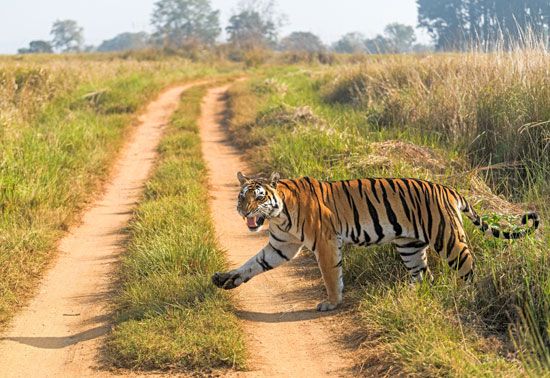
- Predators: Tigers, leopards, and wild dogs.12
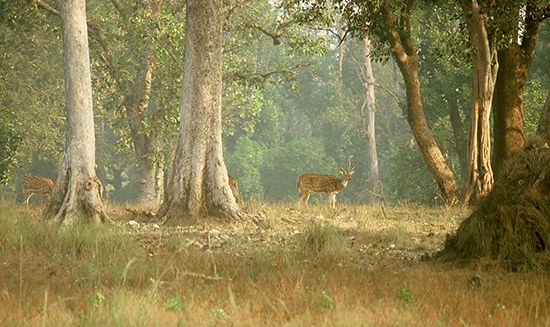
- Ungulates and Herbivores: Barasingha (the state animal of Madhya Pradesh), chitals, sambars, gaur, barking deer, mouse deer, wild pigs, and the reintroduced blackbuck wild pigs, and the reintroduced blackbuck.2
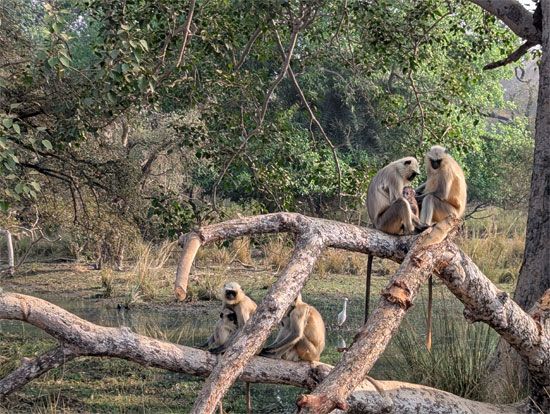
- Primates and Small Mammals: Langurs, the Indian giant squirrel, and the rusty spotted cat.12
- Birds: Peafowls, quails, and red and gray jungle fowl1.2
The park is particularly renowned for its successful in situ conservation efforts, which have significantly bolstered populations of tigers and the barasingha.2
Where is Kanha National Park located in India, and what is its significance?
Kanha National Park is located in the state of Madhya Pradesh in central India, situated between the Vindhya and Satpura hill ranges.2
The park is highly significant for its role in in situ conservation, serving as a model for biodiversity and ecological restoration across India. Its primary focus is the protection of tigers and the barasingha, the latter of which saw its population grow from 66 in the 1970s to 800 by 2020. The park also serves as the core zone for a larger tiger reserve established under Project Tiger in 1973. Beyond these species, the park is vital for its efforts in rewilding orphaned tiger cubs, reintroducing species like the blackbuck, and maintaining ecological corridors to support a wide range of mammals, birds, and reptiles.12
How does Kanha National Park compare to other national parks in India in terms of size and biodiversity?
Kanha National Park, established in 1955, covers 363 square miles (940 square km) of the central Indian highlands, with its surrounding tiger reserve extending to 800 square miles (2,074 square km). While India maintains over 100 national parks covering approximately 17,000 square miles (44,000 square km), Kanha stands out as one of the country’s earliest and most significant protected areas.12
In terms of biodiversity, Kanha is a critical hub for in situ conservation, hosting 43 species of mammals, 300 species of birds, and 26 species of reptiles. Its flora is equally diverse, featuring approximately 850 angiosperm species, 22 pteridophytes, and 2 gymnosperms, primarily within dry deciduous woodlands dominated by sal trees.31
Compared to other parks like Ranthambore National Park, which is also famous for tigers and leopards, Kanha is uniquely distinguished by its successful recovery of the barasingha and its pioneering “Kanha model” of ecological restoration, which has influenced wildlife management strategies across India.142
What are some of the lesser-known animal species that can be found in Kanha National Park?
While Kanha National Park is widely celebrated for its tigers and barasingha, it is also home to several less-frequently highlighted species that contribute to its rich biodiversity. Among these are:
- Indian Giant Squirrel: A large, colorful squirrel species often found in the canopy of the park’s woodlands.1
- Rusty Spotted Cat: One of the world’s smallest wild cats, known for being elusive and difficult to spot.1
- Mouse Deer: Also known as the chevrotain, this small, primitive ungulate is a rare sight within the park’s dense vegetation.1
- Jungle Fowl: Both red and gray varieties of jungle fowl inhabit the forest floor, often overshadowed by the more conspicuous peafowl.1
- Gaur: A massive species of wild cattle that, while significant in size, is often less discussed than the park’s primary predators.1
- Barking Deer: Also called the muntjac, these small deer are known for their distinct, dog-like alarm calls.1
Sources
- Kanha National Park: Top Questions — Encyclopædia Britannica
- Kanha National Park — Encyclopædia Britannica
- Ranthambore National Park: Top Questions — Encyclopædia Britannica
- Environment and sustainable development in India - Wildlife — Encyclopædia Britannica
Published on · 3 min read