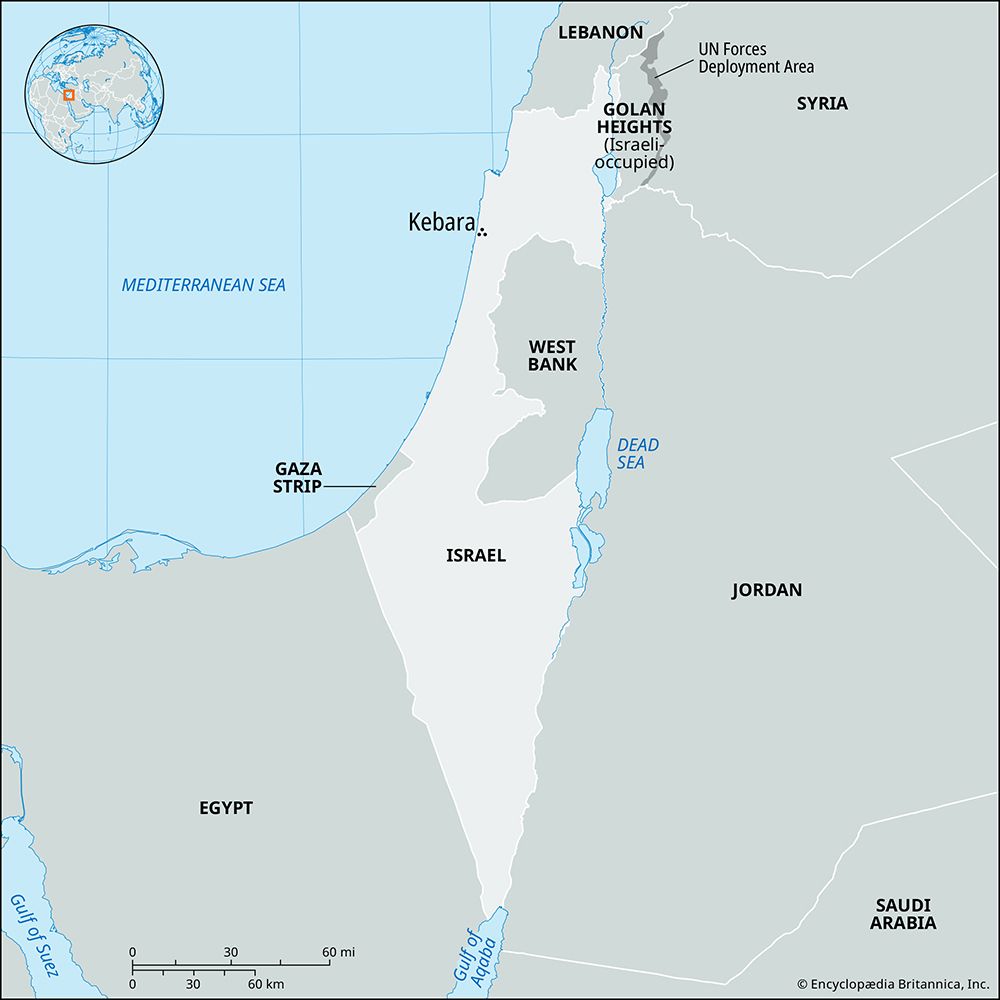
Kebara
The discovery of a hyoid bone at the Kebara site in Israel serves as a pivotal piece of evidence in the debate regarding Neanderthal language abilities.
How do the Kebara Cave findings contribute to debates about Neanderthal language abilities?
The discovery of a hyoid bone at the Kebara site in Israel serves as a pivotal piece of evidence in the debate regarding Neanderthal language abilities.12
Previously, many researchers argued that Neanderthals lacked the capacity for complex speech because their cranial base structure appeared insufficient for producing the vowels found in modern human languages. However, the Kebara 2 specimen—a young adult skeleton dating to approximately 60,000 years ago—preserved a hyoid bone that is morphologically similar to that of modern humans. This finding suggests that the Neanderthal vocal tract may have been capable of producing speech in a manner comparable to our own.21
While it remains uncertain whether Neanderthals could produce the full range of phonemes used by modern humans, the Kebara evidence, combined with genetic studies of the FOXP2 gene and observations of complex behaviors like burial and stone tool production, strongly supports the hypothesis that they possessed significant linguistic capabilities.2
What does the Kebara Cave tell us about Neanderthal culture and behavior?
The Kebara cave on Mount Carmel provides significant insights into Neanderthal culture and behavior during the Middle Paleolithic Period.1
Key findings include:
- Intentional Burial: The discovery of infant and adult skeletons, including the well-preserved Kebara 2, indicates that Neanderthals practiced intentional burial, suggesting complex social or symbolic behavior.1
- Advanced Subsistence: The site contains multiple layers of large, flat hearths, indicating that Neanderthals had sophisticated control over fire and established stable living areas.1
- Tool Use and Anatomy: The presence of Middle Paleolithic tools and the robust, muscular anatomy of the Kebara 2 skeleton—particularly the hands—demonstrate high levels of physical power and manual capability.1
- Linguistic Potential: The preservation of a hyoid bone suggests that Neanderthals possessed the anatomical capacity for speech, challenging earlier assumptions about their cognitive limitations.1
These findings reveal a species that was not only physically robust but also capable of complex social organization and environmental adaptation.1
What tools and technologies were used by the inhabitants of Kebara Cave?
The inhabitants of Kebara Cave utilized a variety of technologies that reflect their adaptation to the environment and their cultural complexity.
Tools and Technologies
- Middle Paleolithic Tools: The site is characterized by the presence of Middle Paleolithic tools, specifically associated with the Levalloiso-Mousterian industry. This industry is defined by a flake tool technology, which utilized a prepared striking-platform and tortoise-core technique to produce specialized implements.13
- Control of Fire: A notable technological feature of the cave is the presence of multiple layers of large, flat hearths. These indicate that the inhabitants possessed sophisticated control over fire, which was essential for warmth, cooking, and creating stable living environments.1
- Upper Paleolithic Developments: In the later, Upper Paleolithic levels of the cave, the tool assemblages evolved to include various types of blade and flake-blade tools, reflecting a shift toward more specialized tool production over time.13
These technologies demonstrate that the Neanderthals at Kebara were highly capable of manipulating their environment through both advanced stone-knapping techniques and the mastery of fire.1
What other prehistoric sites are located near the Kebara Cave in Israel?
Several significant prehistoric sites are located near Kebara Cave on Mount Carmel in northern Israel. These sites are part of the Sites of Human Evolution at Mount Carmel, also known as the Nahal Me’arot or Wadi el-Mughara caves.
Key nearby sites include:
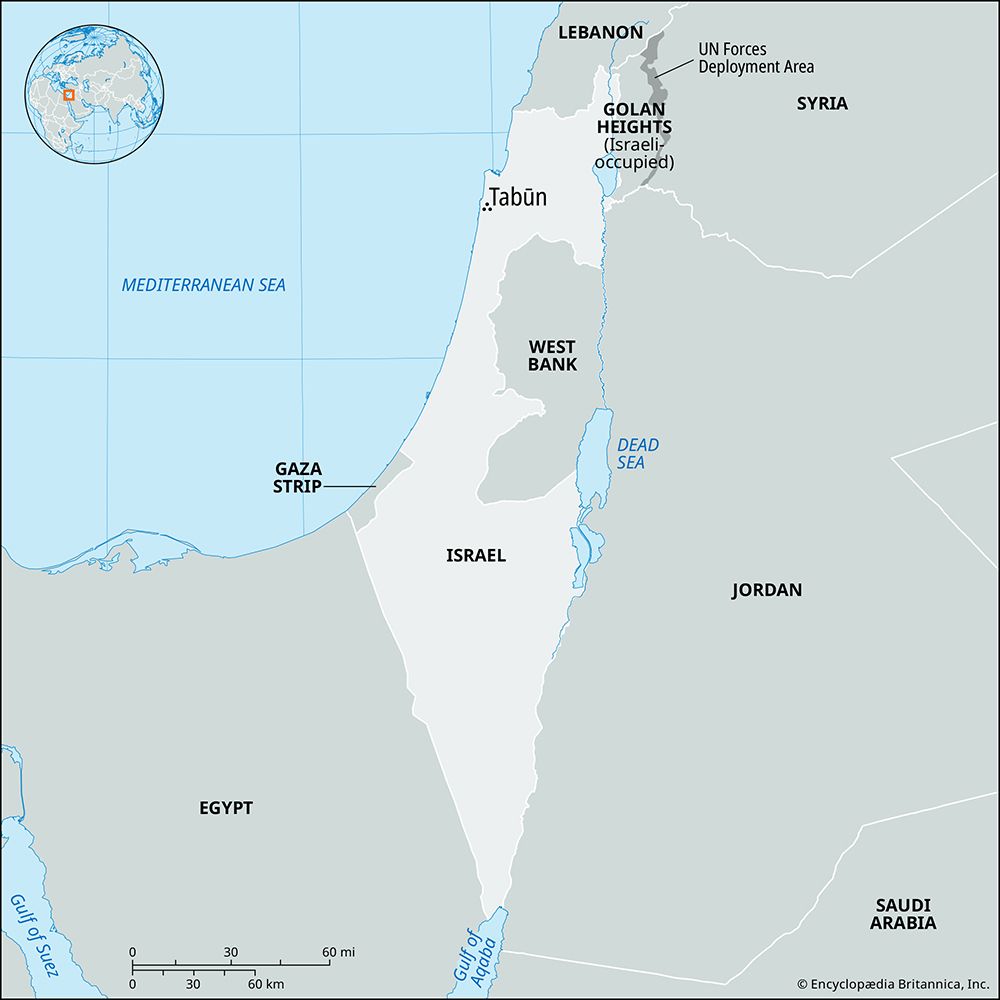
- Tabūn: A deep rock shelter that provides a critical reference scale for human technological evolution in southwestern Asia. Excavations here have yielded fossil remains documenting the alternating occupation of the region by Neanderthals and early modern humans (Homo sapiens).1
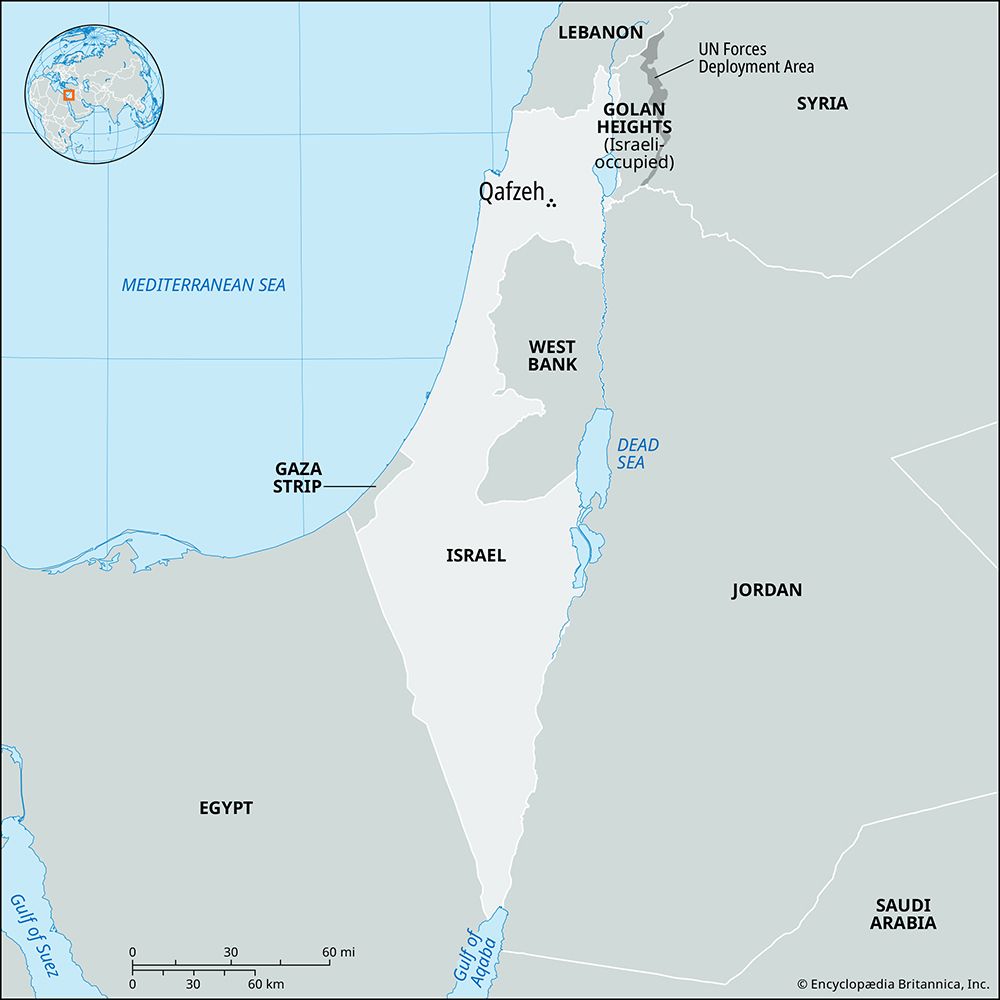
- Skhūl: Located on the western side of Mount Carmel, this site is famous for the discovery of early Homo sapiens remains dating from 120,000 to 80,000 years ago. These findings, alongside those from Tabūn and the nearby site of Qafzeh, have been instrumental in understanding the complex evolutionary history and ecological separation of Neanderthals and early modern humans in the Levant.51
Sources
- Kebara — Encyclopædia Britannica
- Neanderthal - Other adaptations — Encyclopædia Britannica
- Stone tool industry — Encyclopædia Britannica
- Stone Age - Middle East — Encyclopædia Britannica
- Skhūl — Encyclopædia Britannica
- Mount Carmel — Encyclopædia Britannica
- Tabūn — Encyclopædia Britannica
- list of World Heritage sites - Israel — Encyclopædia Britannica
Published on · 3 min read