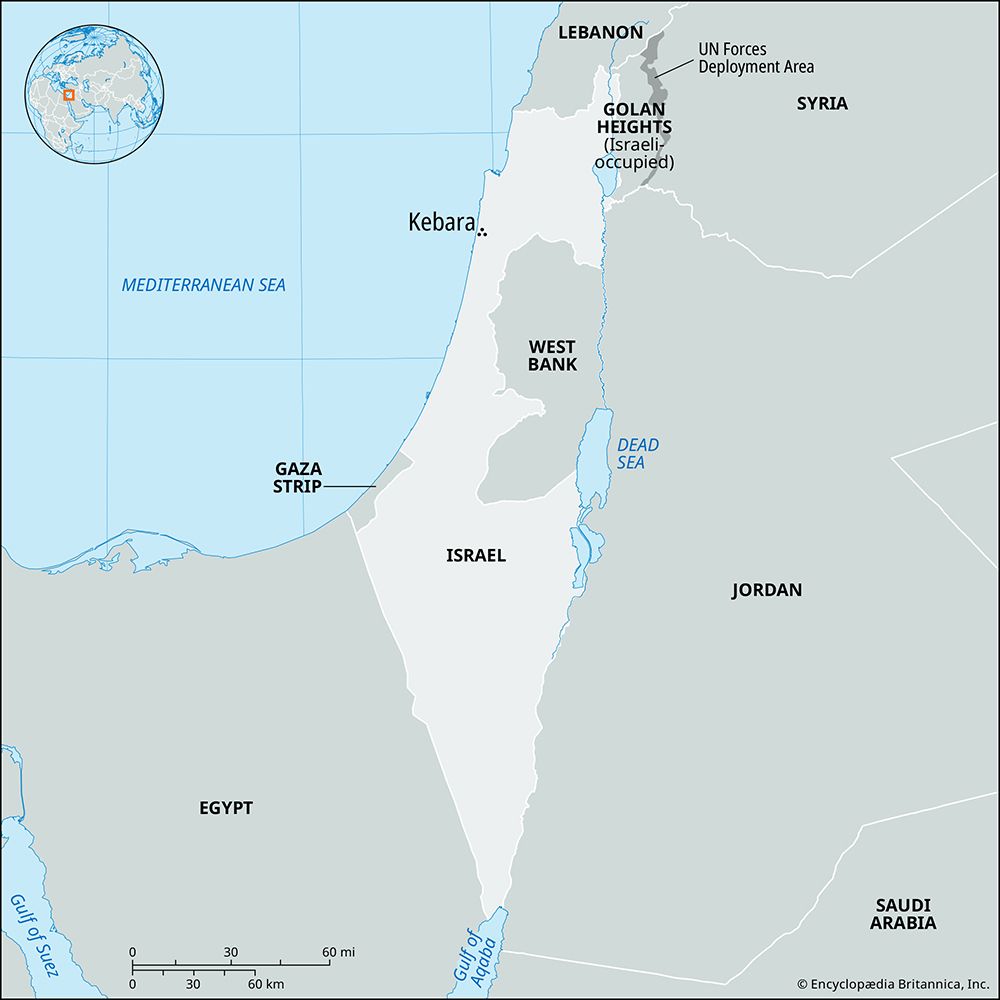
Tabūn
The dating of deposits at Tabūn Cave has been instrumental in establishing a reference scale for human technological evolution in southwestern Asia between…
How has the dating of Tabūn Cave’s layers contributed to our understanding of human occupation in the Levant?
The dating of deposits at Tabūn Cave has been instrumental in establishing a reference scale for human technological evolution in southwestern Asia between 300,000 and 50,000–100,000 years ago. By analyzing the long sequence of stratigraphic layers, researchers have documented significant patterns of change in stone-tool manufacture throughout the Lower and Middle Paleolithic periods.1
Crucially, this chronological framework has provided evidence for the alternating occupation of the Levant by different human groups. The fossil record indicates that Neanderthals moved into the region from the north during cold phases, while early modern humans (H. sapiens) migrated from Africa during warmer intervals. This data reveals an ecological separation between the two populations that persisted for tens of thousands of years, offering vital insights into the complex history of human evolution in the region.1
How old are the oldest artifacts found at Tabūn Cave, and what do they reveal about early human technology?
The artifacts discovered at Tabūn Cave provide a critical reference scale for human technological evolution in southwestern Asia, spanning from 300,000 to 50,000–100,000 years ago. These deposits document the transition and development of stone-tool manufacturing across the Lower and Middle Paleolithic periods.1
The site’s long sequence of layers reveals how early humans adapted their tool-making techniques over time. These artifacts demonstrate the shift from earlier, more generalized stone-tool traditions to the more specialized Middle Paleolithic industries1. By studying these tools alongside the site’s fossil record, researchers have gained significant insights into the alternating occupation of the Levant by Neanderthals and early modern humans (H. sapiens), highlighting how these groups utilized the environment and developed distinct technological responses to changing climatic conditions.1
What types of animal remains have been uncovered at Tabūn Cave, and what do they suggest about the environment during different periods?
Sorry, the Britannica knowledge base does not contain this information.
Where is Tabūn Cave located in Israel, and what makes it an important anthropological and archaeological site?
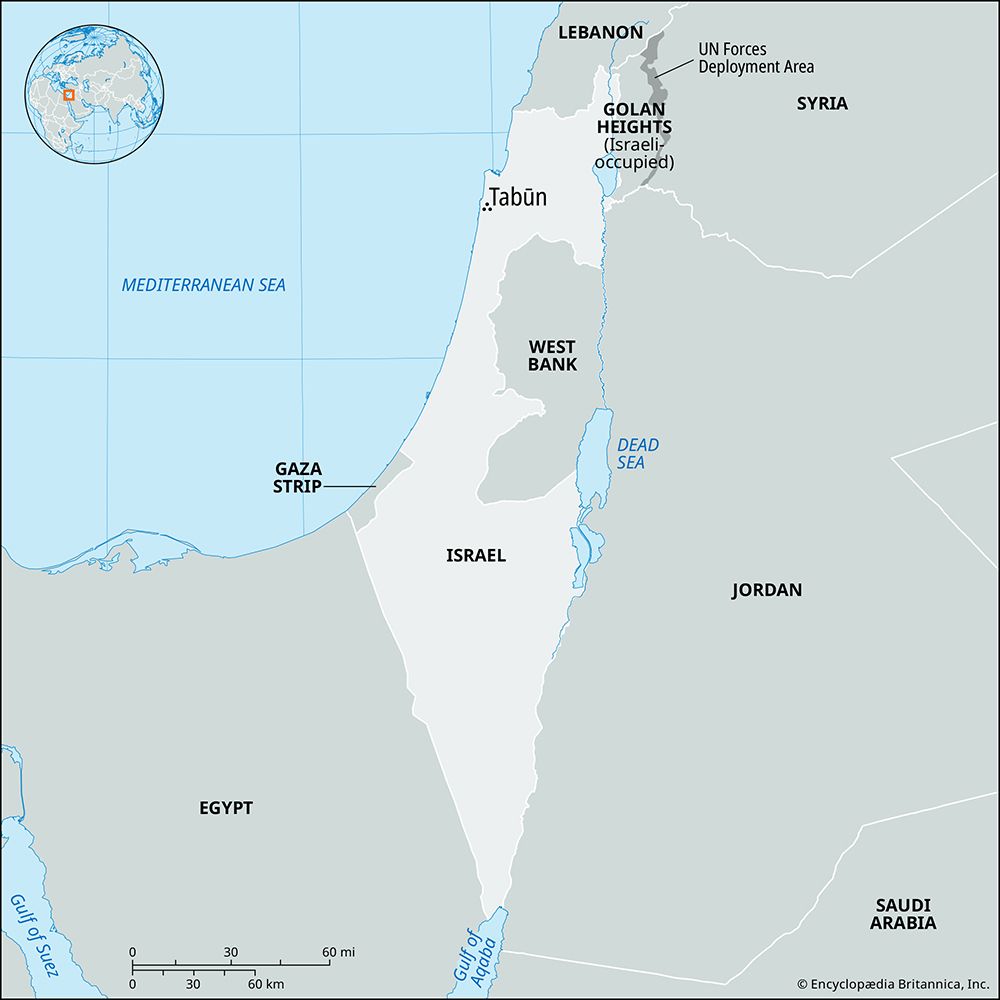
Tabūn is a significant paleoanthropological site situated in a deep rock shelter on the edge of Mount Carmel in northern Israel, overlooking the Mediterranean Sea.1
The site is globally important because its long sequence of deposits serves as the primary reference scale for human technological evolution in southwestern Asia between 300,000 and 50,000–100,000 years ago. It provides a detailed record of stone-tool manufacturing transitions during the Lower and Middle Paleolithic periods.1
Furthermore, Tabūn is vital for understanding human evolution in the Levant. The fossil remains found there indicate that Neanderthals and early modern humans (H. sapiens) alternately occupied the region. The site documents the gradual emergence of Neanderthal features and provides evidence of how these two groups were ecologically separated, with Neanderthals arriving during cold phases and early modern humans moving in during warmer periods.1
Sources
- Tabūn — Encyclopædia Britannica
- Archaeology - Dating — Encyclopædia Britannica
- Acheulean industry — Encyclopædia Britannica
- Stone tool industry — Encyclopædia Britannica
- Skhūl — Encyclopædia Britannica
Published on · 2 min read