Qafzeh
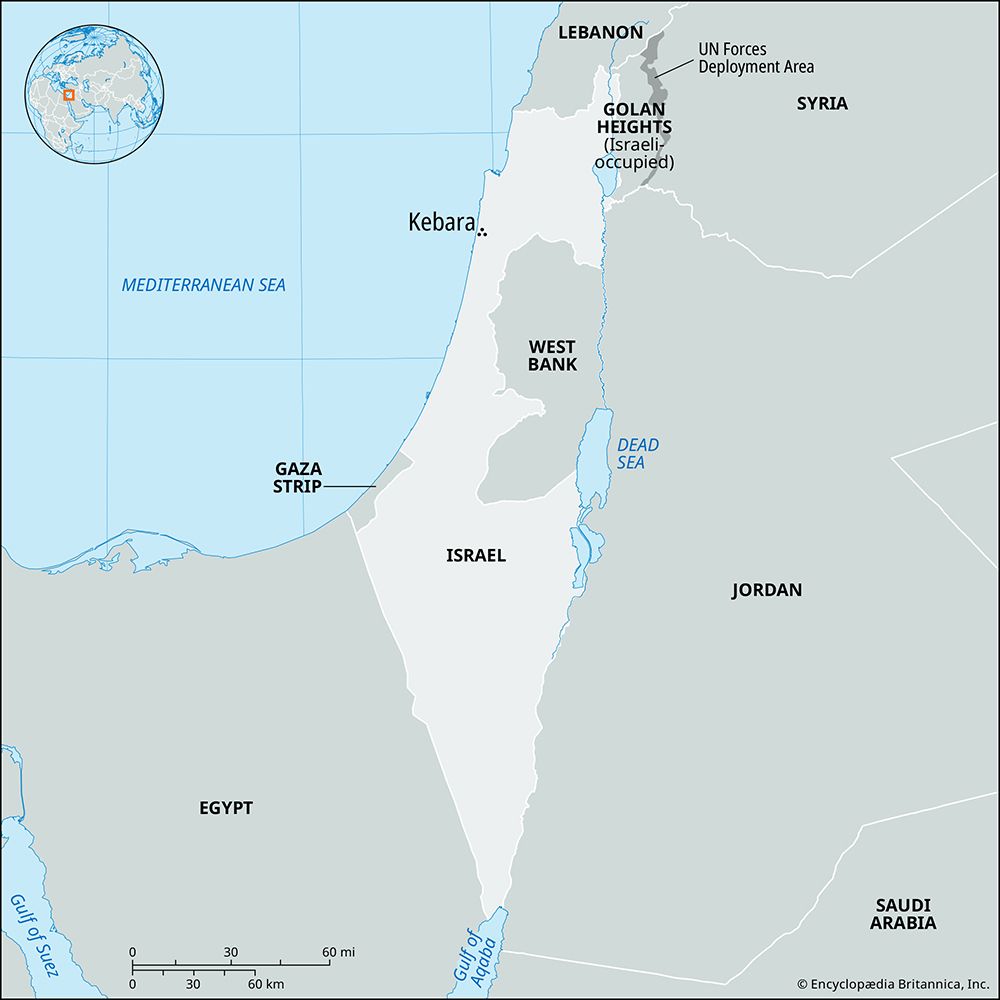
Qafzeh is a significant paleoanthropological site located south of Nazareth, Israel, renowned for housing some of the oldest remains of modern humans…
What is Qafzeh?
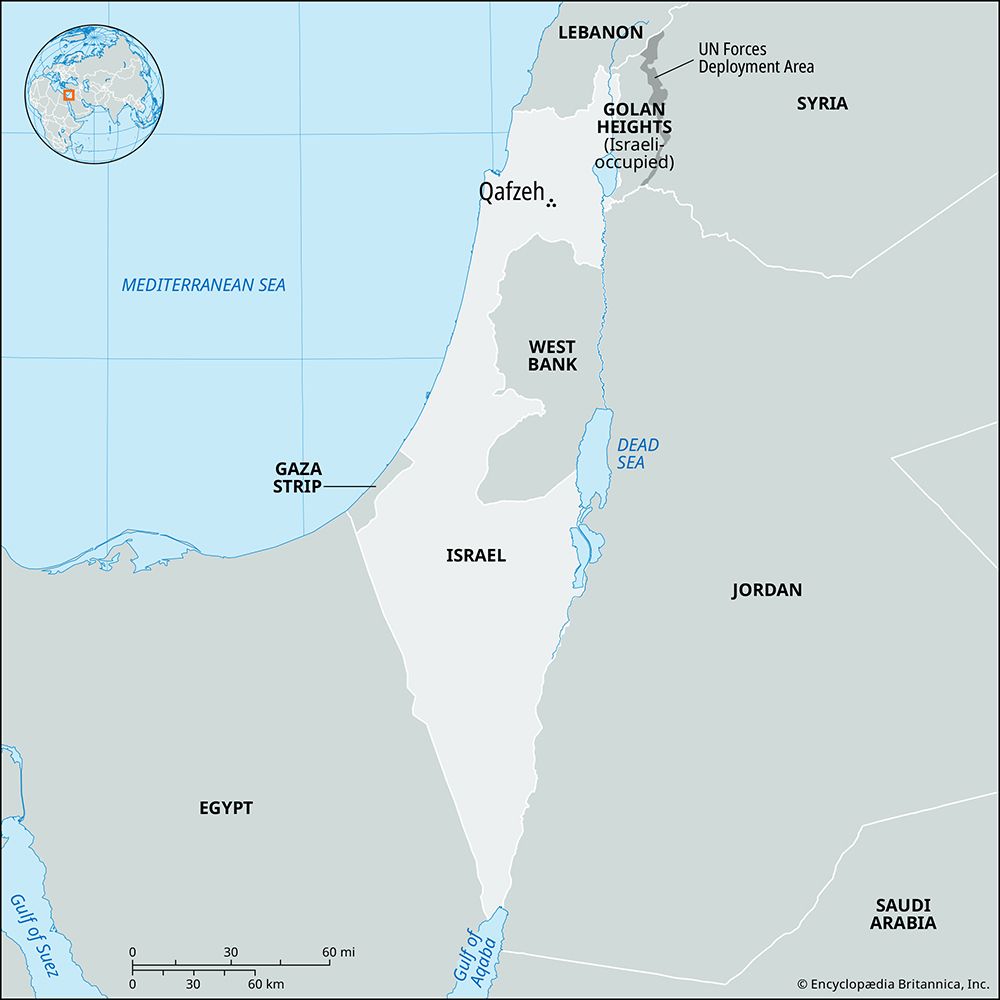
Qafzeh is a significant paleoanthropological site located south of Nazareth, Israel, renowned for housing some of the oldest remains of modern humans discovered in Asia.1
Excavations at this rock shelter, which began in the 1930s and continued through the 1970s, have yielded more than 25 fossil skeletons dating back approximately 90,000 years. These remains represent the largest group of such fossils recovered from this period in the Middle East.1
Interestingly, these humans were found alongside Middle Paleolithic tools typically associated with Neanderthals. The fossils themselves bear a close resemblance to ancestral African humans, suggesting that this group represented a temporary migration of modern humans into regions otherwise occupied by Neanderthals during a warmer climatic period.1
How do Qafzeh fossils differ from Neanderthal remains?
The fossils discovered at Qafzeh are identified as early Homo sapiens, exhibiting distinct anatomical features that differentiate them from Neanderthals.
While early modern human fossils can be robust, they generally differ from Neanderthal remains through the following characteristics:
- Cranial Structure: Qafzeh fossils possess a more juvenilized but large cranial vault compared to the typically elongated Neanderthal skull.1
- Facial Features: Modern humans from Qafzeh have smaller faces and lack the prominent, heavy brow ridges characteristic of Neanderthals.12
- Chin: A defining feature of the Qafzeh specimens is the presence of a distinct mental trigone, or chin, which is a complex structure absent in Neanderthals.1
- Body Proportions: In contrast to the stocky, cold-adapted body proportions seen in Neanderthals, the Qafzeh humans are described as having very linear, heat-adapted frames, consistent with their origins in Africa.2
Despite these physical differences, both groups utilized similar Mousterian stone-tool technologies while inhabiting the Levant during the Middle Paleolithic.3
What tools were found alongside the Qafzeh skeletons?
The skeletons discovered at Qafzeh were found alongside tools belonging to the Mousterian industry, a technology traditionally associated with Neanderthals in Europe and southwestern Asia.67
These tools were primarily produced using the Levallois flaking technique, which involved knapping flakes from prepared cores. The resulting implements were often retouched with hammer stones to refine their edges. While the specific tool kits found at such sites can vary, Mousterian assemblages typically include:7
- Flake tools: Such as well-made sidescrapers and triangular points, which likely functioned as knives.1
- Denticulate instruments: Tools featuring notches, potentially used as saws or for straightening shafts.1
- Hand axes: Small axes fashioned from disk-shaped cores.1
- Round limestone balls: Believed to have served as bolas for hunting.1
The presence of these tools at Qafzeh indicates that early modern humans in the region utilized the same sophisticated stone-tool technology as their Neanderthal contemporaries.67
Why is the Middle Paleolithic period important for human history?
The Middle Paleolithic period is a critical era in human history, serving as a time of significant technological innovation and evolutionary development. Spanning roughly from 200,000 to 30,000 years ago, this period is defined by a shift toward greater specialization and regional diversity in stone-tool manufacture.9
Key aspects of the Middle Paleolithic include:
- Technological Advancement: Unlike the relatively static industries of the Early Paleolithic, Middle Paleolithic tool kits—such as the Mousterian industry—featured carefully prepared cores used to strike elegant, specialized flakes and blades. These tools included refined scrapers, points, and hand axes, reflecting increased cognitive and manipulative skill.109
- Human Evolution and Interaction: This period documents the presence and interaction of different hominin groups. In the Levant, for example, Neanderthals and early Homo sapiens alternately occupied the same regions, often utilizing the same sophisticated tool technologies.11
- Emergence of Symbolic Thought: While evidence of complex symbolic behavior is more abundant in the Late Paleolithic, the Middle Paleolithic provides early indications of abstract thought. This includes the use of jewelry, personal ornaments, and the earliest definite burials, which suggest the development of social institutions and potentially early spiritual concepts.1210
- Environmental Adaptation: Cultural development during this time was heavily influenced by the climatic fluctuations of the Pleistocene Epoch, forcing human groups to adapt to diverse environments and changing resource availability.13
Sources
- Qafzeh — Encyclopædia Britannica
- Homo sapiens - Bodily structure — Encyclopædia Britannica
- Neanderthal - Neanderthal classification — Encyclopædia Britannica
- Vindija — Encyclopædia Britannica
- Tabūn — Encyclopædia Britannica
- Mousterian industry — Encyclopædia Britannica
- Stone tool industry — Encyclopædia Britannica
- Neanderthal - Neanderthal culture — Encyclopædia Britannica
- Paleolithic Period: Top Questions — Encyclopædia Britannica
- human evolution - Speech and symbolic intelligence — Encyclopædia Britannica
- Stone Age - Middle Paleolithic — Encyclopædia Britannica
- human evolution - Refinements in tool design — Encyclopædia Britannica
- Stone Age — Encyclopædia Britannica
- Mesolithic — Encyclopædia Britannica
- Pleistocene Epoch - Evolutionary changes — Encyclopædia Britannica
Published on · 3 min read