Kennebec River
The Kennebec River has served as a vital artery for Maine since the early colonial period. Historically, it functioned as a primary route for exploration and…
How has the Kennebec River historically been important for transportation and industry in Maine?
The Kennebec River has served as a vital artery for Maine since the early colonial period. Historically, it functioned as a primary route for exploration and settlement, with Augusta developing as an early trading post at the head of navigation. The river’s strategic importance was underscored by the establishment of early English settlements, such as Fort St. George in 1607, and later defensive structures like Fort Western and Fort Halifax.12
Regarding industry, the river was a crucial source of hydropower. Infrastructure like the Edwards Dam, constructed in 1837, powered industrial activities in cities including Bingham, Skowhegan, Waterville, and Gardiner. While the river supported the growth of manufacturing, particularly in textiles and paper products, environmental priorities eventually shifted. The 1999 removal of the Edwards Dam restored the river as a significant spawning ground for species like the Atlantic salmon.12
How have dams along the Kennebec River affected its ecosystem, and what efforts have been made to restore fish populations?
Historically, dams along the Kennebec River significantly disrupted the river’s ecosystem by obstructing the natural migration of fish species. While dams like the Edwards Dam, built in 1837, provided essential hydropower for industrial development, they created barriers that prevented fish from reaching their traditional upstream spawning grounds.13
To address these ecological impacts, conservation efforts have focused on restoring river connectivity. A landmark initiative occurred in 1999 when the U.S. government ordered the removal of the Edwards Dam. This action successfully reopened an upstream stretch of the river, which has since become a vital spawning habitat for species such as the Atlantic salmon and the short-nosed sturgeon. While other rivers utilize fish passes—such as fish ladders or locks—to help fish navigate around dams, the removal of the Edwards Dam stands as a prominent example of using dam decommissioning to revitalize declining fish populations in the United States.13
Where does the Kennebec River originate, and where does it empty into the Atlantic Ocean?
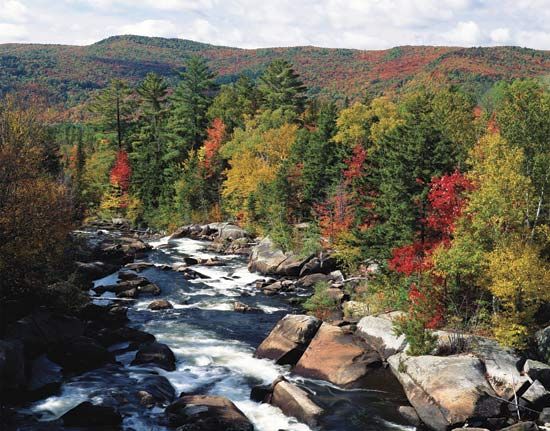
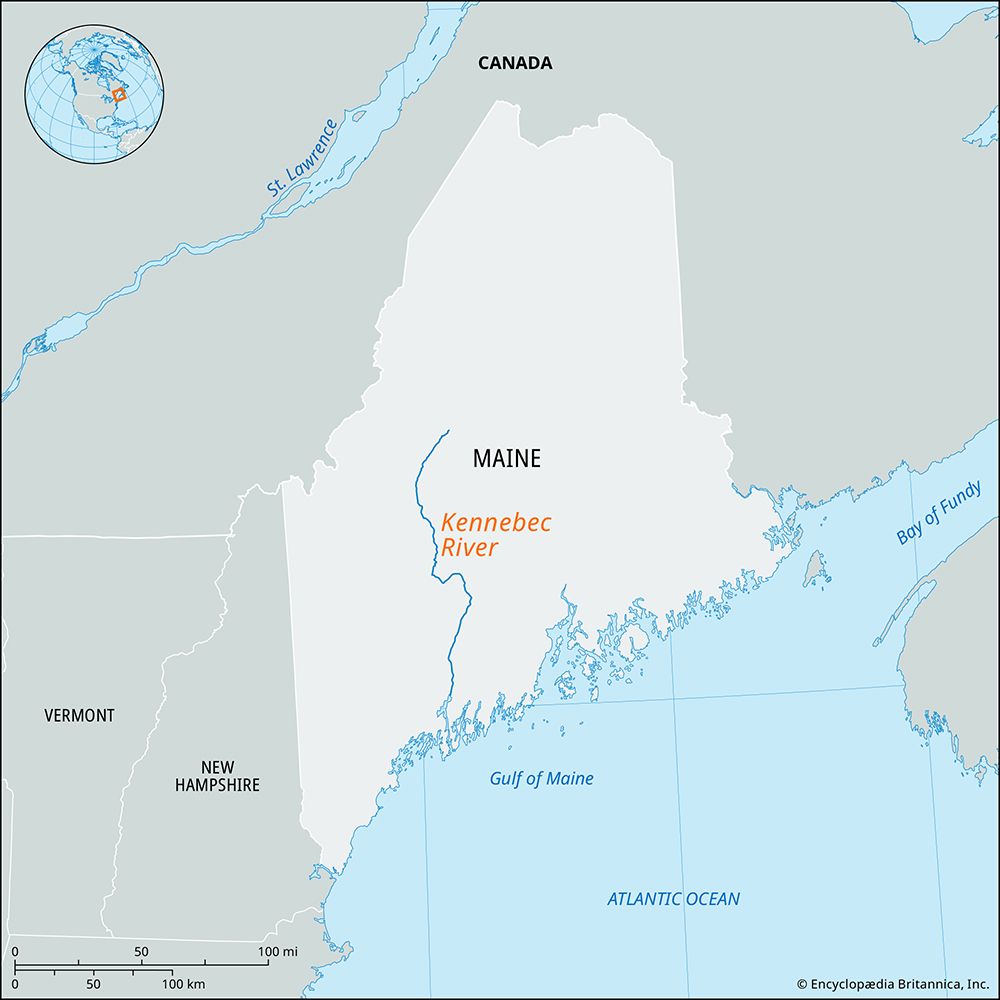
The Kennebec River originates at Moosehead Lake in west-central Maine. From there, it flows south for approximately 150 miles (240 km).
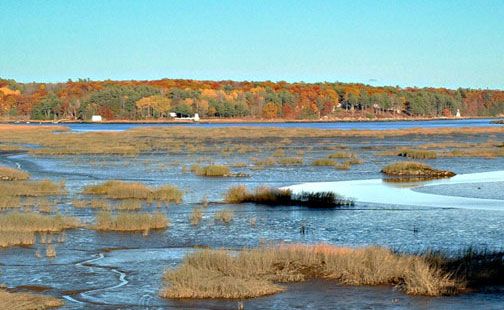
As it nears its end, the river meets its main tributary, the Androscoggin River, northeast of Brunswick to form Merrymeeting Bay. The river then continues for another 16 miles (26 km) before emptying into the Atlantic Ocean.14
What are some of the main wildlife species that can be found in and around the Kennebec River?
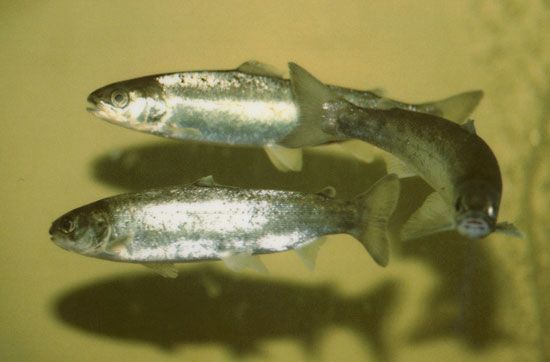
The Kennebec River serves as a critical habitat for various aquatic species, particularly following the removal of the Edwards Dam in 1999. This restoration effort reopened significant upstream stretches of the river, providing essential spawning grounds for several fish populations, including:
- Atlantic salmon: A migratory species that relies on the river’s connectivity to reach its traditional spawning areas.1
- Short-nosed sturgeon: An endangered species that has benefited from the improved access to the river’s upper reaches.1
While these species are highlighted due to their conservation status and the impact of dam removal, the river’s ecosystem supports a broader range of aquatic life that thrives in its restored, free-flowing sections.13
Sources
- Kennebec River — Encyclopædia Britannica
- Kennebec — Encyclopædia Britannica
- dam - Fish passes — Encyclopædia Britannica
- Kennebec — Merriam-Webster
Published on · 2 min read