Klamath River
The Klamath River is a 250-mile (400-km) waterway in the United States that originates in Oregon at Upper Klamath Lake. It flows southwesterly through the…
What is Klamath River?
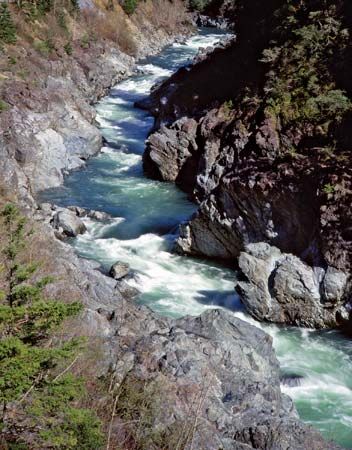
The Klamath River is a 250-mile (400-km) waterway in the United States that originates in Oregon at Upper Klamath Lake. It flows southwesterly through the Klamath Mountains in California before emptying into the Pacific Ocean near Requa.1
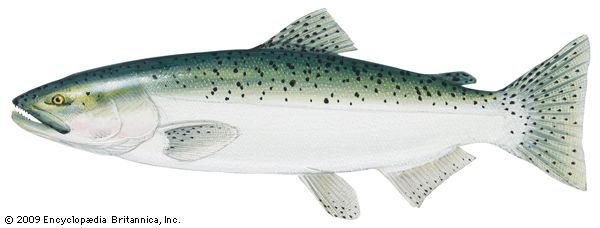
Historically, the river was altered by the construction of six dams for hydroelectric power, which severely impacted Chinook salmon populations. Following extensive advocacy by the Yurok Tribe, four of these dams were removed in 2023–24 in what stands as the largest dam removal project in the United States. The river’s primary tributaries include the Shasta and Trinity rivers.1
Why are Chinook salmon important to the Yurok Tribe?
For the Yurok Tribe, salmon have historically served as a cornerstone of their economy and cultural identity. The traditional Yurok economy was focused on the harvesting of salmon and acorns, which were essential for subsistence.3
Beyond their role as a food source, salmon are deeply integrated into the tribe’s spiritual life and public welfare. The Yurok practiced ceremonies within the World Renewal cycle, which were performed to ensure the continued abundance of food and the general well-being of the people. The significance of the fish is further reflected in the tribe’s long-standing commitment to environmental stewardship; after the construction of hydroelectric dams led to the collapse of Chinook salmon populations, the Yurok led decades of advocacy that resulted in the largest dam removal project in the United States to restore the river’s health.34
How does dam removal help restore a river’s ecosystem?
Dam removal is a significant environmental strategy used to revitalize river ecosystems, particularly by addressing the decline of native fish populations. The primary ways this process aids restoration include:5
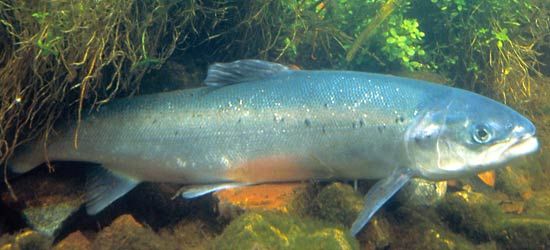
- Restoring Migratory Pathways: Dams often block or impede the movement of spawning fish, such as salmon, preventing them from reaching their natural breeding grounds. Removing these barriers allows fish to access upstream habitats that were previously inaccessible.51
- Revitalizing Spawning Populations: By eliminating physical obstructions, dam removal initiatives—such as those seen on the Klamath River and the Kennebec River—aim to reverse dramatic population declines and support the recovery of native species.56
- Restoring Natural River Processes: Dams often trap sediment and alter the natural flow of water, which can degrade riparian environments. Removing these structures helps restore the river’s natural sediment transport and flow dynamics, which are essential for maintaining healthy aquatic habitats.71
While technologies like fish ladders were historically used to mitigate the impact of dams, they often proved insufficient to sustain fish populations as more dams were built. Consequently, dam removal has become a vital tool for environmental restoration.51
What are the main features of the Klamath Mountains?
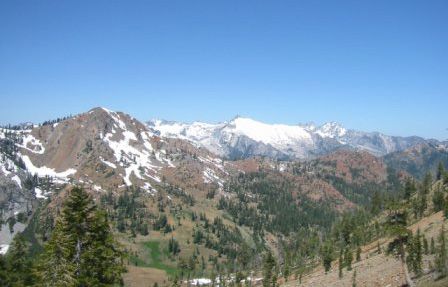
The Klamath Mountains are a prominent segment of the Pacific mountain system in western North America, extending approximately 250 miles from southwestern Oregon to northwestern California.2
Geological Significance
The Klamath Mountains are recognized as the oldest of the Pacific coastal mountains, with origins dating back to the early Paleozoic Era, roughly 500 million years ago. Their complex structure is believed to have resulted from tectonic plate collisions during the early Triassic Period, followed by intrusions of granite batholiths.9
Physical Features
- Topography: The range is deeply dissected by numerous rivers, most notably the Rogue River and the Klamath River.29
- Elevation: The highest point is Mount Eddy, which reaches an altitude of 9,038 feet (2,755 meters).21
- Glaciation: Higher elevations within the range show evidence of past glaciation.9
Regional Context
Geographically, the range forms the east-west cross in the center of the Pacific mountain system’s “H” shape. The region is largely protected within conservation areas, including parts of several national forests and the Oregon Caves National Monument. Regional economic activities include lumbering, dairying, fruit growing, hunting, fishing, and tourism.92
Sources
- Klamath River — Encyclopædia Britannica
- Klamath Mountains — Encyclopædia Britannica
- Yurok — Encyclopædia Britannica
- Mythologies of the Indigenous peoples of the Americas - Northwest Coast — Encyclopædia Britannica
- dam - Fish passes — Encyclopædia Britannica
- river - Environments of deposition — Encyclopædia Britannica
- dam - Rise of environmental and economic concerns — Encyclopædia Britannica
- river - Short-term variations — Encyclopædia Britannica
- Pacific mountain system - Physiography — Encyclopædia Britannica
- Klamath Mountains — Merriam-Webster
Published on · 3 min read