Khurīyā Murīyā
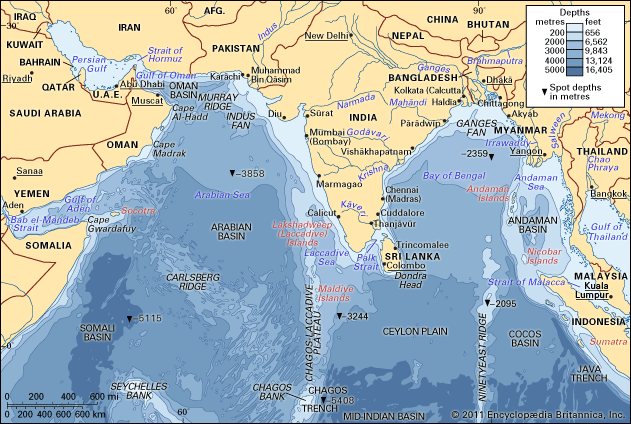
The Khurīyā Murīyā islands, a group of five islands belonging to Oman in the Arabian Sea, do not have permanent settlements in the traditional sense.
Are there any permanent settlements on the Khurīyā Murīyā islands?
The Khurīyā Murīyā islands, a group of five islands belonging to Oman in the Arabian Sea, do not have permanent settlements in the traditional sense.
While the islands were historically inhabited, the population fled in 1818 due to pirate raids. Today, only the largest island, Al-Ḥallānīyah, is inhabited. These few residents are primarily fishermen who maintain a traditional lifestyle, utilizing techniques such as using inflated skins for craft, similar to those used in ancient times.1
What is the climate like on the Khurīyā Murīyā islands?
The Khurīyā Murīyā islands are located in the Arabian Sea, which is characterized by a monsoon climate1.1
The region experiences two distinct seasonal patterns driven by monsoon winds:
- Southwest Monsoon (April to November): This period serves as the rainy season for the area. During the summer months, the Arabian coast—where these islands are situated—experiences pronounced upwelling of deeper, cooler waters.1
- Northeast Monsoon (November to March): This is the dry season, during which the northeast monsoon winds blow across the sea.1
Surface temperatures in the broader Arabian Sea typically range from approximately 75 to 77 °F (24 to 25 °C) during the cooler months of January and February, rising to temperatures above 82 °F (28 °C) in June and November. Because the islands are situated just 25 miles off the southeastern coast of Oman, they are directly influenced by these regional maritime weather patterns.13
What is the historical significance of the Khurīyā Murīyā islands?
The Khurīyā Murīyā islands hold historical significance primarily due to their strategic shifts in colonial and regional control. Originally under the influence of mainland Arabs and the sultan of Oman, the islands became a point of international interest in the 19th century.
In 1854, the sultan ceded the islands to the British. This transition led to their inclusion in the British colony of Aden in 1937, marking a period of British administrative oversight in the Arabian Sea. This arrangement lasted until 1967, when the islands were retroceded to Oman. Historically, the islands also faced significant instability; all inhabitants fled in 1818 due to persistent pirate raids, a testament to the challenges of maritime security in the region during that era. Today, the islands remain notable for their traditional fishing practices, which have preserved ancient methods, such as the use of inflated skins for watercraft.1
What recreational or tourism opportunities, if any, exist on or around the Khurīyā Murīyā islands?
The Khurīyā Murīyā islands currently offer no established recreational or tourism infrastructure. The island group, which consists of five islands composed of granite, is sparsely populated, with only the largest island, Al-Ḥallānīyah, being inhabited.
The present-day population consists almost exclusively of fishermen who continue to utilize traditional methods, such as the use of inflated skins for watercraft, rather than engaging in commercial tourism or recreational activities. Due to their remote nature and limited development, the islands remain largely isolated from the tourism industry found elsewhere in Oman.1
Sources
- Khurīyā Murīyā — Encyclopædia Britannica
- Kuria Muria Islands — Merriam-Webster
- Arabian Sea - Climate and hydrology — Encyclopædia Britannica
- Persian Gulf - Hydrology — Encyclopædia Britannica
Published on · 2 min read