Kings Canyon National Park
Kings Canyon National Park, located in the Sierra Nevada of California, was formed through a combination of tectonic uplift and intense glacial erosion.
How was Kings Canyon National Park formed geologically, and what makes it unique?
Kings Canyon National Park, located in the Sierra Nevada of California, was formed through a combination of tectonic uplift and intense glacial erosion.12
Geological Formation
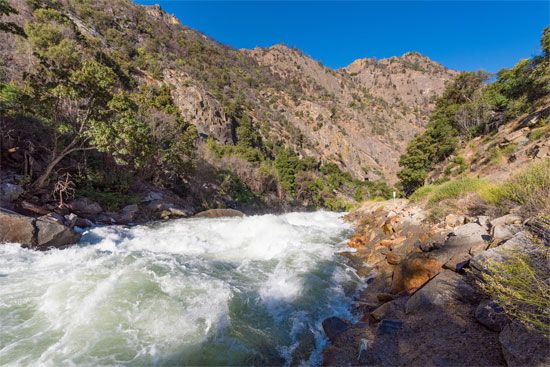
The park is situated within the Sierra Nevada, which is geologically defined as an upfaulted, tilted block of the Earth’s crust. Millions of years ago, and accelerating significantly within the last two million years, this massive block was uplifted along a major fault zone on its eastern edge, causing the range to tilt westward. This tectonic activity created the high-elevation landscape, which is primarily composed of granite3.2
Unique Features
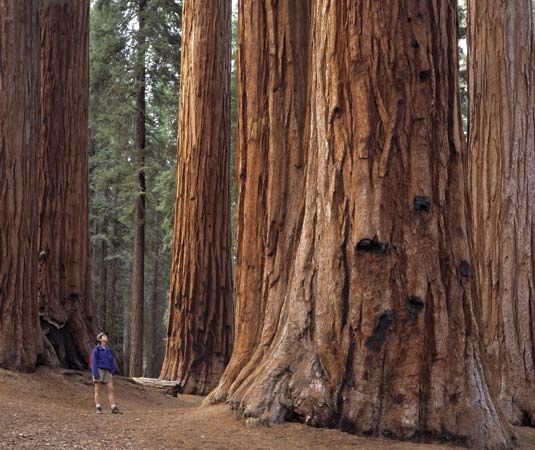
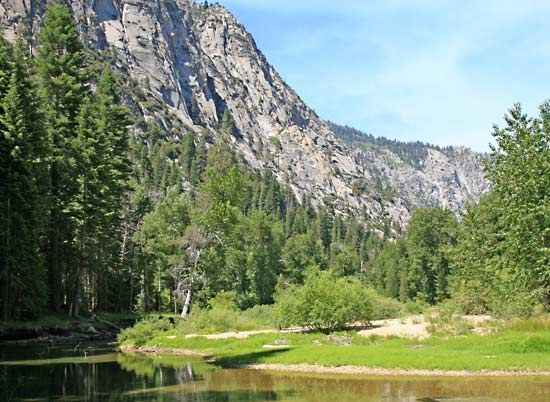
The park’s defining characteristic is the spectacular Kings Canyon itself, which was carved into the granite bedrock by glacial action. The canyon is remarkably deep, with walls towering up to 4,000 feet above the floor within the park, and reaching depths of 8,200 feet just outside its boundaries. Additionally, the park is home to some of the world’s most extensive stands of giant sequoias, including the massive groves at Redwood Mountain.1
How does Kings Canyon National Park contribute to scientific research and environmental education?
Kings Canyon National Park serves as a critical site for scientific study and environmental appreciation, primarily due to its diverse Sierra Nevada ecosystems and unique geological history.
Scientific Research
The park and the broader Sierra Nevada range have been subjects of systematic geological research since the late 19th century. Scientists utilize the region to study:
- Glacial Erosion: The dramatic formation of Kings Canyon provides a natural laboratory for understanding the power of glacial action on granite landscapes.14
- Stratigraphy and Tectonics: Researchers examine Jurassic stratigraphy, the nature of intrusive granites, and the chronology of crustal emplacement.4
- Biological Conservation: The park protects the world’s most extensive remaining stand of giant sequoias at Redwood Mountain, offering vital data for forest ecology and conservation science.1
Environmental Education
The park fosters environmental awareness by preserving the natural resources that inspired early conservationists like John Muir. Through its vast trail systems, including the Pacific Crest National Scenic Trail, the park provides an immersive educational environment where visitors can observe protected wildlife and ancient forests firsthand.14
What is the history behind the establishment of Kings Canyon National Park?
The establishment of Kings Canyon National Park in 1940 marked a significant milestone in the preservation of the Sierra Nevada wilderness. The park was created by incorporating the existing General Grant National Park, which had been established decades earlier in 1890 to protect the region’s iconic giant sequoias.1
This consolidation brought the Grant Grove area into a larger protected framework, ensuring the long-term stewardship of the surrounding high-mountain landscape and its deep, glacially carved canyons. Today, the park is managed in conjunction with the adjacent Sequoia National Park, maintaining a vast, contiguous protected area that safeguards diverse ecosystems, from the massive groves of big trees to the rugged granite peaks of the high Sierra.1
What types of flora and fauna can be found in Kings Canyon National Park?
Kings Canyon National Park is home to a diverse array of plant and animal life, supported by its varied elevation and protected ecosystems.
Flora
The park is most famous for its groves of giant sequoias (Sequoiadendron giganteum), including the expansive Redwood Mountain Grove, which contains approximately 15,800 trees. In addition to these massive specimens, the park’s forests feature a variety of other trees, such as:
- Sugar pine
- Yellow pine
- White fir
- Incense cedar
Fauna
The park provides a habitat for several notable animal species that thrive in the Sierra Nevada environment. Commonly observed wildlife includes:
- Deer
- Black bears
- Bighorn sheep
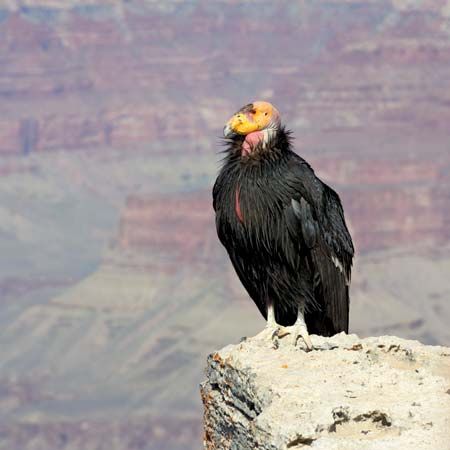
Furthermore, the California condor—an endangered species—is known to utilize the cavities of giant sequoias for nesting, highlighting the importance of these trees to the broader ecosystem.16
Sources
- Kings Canyon National Park — Encyclopædia Britannica
- Sierra Nevada - Geology — Encyclopædia Britannica
- Sierra Nevada - Physiography — Encyclopædia Britannica
- Kings Canyon National Park — Merriam-Webster
- Sierra Nevada - Study and exploration — Encyclopædia Britannica
- giant sequoia — Encyclopædia Britannica
Published on · 3 min read