Kinkajou
The kinkajou (Potos flavus) is a unique, nocturnal mammal belonging to the raccoon family, or procyonid group. It is characterized by its soft, brownish fur…
What is a kinkajou and where does it primarily live?
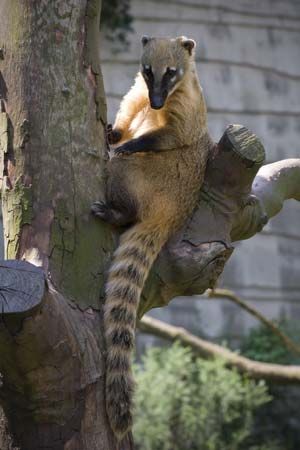
The kinkajou (Potos flavus) is a unique, nocturnal mammal belonging to the raccoon family, or procyonid group. It is characterized by its soft, brownish fur, large eyes, and a long prehensile tail, which it uses to navigate the upper canopy of its habitat. Although related to raccoons and coatis, its behavior and ecology are often compared to those of a primate1.12
These agile animals are primarily found in the tropical forests of Central America and South America, ranging from Mexico southward. They are strictly arboreal, spending almost their entire lives in trees, where they feed on fruit, insects, and nectar. While sometimes kept as pets, they are wild animals that can be unpredictable, possessing scent glands and the ability to deliver sharp bites when threatened.12
What interesting behaviors or abilities do kinkajous exhibit that make them unique among mammals?
The kinkajou (Potos flavus) possesses several specialized traits that distinguish it from other members of the procyonid family:
- Prehensile Tail: Unlike its relatives, such as the cacomistle and olingo, the kinkajou has a fully prehensile tail. This allows it to grasp branches securely, acting as a fifth limb while navigating the upper canopy of tropical forests.1
- Rotatable Feet: The kinkajou’s feet can rotate 180°, an adaptation that provides exceptional agility and allows it to move headfirst down tree trunks with ease.1
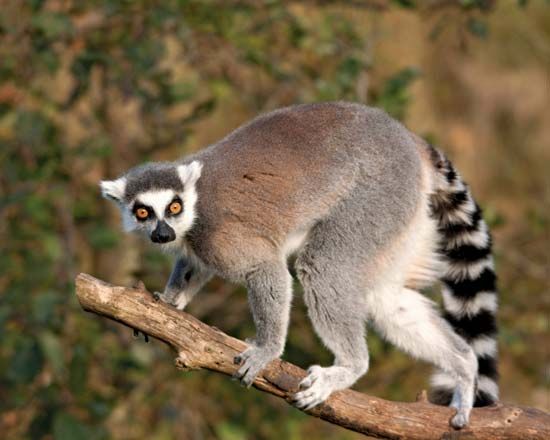
- Primate-like Ecology: Although it is a raccoon relative, its behavior and ecological niche so closely resemble those of a primate that it was originally misclassified as a lemur.1
- Unique Vocalizations: These animals are highly vocal, communicating through a diverse range of sounds, including screams, barks, and distinct noises described as “sneezes.”1
- Specialized Feeding: They are adept at consuming nectar from flowers, particularly during dry periods, supplementing their primary diet of fruit and insects.1
What unique physical characteristics do kinkajous possess that help them adapt to their environment?
The kinkajou (Potos flavus) possesses several specialized physical characteristics that facilitate its life as an arboreal dweller in tropical forests:
- Prehensile Tail: Unlike other members of the procyonid family, the kinkajou features a long, prehensile tail measuring 40–57 cm. This appendage acts as a fifth limb, providing essential support and balance while navigating the upper canopy.1
- Rotatable Feet: Its feet can rotate 180°, an adaptation that grants the animal exceptional agility and allows it to move headfirst down tree trunks with ease.1
- Sensory Adaptations: The kinkajou has large, highly reflective eyes that produce a bright orange eyeshine, which is an adaptation for its nocturnal lifestyle. Its small, round face features low-set, rounded ears.1
- Specialized Soles: The soles of its feet are covered in a thick layer of short hair, providing grip as it traverses branches.1
- Defensive Glands: It possesses anal glands that emit a musky odor when the animal is frightened or angered, serving as a chemical defense mechanism.1
Are kinkajous endangered, and what conservation efforts are in place to protect them?
Sorry, the Britannica knowledge base does not contain information regarding the current conservation status of kinkajous or specific efforts in place to protect them.
Sources
- kinkajou — Encyclopædia Britannica
- kinkajou — Merriam-Webster
Published on · 2 min read