Lemur
Lemurs belong to the suborder Strepsirrhini, a group of primates that diverged from the Haplorrhini (monkeys, apes, and humans) approximately 60 million…
How have lemurs evolved over time, and what is their evolutionary relationship to other primates?
Lemurs belong to the suborder Strepsirrhini, a group of primates that diverged from the Haplorrhini (monkeys, apes, and humans) approximately 60 million years ago. While early strepsirrhines were abundant across North America and Europe during the Eocene Epoch, they largely disappeared from the Northern Hemisphere by 34 million years ago.12
The lineage survived and flourished in Madagascar, where they likely arrived by floating across the Mozambique Channel on vegetation mats about 50 million years ago. Isolated from competition with more advanced primates, they underwent significant diversification. Evolutionary evidence suggests that the Adapidae family provided the stem from which modern lemurs and lorises evolved.23
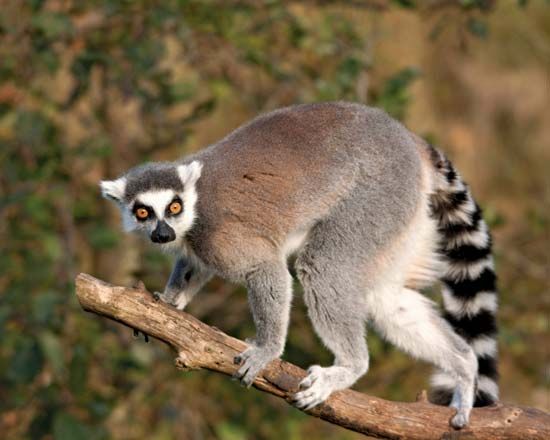
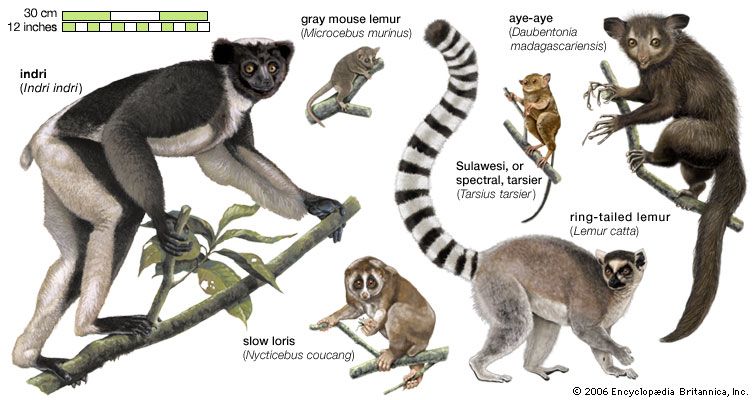
Today, lemurs are characterized by primitive traits such as a moist muzzle, a reflective tapetum lucidum for night vision, and a specialized “toilet claw” on the second toe. Their evolutionary history on Madagascar includes at least two distinct migration events, with ancestors of the aye-aye originating in Africa before reaching the island.21
How do lemurs compare to other primate groups in terms of intelligence and problem-solving abilities?
In the study of primate cognition, lemurs are generally considered less intelligent than monkeys. While comparative intelligence is difficult to measure due to variations in sensory adaptations, lemurs possess a more acute sense of smell but less developed vision compared to monkeys. Their eyes are primarily adapted for nocturnal life, lacking the fovea and macula lutea found in higher primates, which limits their visual acuity.1
When evaluating problem-solving abilities, such as “learning to learn” or generalized rule learning, researchers have observed that primates with more advanced visual systems—specifically monkeys and apes—tend to perform more efficiently on visual discrimination tasks. While apes are generally considered more intelligent than monkeys and demonstrate tool use and language-like communication skills, lemurs occupy a more primitive position within the primate order.516
It is important to note that valid comparisons between species are challenging; for example, differences in performance on cognitive tests are often attributable to specific sensory strengths, such as color vision or olfactory capabilities, rather than strictly “intelligence”.5
What are some unique feeding habits of different lemur species?
Lemurs exhibit a diverse range of feeding habits adapted to their specific environments and body sizes. While many primates are omnivorous, lemurs show specialized dietary preferences that reflect their evolutionary history and ecological niches.78
Specialized Feeding Strategies
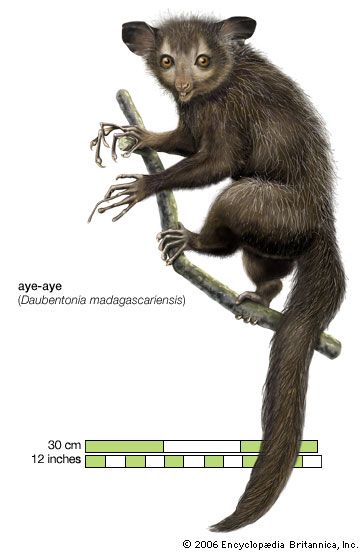
- The Aye-aye: This species employs a highly unique method to locate food. It taps on tree trunks with its specialized, elongated third finger to detect the hollow sounds of wood-boring insect larvae. Once located, it uses that same finger to extract the insects and to scoop out the pulp of fruit.1
- Sportive Lemurs: These nocturnal, solitary animals rely on a diet of leaves and flowers. Because cellulose is difficult to digest, they utilize an enormous cecum where bacterial fermentation breaks down plant material to extract necessary energy.8
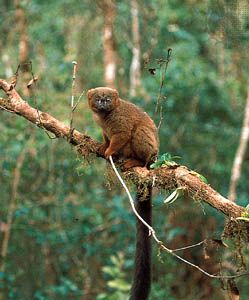
- Bamboo Lemurs: The gentle lemurs and the highly endangered greater bamboo lemurs are specialized feeders that subsist on bamboo stems.8
- Fork-crowned Lemurs: Inhabiting the western coast of Madagascar, these lemurs have a diet consisting primarily of gum and insects.8
- Dwarf and Mouse Lemurs: These small primates are largely insectivorous and frugivorous. Notably, dwarf lemurs store fat in their tails to survive periods of dormancy during the dry season.8
General Dietary Trends
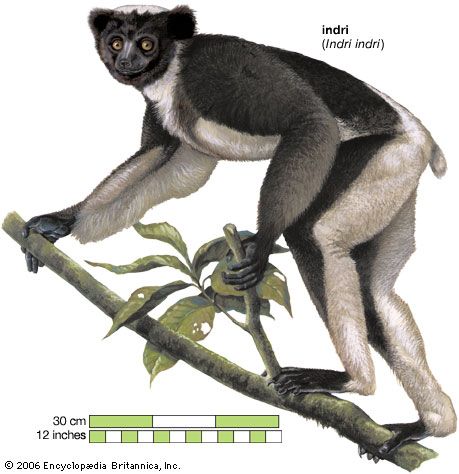
Larger diurnal lemurs, such as the sifaka and the indri, are primarily vegetarian, consuming leaves, seeds, and fruit. Generally, body size acts as a primary constraint on diet: smaller species often rely on high-energy insects and gums, while larger species are better equipped to process the complex cellulose found in leaves.7
What are the main threats to lemur populations, and why are many species endangered?
Many lemur species are currently endangered due to a combination of historical and modern pressures. The primary threats to their survival include:
- Habitat Modification and Deforestation: The loss of natural forest environments is the most significant threat to lemur populations. As forests are cleared, these arboreal animals lose the essential resources required for food and shelter.110
- Overhunting: Historically, human activity has had a devastating impact on lemur diversity. Larger species that once existed on Madagascar were likely driven to extinction by overhunting following the arrival of the Malagasy people less than 2,000 years ago. Today, hunting remains a secondary concern for some populations.110
- Ecological Vulnerability: Because many lemurs are highly specialized in their diets and habitats, they are particularly sensitive to environmental changes. Their slow reproductive rates—with females often having only one fertile day per year—further limit their ability to recover from population declines.1
While some species, such as the flying lemur, currently maintain relatively healthy populations, the ongoing destruction of their native ecosystems continues to pose a serious risk to their long-term stability.10
Sources
- lemur — Encyclopædia Britannica
- Tertiary Period - Primates — Encyclopædia Britannica
- primate - Classification — Encyclopædia Britannica
- primate - Eocene — Encyclopædia Britannica
- Animal learning - Generalized rule learning — Encyclopædia Britannica
- What’s the Difference Between Monkeys and Apes? — Encyclopædia Britannica
- primate - Diet — Encyclopædia Britannica
- aye-aye — Encyclopædia Britannica
- sifaka — Encyclopædia Britannica
- flying lemur — Encyclopædia Britannica
Published on · 4 min read