Kissimmee River
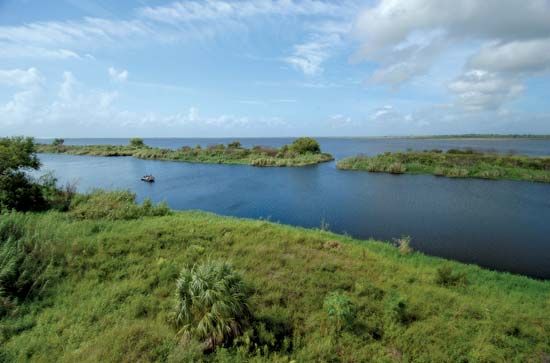
The Kissimmee River is a waterway in central Florida, U.S., that flows southward between Lake Kissimmee and Lake Okeechobee. It serves as a major source of…
What is Kissimmee River?
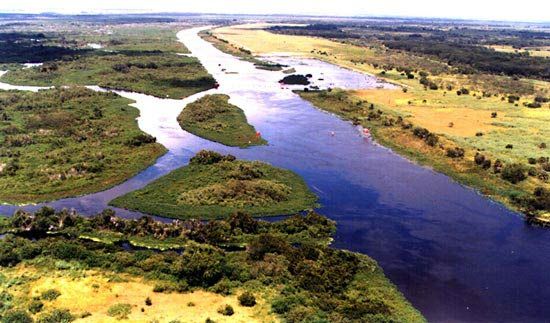
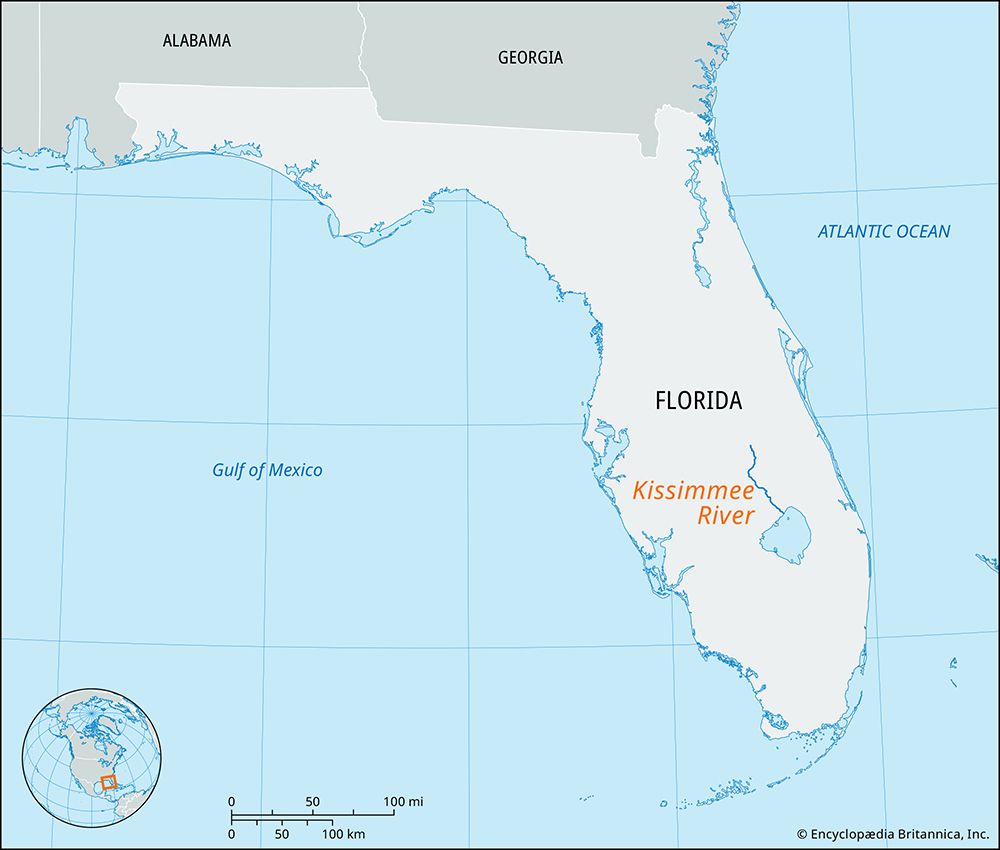
The Kissimmee River is a waterway in central Florida, U.S., that flows southward between Lake Kissimmee and Lake Okeechobee. It serves as a major source of water for the Everglades ecosystem.12
Originally spanning about 100 miles (160 km), the river was canalized in the 1960s for flood control, reducing its length to 56 miles (90 km). This alteration, along with broader drainage projects in the region, significantly disrupted natural water flow and damaged local habitats. Consequently, efforts were initiated to restore the river to its original state to improve ecological health. The river basin covers approximately 3,000 square miles (7,700 square km), and its surrounding lowlands are characterized by flat grasslands, cattle ranches, and pastures. The name “Kissimmee” is thought to potentially derive from a Calusa word meaning “long water”.132
Why was the Kissimmee River originally turned into a canal?
The Kissimmee River was canalized in the 1960s primarily for flood-control purposes. This project was part of broader regional efforts, mandated by laws passed in 1948, to construct levees and canals throughout South Florida2.1
These engineering interventions were intended to prevent flooding in the region and to manage water resources for human use, including providing supply for agriculture and growing urban populations. By straightening the river into a canal, the project aimed to move water more efficiently; however, this significantly altered the natural water flow, leading to severe ecological consequences for the Everglades ecosystem.21
How does the restoration project help the Florida Everglades?
The restoration of the Kissimmee River is a critical component of broader efforts to rehabilitate the Everglades ecosystem, which suffered significant degradation due to 20th-century water-management projects.14
By reversing the canalization of the river, the restoration project aims to:
- Restore Natural Hydrology: The plan involves removing levees and modifying water management practices to better mimic the natural, historical flow of water through the landscape.4
- Improve Water Quality and Distribution: Previous drainage and canal projects artificially altered water levels, leading to toxic algae, mercury contamination, and the destruction of habitats. Restoration seeks to correct the timing, amount, and distribution of water to support native flora and fauna.4
- Support Wildlife Habitats: By re-establishing natural water cycles, the project helps prevent the flooding of seasonal wildlife feeding and nesting sites, which had been severely disrupted by erratic water management.4
- Ensure Sustainable Resource Use: Beyond environmental recovery, the project is designed to preserve the regional tourism industry and secure reliable freshwater supplies for both agriculture and South Florida’s growing population.4
What kind of wildlife lives in the Kissimmee River basin?
The provided search results do not contain specific information regarding the wildlife species that inhabit the Kissimmee River basin. While the area is a significant river system in Florida that connects Lake Okeechobee to the north, the available documentation focuses on its geography, history of canalization, and restoration efforts rather than its biological inhabitants.
Sources
- Kissimmee River — Encyclopædia Britannica
- Everglades - Development of the Everglades — Encyclopædia Britannica
- Florida - Relief — Encyclopædia Britannica
- Lake Okeechobee — Encyclopædia Britannica
Published on · 2 min read