Lake Okeechobee
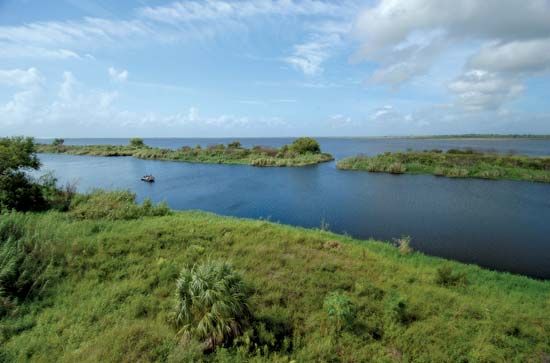
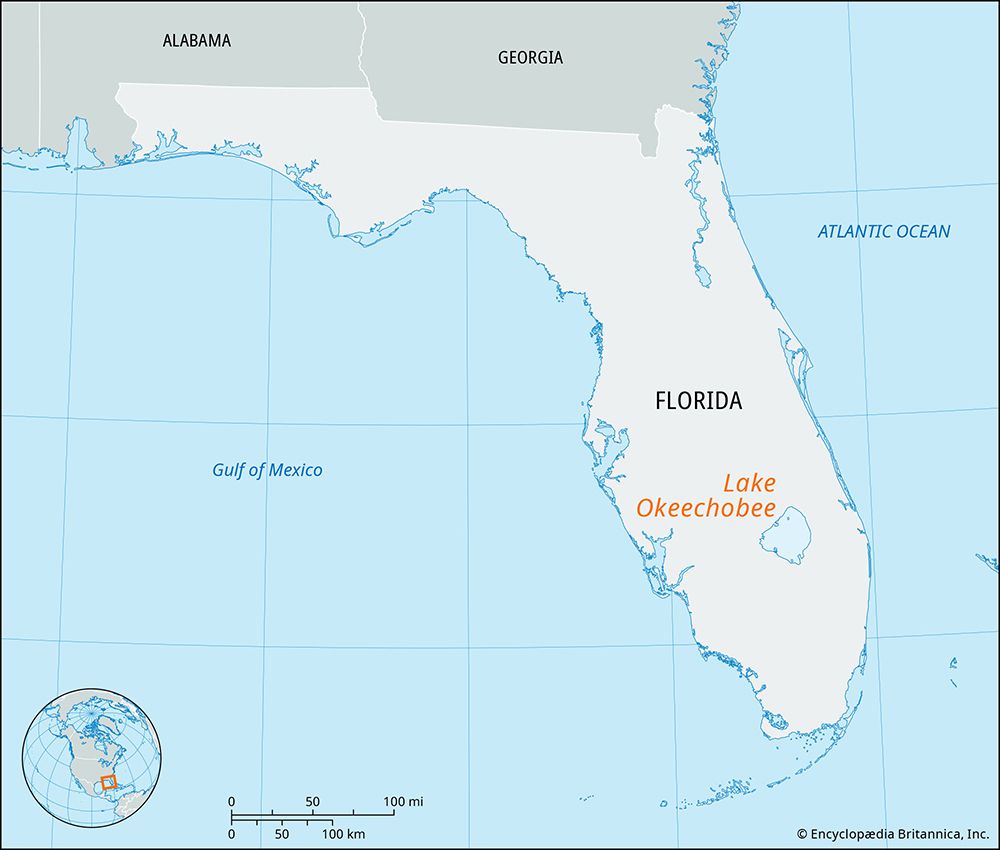
Lake Okeechobee is located in southeastern Florida, situated approximately 40 miles (65 km) northwest of West Palm Beach at the northern edge of the…
What is the geographical location and size of Lake Okeechobee in Florida?
Lake Okeechobee is located in southeastern Florida, situated approximately 40 miles (65 km) northwest of West Palm Beach at the northern edge of the Everglades.1
Regarding its size and dimensions:
- Area: It covers approximately 730 square miles (1,900 square km), including several small islands.1
- Length: The lake is about 35 miles (55 km) long.1
- Shoreline: It features a shoreline of 135 miles (220 km).1
- Depth: The average depth ranges from 10 to 12 feet (3 to 4 metres).1
As the third-largest freshwater lake located entirely within the United States, it serves as a critical component of the regional watershed, primarily fed by the Kissimmee River.1
What role does Lake Okeechobee play in Florida’s ecosystem and water management?
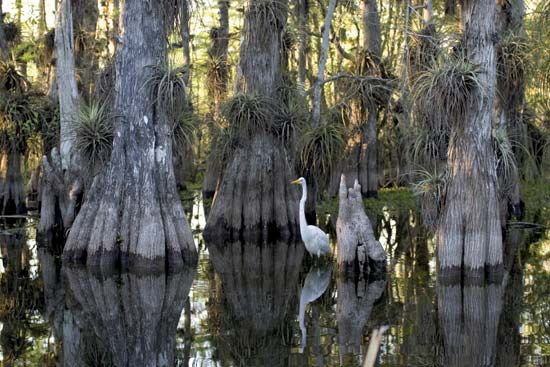
Lake Okeechobee serves as a central, albeit heavily modified, component of Florida’s watershed and water management infrastructure. Historically, the lake acted as the northern headwaters for the Everglades, naturally overflowing southward during the rainy season to sustain the downstream ecosystem.12
Water Management and Human Impact
Following devastating hurricanes in the 1920s, extensive flood control projects were implemented, including the construction of 140 miles of levees and a regulatory outlet system. These measures were designed to prevent flooding and provide water for human use, agriculture, and urban expansion. However, these interventions significantly altered the natural flow of water, cutting off the lake from the Everglades and disrupting the seasonal cycle of water distribution.12
Ecological Consequences and Restoration
The diversion of water and agricultural runoff have caused severe ecological damage, including:
- The creation of toxic algae and high levels of organic mercury.2
- The destruction of wildlife habitats and sea-grass beds.2
- The disruption of nesting and feeding sites for native species.2
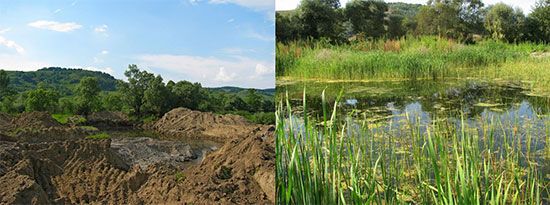
Recognizing these detrimental effects, a major restoration plan was authorized in 2000 to remove levees and modify water management to better mimic natural processes, aiming to balance environmental health with the needs of South Florida’s population.2
How deep is Lake Okeechobee, and how does its depth compare to other large lakes in the United States?
Lake Okeechobee is a relatively shallow body of water, with an average depth of 10 to 12 feet (3 to 4 metres).1
When compared to other large lakes in the United States, such as the Great Lakes, Lake Okeechobee is significantly shallower. For context, the mean depths of the Great Lakes are substantially greater:
- Lake Superior: 483 feet (147 metres)3
- Lake Ontario: 283 feet (86 metres)3
- Lake Michigan: 279 feet (85 metres)3
- Lake Huron: 195 feet (59 metres)3
- Lake Erie: 62 feet (19 metres)3
Even Lake Erie, which is the shallowest of the Great Lakes, has a mean depth more than five times that of Lake Okeechobee. While Lake Okeechobee is the third-largest freshwater lake located entirely within the United States, its limited depth is a defining physical characteristic that distinguishes it from the much deeper basins found in the Great Lakes system.13
How does the Kissimmee River affect the lake’s ecosystem?
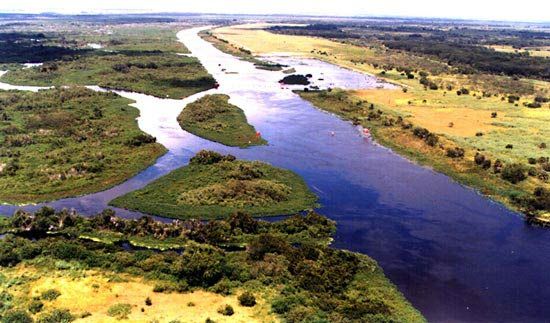
The Kissimmee River serves as the primary source of water for Lake Okeechobee. As the main tributary of the lake’s watershed, it funnels water from a chain of northern lakes directly into the basin, playing a critical role in maintaining the lake’s water levels and overall hydrological balance.1
Historically, the river’s flow was a natural component of the broader Everglades ecosystem, which stretched from the Kissimmee basin southward to the Gulf of Mexico and the Atlantic Ocean. However, in the 1960s, the river was canalized for flood control, which significantly altered its natural flow and impact on the lake. These modifications, alongside other regional water management projects, disrupted the natural timing and distribution of water, contributing to ecological challenges such as toxic algae and habitat degradation.521
Efforts to restore the river to its original, meandering state have been underway for years, aiming to improve the quality and flow of water entering Lake Okeechobee and to support the health of the downstream environment.2
Sources
- Lake Okeechobee — Encyclopædia Britannica
- Everglades - Development of the Everglades — Encyclopædia Britannica
- Great Lakes - Physiography of Great Lakes — Encyclopædia Britannica
- Great Lakes - Hydrology and climate — Encyclopædia Britannica
- Kissimmee River — Encyclopædia Britannica
Published on · 3 min read