Koi
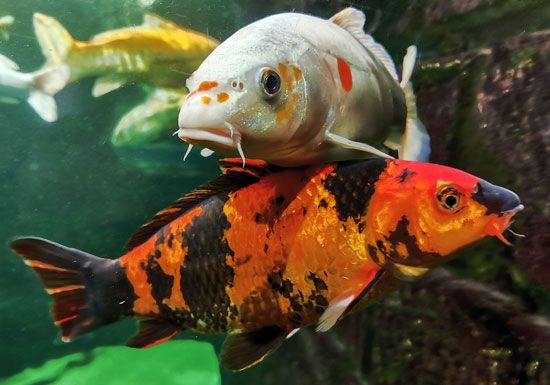
Koi (Cyprinus carpio) are ornamental varieties of carp prized for their vibrant colors and patterns. Often kept as pets in freshwater ponds, these robust…
What is koi?
Koi (Cyprinus carpio) are ornamental varieties of carp prized for their vibrant colors and patterns. Often kept as pets in freshwater ponds, these robust, omnivorous fish can grow to about 90 cm (36 inches) and live for several decades in captivity.12
The term koi is a shortened form of the Japanese word nishikigoi, meaning “brocaded carp,” and serves as a homophone for the Japanese word for “affection.” Beyond their aesthetic appeal, koi are significant cultural symbols of luck, perseverance, peace, and friendship in China and Japan.1
While traditionally linked to the common carp, recent genetic research suggests that koi are domesticated descendants of the Amur carp (C. rubrofuscus). Their history of domestication spans over 2,000 years, though their exact evolutionary origins remain a subject of scientific study due to centuries of human-led relocation and crossbreeding.1
How do koi differ from common carp?
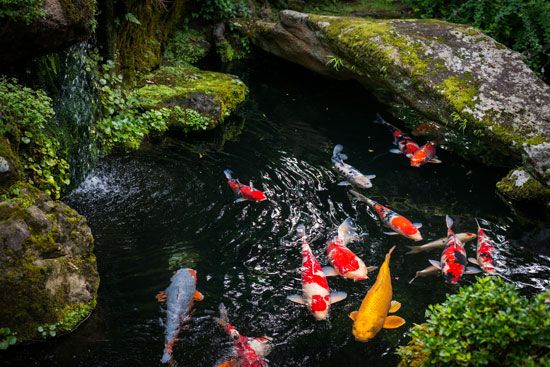
While koi are often associated with the common carp (Cyprinus carpio), they differ primarily in their purpose, appearance, and classification.
- Purpose and Perception: Koi are selectively bred as ornamental pets for their vibrant colors and patterns, serving as cultural symbols of luck and perseverance. In contrast, the common carp is a hardy, greenish-brown fish often raised for food. In many regions, particularly North America, the common carp is considered an invasive nuisance because its habit of rooting for food increases water turbidity and disrupts native ecosystems.13
- Classification: Traditionally, koi were thought to be descendants of the common carp. However, recent genetic research suggests that koi are actually domesticated Amur carp (C. rubrofuscus). Because the Amur carp was classified as a subspecies of the common carp until the early 2010s, scientists remain divided on the precise classification of koi.13
- Physical Traits: While both are robust, heavy-bodied fish, koi are specifically valued for their “brocaded” or colorful body patterning, whereas common carp are typically uniform in color.13
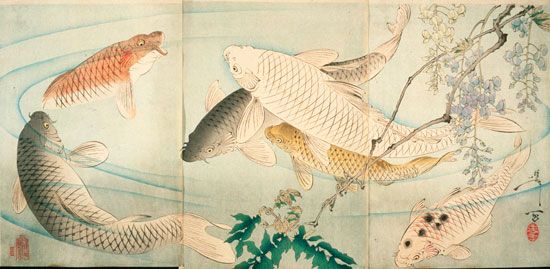
What do the different colors of koi symbolize?
The provided information does not specify individual symbolic meanings for the different colors of koi. While koi are recognized as general symbols of friendship, peace, luck, and perseverance, the Britannica knowledge base does not contain details regarding the specific cultural or symbolic significance attributed to their various color patterns.
How long can a koi fish live in a well-maintained pond?
In a well-maintained environment, koi are remarkably long-lived fish. While they typically live between 30 and 40 years in the wild, individuals kept in captivity have been known to live for nearly 70 years.1
Sources
- koi — Encyclopædia Britannica
- koi — Merriam-Webster
- carp — Encyclopædia Britannica
Published on · 2 min read