Chub
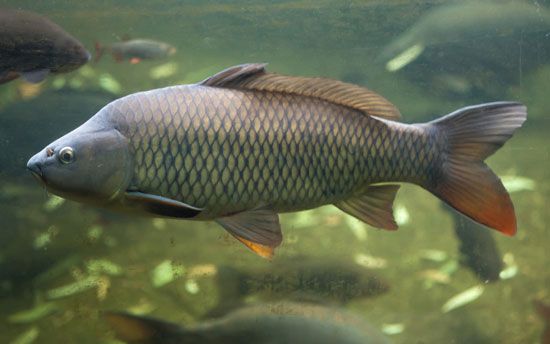
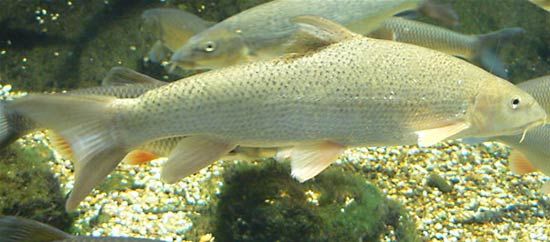
The term chub primarily refers to various freshwater fish belonging to the carp family, Cyprinidae, which are found throughout Europe and North America.
What is chub?
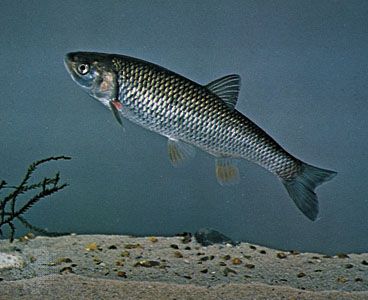
The term chub primarily refers to various freshwater fish belonging to the carp family, Cyprinidae, which are found throughout Europe and North America.1
Freshwater Varieties
- European Chub: The European chub (Leuciscus cephalus) is a popular game fish known for its voracious appetite and large, black-edged scales.1
- North American Species: In North America, the name applies to numerous cyprinids, such as the creek chub and hornyhead chub. These are often used as bait, though some species, such as those in the genus Gila, are currently endangered.1
Other Uses
The name is also applied to several unrelated species, including:
- Deepwater Fish: Certain species in the family Coregonidae found in the Great Lakes region, which are frequently smoked for food.1
- Marine Fish: The chub mackerel (Scomber japonicus) and the Bermuda chub (Kyphosus sectatrix) are also commonly referred to by this name.12
Additionally, the word serves as the etymological root for the adjective “chubby,” which describes a full, rounded form.3
What are some other common fish in the carp family?
The family Cyprinidae, commonly known as the carp family, includes a vast array of freshwater fish species. Beyond the well-known common carp and various chub species, the family encompasses many smaller fish often referred to as minnows, as well as several other notable groups:
- Minnows and Shiners: In North America, this group includes numerous small species such as the golden shiner, the common shiner, and the fathead minnow. In Europe and northern Asia, the common minnow (Phoxinus phoxinus) is a representative member of this family.5
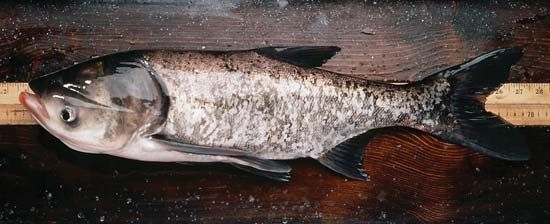
- Asian Carp: This group includes several species introduced to various regions for their ability to control aquatic vegetation and pests, such as the grass carp, silver carp, bighead carp, and black carp.67
- Ornamental Varieties: The koi, a popular ornamental fish, is a domesticated breed derived from the common carp.71
- Other Cyprinids: The family also includes goldfish, barbs, rasboras, danios, and loaches, many of which are popular in the aquarium trade.6
How do scientists classify different species of freshwater fish?
Scientists classify freshwater fish species by analyzing their evolutionary relationships, a field of study known as ichthyology. To establish these classifications, researchers rely on several key methods and criteria:
- Comparative Skeletal Study: Ichthyologists place significant emphasis on the skeleton. Bones are relatively easy to study in living fish and provide a reliable basis for comparing extant species with fossilized remains, which are often limited to bony structures.12
- Morphological Analysis: Scientists examine external features, including body and head dimensions, as well as counts of specific characters such as teeth, scales, and fin rays.12
- Anatomical and Physiological Traits: Classification often involves identifying specialized structures, such as the Weberian apparatus—a system connecting the swim bladder to the inner ear found in certain groups—or specific jaw musculature and gill structures.131415
- Modern Data Integration: In recent years, classification has been refined by incorporating data from comparative behavior, functional anatomy, genetics, and molecular analysis.1216
These methods allow scientists to group fish into hierarchical categories—such as orders, families, and genera—based on shared evolutionary history rather than just superficial similarities.16
Why are some fish species considered endangered?
Fish species become endangered primarily due to human activities, which threaten their survival through several interconnected factors. Approximately 99 percent of threatened and endangered species are at risk because of these human-driven pressures.18
Primary Threats to Fish Species
- Habitat Loss and Degradation: Freshwater ecosystems are increasingly threatened by the canalization of rivers and the destruction of natural environments to accommodate urban expansion and food production.19
- Pollution: Chemical pollution from industry, agriculture, and human settlements degrades water quality. Runoff containing fertilizers and pesticides can lead to nutrient enrichment, causing oxygen depletion and the creation of “dead zones” where fish and other aquatic life cannot survive.1920
- Overharvesting: Many fish species, particularly long-lived ones that require years to reach sexual maturity, are highly susceptible to unsustainable fishing practices. Overfishing has resulted in numerous stocks being classified as overfished, with some species, such as the barn-door skate, reaching endangered status due to incidental or targeted catch.1921
- Invasive Species: The introduction of non-native species—such as the sea lamprey in the Great Lakes or Asian carp in the Mississippi River—can disrupt food chains, outcompete native fish, and decimate prey populations.1922
- Climate Change and Disease: Rising global temperatures and the spread of diseases, often exacerbated by human trade and environmental changes, further stress already vulnerable populations.201922
Sources
- chub — Encyclopædia Britannica
- chub — Merriam-Webster
- chubby — Merriam-Webster
- Bermuda chub — Merriam-Webster
- minnow — Encyclopædia Britannica
- atheriniform - Natural history — Encyclopædia Britannica
- ostariophysan - Importance — Encyclopædia Britannica
- carp — Encyclopædia Britannica
- Cyprinodontidae — Merriam-Webster
- cyprinodont — Merriam-Webster
- aquaculture - Carp — Encyclopædia Britannica
- fish - Distinguishing taxonomic features — Encyclopædia Britannica
- paracanthopterygian - Annotated classification — Encyclopædia Britannica
- ostariophysan - Annotated classification — Encyclopædia Britannica
- protacanthopterygian - Annotated classification — Encyclopædia Britannica
- protacanthopterygian - Critical appraisal — Encyclopædia Britannica
- fish - Distribution and abundance — Encyclopædia Britannica
- fishing - Recent trends in fishing — Encyclopædia Britannica
- conservation - Fishing — Encyclopædia Britannica
- conservation - Pollution — Encyclopædia Britannica
- endangered species - Balancing human activities with conservation — Encyclopædia Britannica
- invasive species - A global problem — Encyclopædia Britannica
- endangered species: Top Questions — Encyclopædia Britannica
Published on · 3 min read