Carp
Invasive carp species, including the common carp and various Asian carp species, significantly disrupt local ecosystems by outcompeting native wildlife for…
What impact do invasive carp species have on local ecosystems?
Invasive carp species, including the common carp and various Asian carp species, significantly disrupt local ecosystems by outcompeting native wildlife for resources.12
These fish impact their environments in several destructive ways:
- Resource Competition: Species like bighead and silver carp consume massive quantities of plankton, which forms the base of the aquatic food web, thereby depriving native species of essential food sources.12
- Habitat Degradation: Common carp root through bottom sediments for food, which increases water turbidity (cloudiness) and uproots aquatic vegetation. This destroys critical habitats for other animals and plants.2
- Ecological Imbalance: By feeding rapaciously on invertebrates and detritus, these invasive fish alter the fundamental ecological dynamics of the waterways they colonize.2
Efforts to mitigate these impacts include the use of electric barriers and piscicides to prevent their spread into vulnerable areas like the Great Lakes.12
What are some of the most common species of carp, and how do they differ from each other?
Carp species are diverse, ranging from the widely recognized common carp to the group collectively known as Asian carp. While they share membership in the family Cyprinidae, they differ significantly in their ecological roles, physical characteristics, and origins.
Common Carp (Cyprinus carpio)
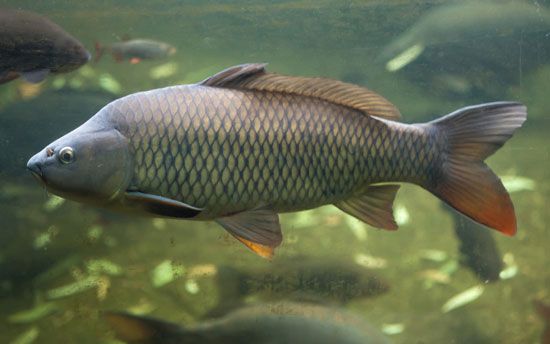
The common carp is a hardy, greenish-brown fish native to Eurasia. It is characterized by large scales and two barbels on each side of its upper jaw. It is an omnivorous bottom-feeder that often roils water while searching for food, which increases turbidity and harms aquatic vegetation. Domesticated varieties include the mirror carp and leather carp, while koi are ornamental fish thought to descend from common or Amur carp.
Asian Carp
In the United States, the term Asian carp refers to four distinct species introduced to control pests in fish farms, which later became invasive:
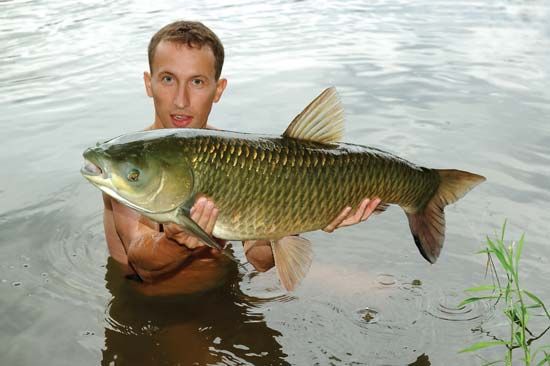
- Grass carp: Primarily consumes aquatic vegetation, posing a threat to underwater plant habitats.
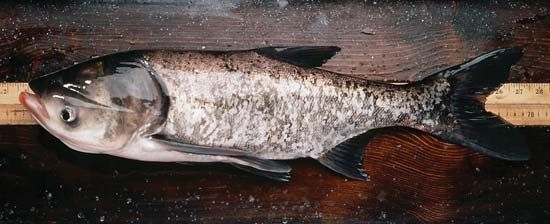
- Bighead carp: A large-mouthed, heavy-bodied fish that feeds voraciously on plankton.
- Silver carp: Similar to the bighead, it consumes massive quantities of plankton, disrupting the base of the aquatic food web.
- Black carp: Known for its diet of snails and other mollusks.
Unlike the bottom-dwelling common carp, these species are generally recognizable by their upturned jaws and eyes positioned on the lower half of their heads.
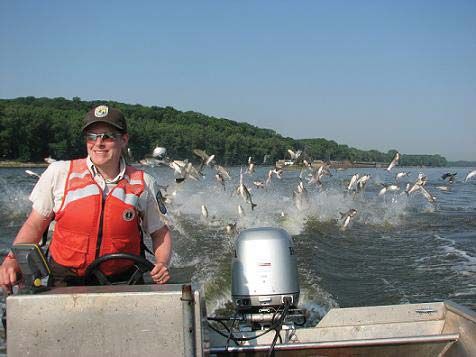
How have carp been introduced to different parts of the world, and what were the reasons for these introductions?
Carp have been introduced to various parts of the world primarily for their utility in aquaculture, pest control, and sport fishing. Because they are hardy and grow rapidly, they have been farmed extensively for food in Europe and Asia for centuries.12
Reasons for Introduction
- Food Production: The common carp was introduced to North America in the mid-19th century by private interests and government authorities to serve as a reliable food source and a sport fish.1
- Biological Control: During the 1960s and 1970s, several species collectively known as Asian carp—including grass carp, bighead carp, black carp, and silver carp—were imported to the United States. They were intended to manage noxious aquatic plants, snails, and other pests in fish farms and small ponds.51
Spread into Natural Waterways
Once introduced for these controlled purposes, carp often escaped into larger river systems due to floods or accidental release by sport fishers.1 These populations subsequently colonized major waterways, such as the Mississippi River system, where they became invasive and began disrupting native ecosystems.15
What is a carp?
A carp is a large, variable, soft-finned freshwater fish belonging to the family Cyprinidae. While the term is broadly used for several species within the genus Cyprinus, it most commonly refers to the common carp (Cyprinus carpio).62
Key characteristics of the common carp include:
- Appearance: A hardy, greenish-brown fish with large scales and two barbels on each side of its upper jaw.2
- Habitat: It typically inhabits quiet, weedy, mud-bottomed ponds, lakes, and rivers.2
- Behavior: As an omnivorous bottom-feeder, it often roils the water while searching for food, which increases turbidity and can harm aquatic plants and animals.2
- Life Cycle: Carp grow rapidly, can live for more than 40 years in captivity, and are known for their ability to become torpid during winter.2
Beyond the common carp, the term also encompasses various related species, such as the grass carp and other Asian carp varieties, which are often studied for their invasive impact on ecosystems.62
Sources
- Asian carp — Encyclopædia Britannica
- carp — Encyclopædia Britannica
- Asian carp — Merriam-Webster
- bighead carp — Merriam-Webster
- aquaculture - Carp — Encyclopædia Britannica
- carp — Merriam-Webster
- atheriniform - Natural history — Encyclopædia Britannica
Published on · 4 min read