Lacerta
Lacerta refers to two distinct subjects: a biological genus and a celestial constellation.

What is Lacerta?
Lacerta refers to two distinct subjects: a biological genus and a celestial constellation.
Biological Genus
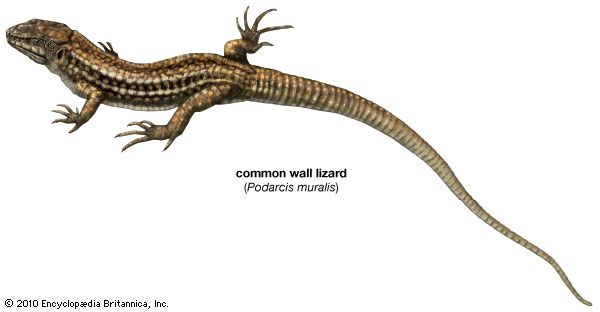
In biology, Lacerta is a genus of lizards belonging to the family Lacertidae. While the name was historically used to classify nearly all known lizards, it is now restricted to specific Old World forms, such as the green lizard and the sand lizard.1
Astronomy
In the night sky, Lacerta is a faint constellation in the northern hemisphere, positioned between the constellations of Andromeda and Cygnus.21
- History: It was introduced by the Polish astronomer Johannes Hevelius in 1687.2
- Characteristics: Because its brightest stars are only of the fourth magnitude, it is often difficult to spot within the Milky Way.21
- Notable Objects: The constellation is home to BL Lacertae, the prototype for a specific class of quasars characterized by jets oriented directly toward Earth.2
What are quasars and why are they important to astronomy?
A quasar (short for “quasi-stellar radio source”) is an extremely luminous astronomical object located at the center of some galaxies. Powered by gas spiraling at high velocity into a supermassive black hole, these objects are among the most distant and energetic in the universe.3456
Why Quasars Are Important
Quasars are vital to astronomy for several reasons:
- Probing the Early Universe: Because they are so luminous, they can be observed at distances of billions of light-years. Observing them allows astronomers to study the universe as it existed shortly after the big bang.35
- Understanding Galaxy Evolution: Quasars represent an active phase in the life cycle of a galaxy. The intense radiation and jets produced during this phase can heat or remove the interstellar medium, effectively shutting down star formation and regulating the growth of the host galaxy.5
- Black Hole Physics: The study of quasars led to the discovery of supermassive black holes. They provide a natural laboratory for observing accretion disks and the extreme gravitational forces that govern the centers of massive galaxies.46
How do astronomers name new constellations?
Astronomers do not “name” new constellations today, as the list of 88 recognized constellations was finalized by the International Astronomical Union (IAU) in 1922. Modern constellations are defined as specific areas of the sky rather than just patterns of stars, with boundaries established in 1930 based on right ascension and declination.9
Historically, naming was a cultural process rather than a scientific one:
- Ancient Origins: Early constellations were named by Mesopotamian and Greek observers to symbolize religious, mythological, or natural phenomena.9
- Age of Exploration: As European astronomers mapped the southern sky in the 16th–18th centuries, they added new constellations. These were often named after animals (e.g., Tucana), scientific instruments, or artistic tools (e.g., Microscopium).9
- Systematization: Astronomers like Johannes Hevelius and Nicolas Louis de Lacaille filled in gaps between existing groups, often using their own naming conventions.9
What are some other constellations located in the northern sky?
In addition to Ursa Major, the northern sky contains many other constellations. While the International Astronomical Union recognizes 88 constellations in total, several prominent ones are located in the northern celestial hemisphere.
Some notable northern constellations include:
- Camelopardalis: One of the constellations invented by Petrus Plancius in the late 16th century.11
- Monoceros: Another northern constellation introduced by Plancius.11
- Columba: Also devised by Plancius as part of his additions to the northern sky.11
- Sextans: Added by the astronomer Johannes Hevelius in 1687 to fill gaps between more prominent star groups.119
These constellations, along with others like Leo and Pegasus, are now defined as specific, unambiguous regions of the sky rather than just patterns of stars.119
Sources
- Lacerta — Encyclopædia Britannica
- Lacerta — Merriam-Webster
- Quasar — Encyclopædia Britannica
- Quasar - Evolution of quasars — Encyclopædia Britannica
- Supermassive black hole — Encyclopædia Britannica
- Quasar - Physical structure of quasars — Encyclopædia Britannica
- Quasar - Discovery of quasars — Encyclopædia Britannica
- BL Lacertae object — Merriam-Webster
- Constellation — Encyclopædia Britannica
- Johann Bayer — Encyclopædia Britannica
- Ursa Major — Encyclopædia Britannica
- Astronomical map - New constellations: 16th–20th century — Encyclopædia Britannica
- Scorpius: Top Questions — Encyclopædia Britannica
Published on · 3 min read