Lachlan River
The Lachlan River is a major waterway located in New South Wales, Australia. It rises in the Great Dividing Range, specifically 8 miles (13 km) east of…
What is the geographical location and length of the Lachlan River in New South Wales, Australia?
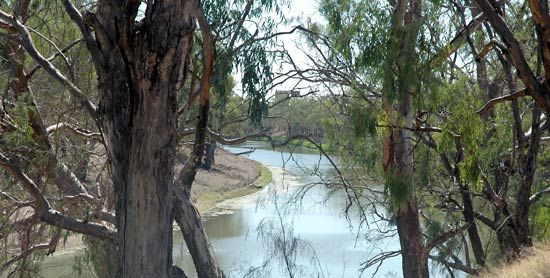
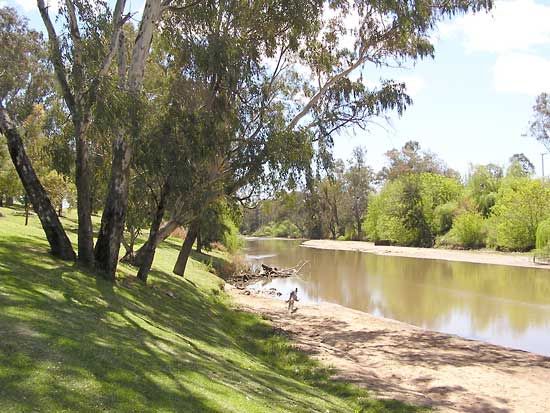
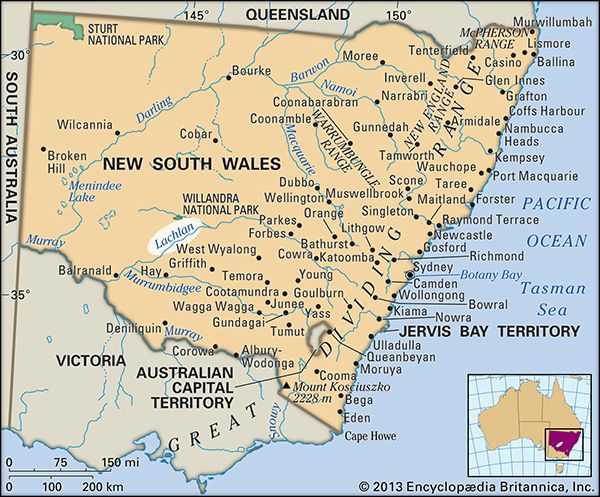
The Lachlan River is a major waterway located in New South Wales, Australia. It rises in the Great Dividing Range, specifically 8 miles (13 km) east of Gunning. From there, the river flows northwest, passing through towns such as Cowra, Forbes, and Condobolin, before turning southwest past Lake Cargelligo and Hillston to join the Murrumbidgee River.1
While some sources suggest a length of approximately 800 miles (1,287 km), the main stream of the Lachlan River is officially recorded as being about 930 miles (1,500 km) long. It serves as a vital water source for the region’s wheat and sheep industries, though it can occasionally run dry during periods of severe drought.21
What is the origin and meaning of the name ‘Lachlan River’?
The Lachlan River was named in honor of Lachlan Macquarie, who served as the governor of New South Wales from 1810 to 1821. The river was explored in 1815 by the surveyor George William Evans, who bestowed the name upon the waterway during his expedition.2
The name “Lachlan” itself is of Scottish Gaelic origin, historically meaning “land of the lochs” or “warrior from the land of lakes.” While the river is a significant geographical feature in Australia, its naming reflects the colonial practice of commemorating prominent British officials of the era.2
What role does the Lachlan River play in the Murray-Darling Basin system?
The Lachlan River is a vital component of the Murray-Darling Basin system, serving as the chief tributary of the Murrumbidgee River1. Rising in the Great Dividing Range, the river drains a basin of 32,700 square miles (84,690 square km) and flows westward across the slopes and plains of New South Wales.13
Within the broader system, the Lachlan contributes to the inland water network that eventually feeds into the Murray River and the Darling River. The river joins the Murrumbidgee between Maude and Balranald, approximately 130 miles from the Murrumbidgee’s own confluence with the Murray.314
The Lachlan plays a significant economic role by supporting the region’s wheat and sheep industries. Like other major interior rivers, its flow is managed through dams and weirs—such as the Wyangala Reservoir—to facilitate irrigation and mitigate the impacts of Australia’s variable rainfall and periodic droughts.13
We could dive deeper into the specific irrigation infrastructure of the Murray-Darling Basin or explore the environmental challenges facing these inland river systems.
How does the Lachlan River contribute to the local ecosystem and environment?
The Lachlan River serves as a critical environmental and economic artery within the interior of New South Wales. By draining a basin of 32,700 square miles (84,690 square km), the river system supports diverse landscapes, ranging from the slopes of the Great Dividing Range to the expansive western plains.14
Environmentally, the river acts as a perennial water source that sustains regional biodiversity, though its flow is highly sensitive to Australia’s variable climate. In severe drought years, the river may run dry, highlighting the fragility of the local ecosystem. To manage these fluctuations, the Wyangala Reservoir and various weirs have been constructed to regulate water levels. These structures are essential for mitigating the impacts of drought and ensuring a consistent water supply for the surrounding environment and agricultural activities, such as wheat and sheep farming.14
As a major tributary of the Murrumbidgee River, the Lachlan is integral to the broader Murray-Darling Basin network, which relies on these west-flowing rivers to sustain inland life and productivity.134
Sources
- Lachlan River — Encyclopædia Britannica
- Lachlan — Merriam-Webster
- New South Wales - Drainage — Encyclopædia Britannica
- Murrumbidgee River — Encyclopædia Britannica
Published on · 3 min read