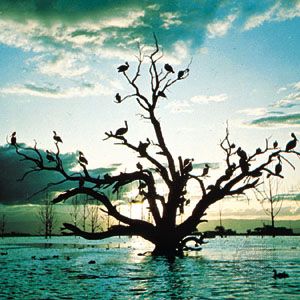
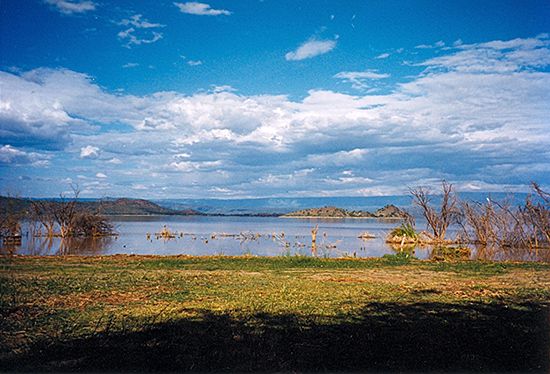
Lake Baringo
The provided search results do not contain specific information regarding the seasonal fluctuations of the water level of Lake Baringo.
How does the water level of Lake Baringo fluctuate throughout the year?
The provided search results do not contain specific information regarding the seasonal fluctuations of the water level of Lake Baringo.
While the data notes that East African lakes are generally sensitive to climatic variations and that Lake Baringo is a freshwater lake believed to have subterranean outlets, it does not provide a breakdown of its annual water level patterns.
What is the geographical location and size of Lake Baringo in Kenya?
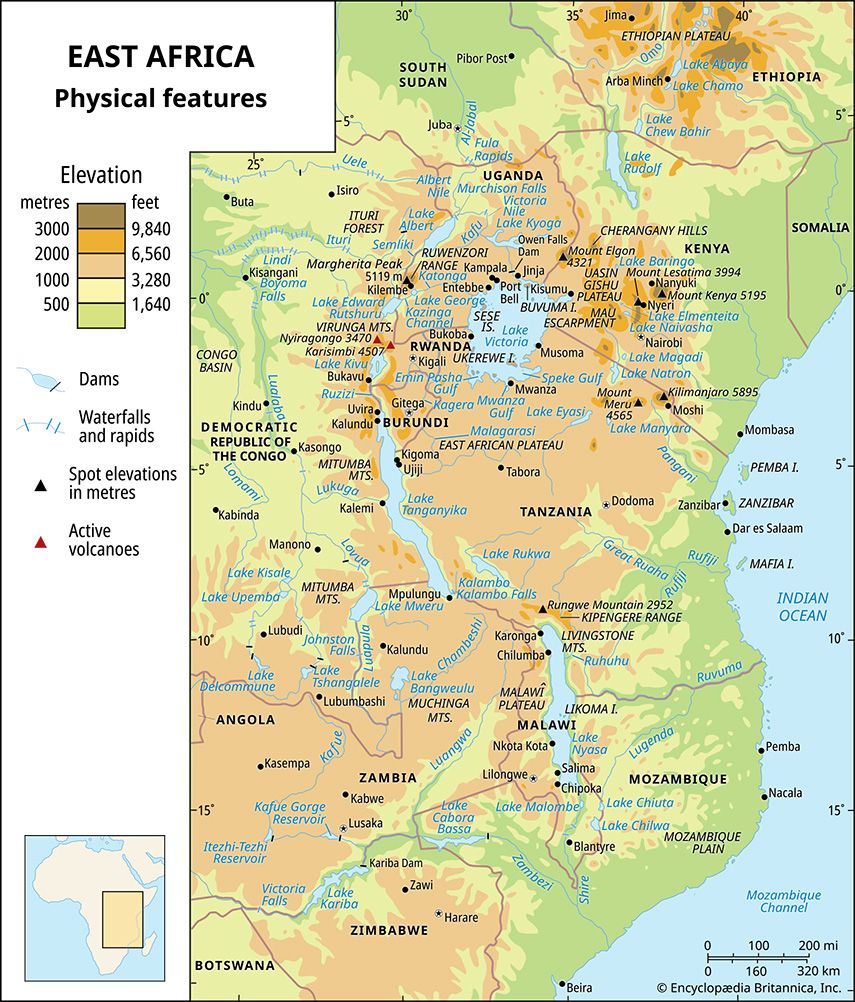
Lake Baringo is located in west-central Kenya, situated 3,200 feet (975 m) above sea level within the Great Rift Valley. It lies specifically to the east of the Kamasia (Ilkamasya) Hills.1
The lake covers an area of approximately 50 square miles (129 square km). Its physical dimensions include a length of 11 miles (18 km) and a width of 5 miles (8 km), with an average depth of 17 feet (5 m).1
How do the local Njemps and Tugen communities interact with and utilize Lake Baringo?
The Njemps (also referred to as Njamus) and the Tugen (Kamasya) peoples of the Baringo basin maintain a traditional lifestyle closely tied to the lake’s resources. Their primary interactions with Lake Baringo involve three main activities:
- Fishing: The communities rely on the lake to catch various species of tilapia, a type of perchlike fish, which serves as a vital food source.1
- Livestock Herding: The surrounding basin provides essential grazing land for their cattle, which is a cornerstone of their local economy.1
- Agriculture: In addition to fishing and herding, these communities cultivate crops in the fertile areas surrounding the lake, particularly near the alluvial flats on its southern border.1
These practices reflect a long-standing adaptation to the environment of the Great Rift Valley, where the lake acts as a central hub for both sustenance and agricultural activity.1
We could dive deeper into the ecological significance of the lake’s wildlife, such as its hippopotamuses and crocodiles, or explore the history of the region since the arrival of European explorers.
Are there any conservation efforts or protected areas associated with Lake Baringo?
Sources
- Lake Baringo — Encyclopædia Britannica
- East African lakes - Geology, climate, and hydrology — Encyclopædia Britannica
- Kenya - Relief — Encyclopædia Britannica
Published on · 2 min read