Lake Cuitzeo
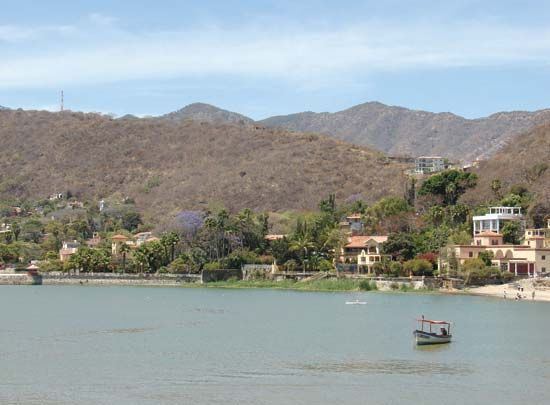
Lake Cuitzeo is a lake situated in the state of Michoacán in south-central Mexico. Positioned on the Mesa Central at an elevation of 5,974 feet (1,821…
What is Lake Cuitzeo?
Lake Cuitzeo is a lake situated in the state of Michoacán in south-central Mexico. Positioned on the Mesa Central at an elevation of 5,974 feet (1,821 metres) above sea level, the lake spans approximately 31 miles (50 km) in length.1
While its surface area fluctuates based on rainfall, it typically covers about 160 square miles (410 square km). Located 19 miles (31 km) north of Morelia, the state capital, the lake serves as a popular resort destination and is well-connected by both highway and railroad within its surrounding agricultural region.1
How does the climate in Michoacán affect the lake’s water levels?
The water levels of Lake Cuitzeo are directly influenced by the local climate, specifically through the balance of precipitation and evaporation.12
In general, lake levels rise and fall in response to seasonal meteorological events. Periods of high precipitation typically lead to a rise in water levels, while seasons characterized by high evaporation rates cause the levels to fall. Because the lake is located in a region of Michoacán that experiences varying climatic conditions—ranging from semiarid highlands to more humid areas—these fluctuations are a natural part of the lake’s hydrologic cycle.123
While specific long-term records for Lake Cuitzeo’s water budget are not detailed in the provided data, the general principle for such lakes is that their net water balance is determined by these periodic inputs and outputs. When precipitation is abundant, the lake expands, whereas drought conditions or high evaporation can significantly reduce its surface area.21
What kinds of plants and animals live in or near Lake Cuitzeo?
Sorry, the Britannica knowledge base does not contain information regarding the specific plants and animals that live in or near Lake Cuitzeo.
Why is the Mesa Central region important for agriculture in Mexico?
The Mesa Central is a vital agricultural region in Mexico due to its favorable environmental conditions, which include a temperate climate, relatively abundant rainfall, and fertile alluvial and volcanic soils. These factors allow the region to support extensive farming and cattle grazing in its drier basins.5
Key aspects of its agricultural importance include:
- Crop Diversity: The region produces a variety of significant crops, including corn (maize), beans, wheat, sugarcane, vegetables, peanuts, and strawberries.56
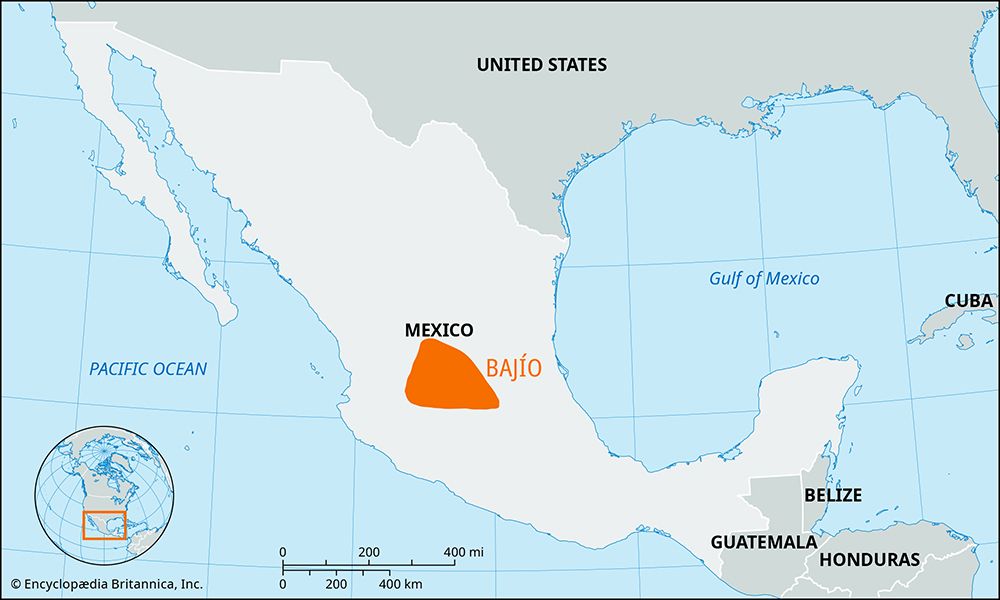
- The Bajío: Located within the Mesa Central, the Bajío has traditionally been considered the “breadbasket of Mexico” due to its high productivity and proximity to major urban markets.6
- Specialized Cultivation: The region is known for the cultivation of maguey, an agave plant that thrives on rocky, infertile soils and is used to produce traditional beverages like pulque.6
- Historical Context: Following the land reforms of the 1930s, the hacienda system was largely replaced by smallholdings and cooperative ejidos, which continue to contribute to the region’s agricultural output.6
Sources
- Lake Cuitzeo — Encyclopædia Britannica
- lake - Water level fluctuations — Encyclopædia Britannica
- Michoacán — Encyclopædia Britannica
- Sahuayo — Encyclopædia Britannica
- Mesa Central — Encyclopædia Britannica
- Mexico - Agriculture — Encyclopædia Britannica
Published on · 2 min read