Maguey
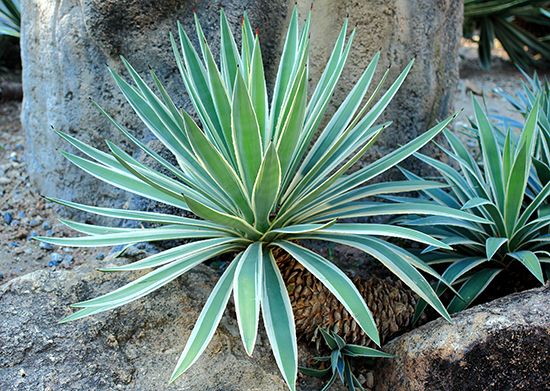
Maguey is a term used to describe several plants within the Agave genus, most notably Agave americana, as well as the leaf fiber extracted from them. In…
What is Maguey?
Maguey is a term used to describe several plants within the Agave genus, most notably Agave americana, as well as the leaf fiber extracted from them. In Mexico, the name is frequently used interchangeably with agave.123
These plants have held significant ethnobotanical importance for Indigenous American peoples for millennia. Historically, the fibrous interior and leathery exterior were used to create rope, cloth, sandals, and traditional paper. The fibers are categorized as “hard” or “leaf” fibers, which are coarse, stiff, and primarily utilized for cordage.324
Beyond their utility as a fiber source, maguey plants are culturally and economically vital:
- Culinary and Spirits: The heart of the plant can be roasted and eaten, or its sap can be fermented and distilled to produce mezcal or used to make pulque.32
- Sweeteners: The plant is a primary source of agave nectar.2
How do agave plants adapt to survive in dry, desert environments?
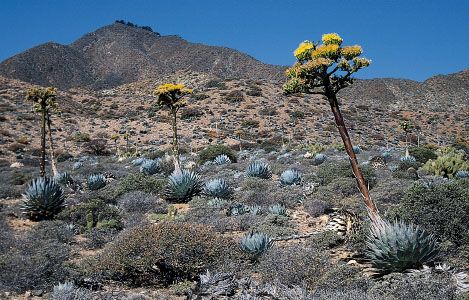
Agave plants have evolved several specialized adaptations to thrive in the arid and semiarid environments of the Americas. Their survival strategies primarily focus on water conservation and efficient resource management.
Crassulacean Acid Metabolism (CAM)
The most significant physiological adaptation in agaves is crassulacean acid metabolism (CAM), a specialized photosynthetic pathway. Unlike most plants that open their stomata during the day, agaves keep theirs closed during hot, dry daylight hours to minimize water loss through transpiration. Instead, they open their stomata at night to take in carbon dioxide, which is then stored as organic acids and processed for photosynthesis during the following day.5367
Succulence and Morphology
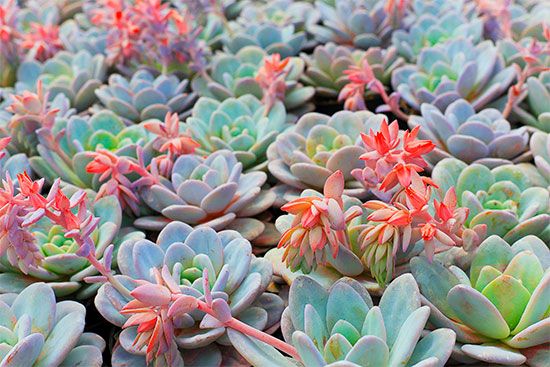
Agaves are succulent plants, meaning they possess thick, fleshy tissues designed for water storage. In agaves, this water is stored primarily in their large, leathery leaves. These leaves often feature a high volume-to-surface ratio, which helps reduce the area exposed to drying conditions.538
Xeromorphic Features
As xerophytes, agaves exhibit various structural modifications to prevent water loss, including:
- Protective Coatings: A thick layer of epicuticular wax or mucilage often covers the epidermis to seal in moisture.8
- Spines: Most species bear spines along the leaf edges and tips, which provide protection and can help reduce airflow around the leaf surface.3
- Root Systems: Like many succulents, they utilize broad or deep root systems to efficiently capture available moisture from their environment.5
What is the difference between pulque and distilled spirits like mezcal?
The primary difference between pulque and distilled spirits like mezcal lies in their production methods and alcohol content.
Production Process
- Pulque: This is a fermented beverage made from aguamiel (“honey water”), which is the raw sap collected from the basin of a mature agave plant. The sap is fermented in barrels for several days, often with the addition of previously fermented pulque to accelerate the process. It is consumed unaged and still contains suspended yeast cells.9
- Mezcal: This is a distilled spirit. Production begins by roasting the heart of the agave plant (the piña) over hot rocks in earthen pits, which releases natural sugars and imparts a smoky flavor. The roasted agave is crushed, mixed with water and yeast to ferment, and then distilled at least twice.2
Key Characteristics
- Appearance and Flavor: Pulque is a cloudy, whitish liquid with a sour, buttermilk-like flavor. In contrast, mezcal is a clear- to gold-colored liquor, often characterized by its smoky profile.92
- Alcohol Content: Pulque typically has an alcohol content of about 6 percent. Distilled spirits like mezcal and tequila are significantly stronger, generally containing 40–50 percent alcohol.910
Why did the Aztec people consider the agave plant to be sacred?
The Aztec people held the agave plant in high regard, considering it to be sacred and incorporating it into various religious ceremonies. This reverence was deeply connected to the plant’s multifaceted role in their daily life and spiritual world.3
The cultural and religious significance of the agave was tied to several key factors:
- Divine Association: The plant was linked to the “400 Rabbits” (Centzon Totochtin), a group of minor deities associated with crops and fertility. Among these, Ometochtli was specifically revered as the god of octli (the fermented drink now known as pulque), while Tepoztécatl was honored as the god of drunkenness.9
- Essential Utility: Beyond its spiritual status, the agave was a vital resource. Its strong fibers were used to create essential items like rope, sandals, and nets, while its “heart” provided food and its sap served as a source of nutrition and the ceremonial beverage pulque.31
- Agricultural Integration: The Aztecs utilized agave plants for practical land management, planting them along terraces to help control soil erosion on the sloping terrain of their basin homeland.12
Sources
- maguey — Encyclopædia Britannica
- mezcal — Encyclopædia Britannica
- agave — Encyclopædia Britannica
- Leaf fiber — Encyclopædia Britannica
- Succulent — Encyclopædia Britannica
- Photosynthesis - Carbon fixation via crassulacean acid metabolism (CAM) — Encyclopædia Britannica
- Plant - Specific variations in photosynthesis — Encyclopædia Britannica
- Angiosperm - Leaves — Encyclopædia Britannica
- Pulque — Encyclopædia Britannica
- pulque — Merriam-Webster
- tequila — Encyclopædia Britannica
- Aztec religion — Encyclopædia Britannica
- Pre-Columbian civilizations - Aztec religion — Encyclopædia Britannica
- Pre-Columbian civilizations - Deities — Encyclopædia Britannica
- Pre-Columbian civilizations - Agriculture — Encyclopædia Britannica
Published on · 4 min read