Lake Ellesmere
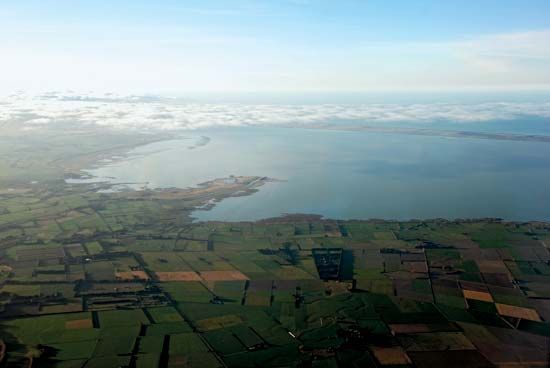
Lake Ellesmere, also known by its Maori name Waihora (meaning "wide waters"), is a coastal lagoon located on the eastern South Island of New Zealand.
What is Lake Ellesmere?
Lake Ellesmere, also known by its Maori name Waihora (meaning “wide waters”), is a coastal lagoon located on the eastern South Island of New Zealand.1
Situated just west of the Banks Peninsula, the lake covers approximately 70 square miles (180 square km) and is relatively shallow, with a maximum depth of 7 feet (2 m). It is separated from the Pacific Ocean by the Kaitorete Spit, a gravel formation created by erosion from the Canterbury Plain. Because there is no natural outlet, an artificial opening is periodically dug at Taumutu to manage water levels and prevent flooding in nearby agricultural areas. The lake is brackish and serves as a significant habitat for large populations of waterfowl.1
What is a coastal lagoon?
A coastal lagoon is an area of relatively shallow, quiet water situated in a coastal environment that maintains access to the sea but is separated from open marine conditions by a barrier. These barriers are typically formed by wave-built features, such as sandbars or barrier islands, or by coral reefs or barrier islands, or by coral reefs.2
There are two primary types of lagoons:
- Barrier island lagoons: These are typically found along low-energy coasts where abundant sediment allows for the construction of protective barriers. They are often characterized by fine-grained sedimentation and, in many cases, brackish marshes.3
- Coral lagoons: These are restricted to tropical regions and consist of quiet waters surrounded by atoll reefs or protected by barrier reefs.24
Lagoons are highly productive ecosystems that support a wide variety of flora and fauna. They are widely distributed globally, estimated to constitute about 13 percent of the world’s coastline, and are most common on coasts with moderate to low tidal ranges3.2
How does the Kaitorete Spit form?
The Kaitorete Spit is a significant gravel formation that isolates Lake Ellesmere from the Pacific Ocean. Its formation is driven by the accumulation of materials—specifically gravel—that have been eroded from the Canterbury Plain. These materials are subsequently transported northward along the coast by shore currents, eventually depositing to form the barrier spit.1
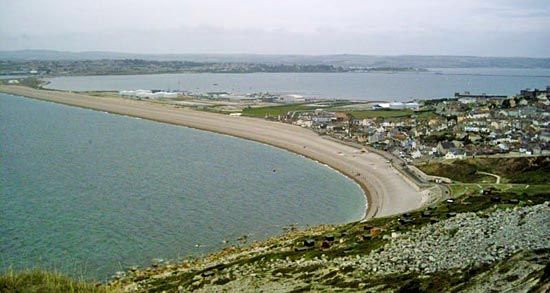
This process is a classic example of how material carried alongshore can develop into a bay-mouth barrier, effectively enclosing a lagoon. Unlike some barriers formed primarily of sand, the Kaitorete Spit is composed of shingle (pebbles), similar to other coastal features like Chesil Beach in England.4
Why is the lake’s water brackish?
Lake Ellesmere is considered brackish because it is a coastal lagoon where the salinity is influenced by the balance between freshwater runoff and seawater influx.17
The lake receives significant freshwater runoff from a 745-square-mile basin, primarily through the Selwyn River. In general, lagoons are classified as brackish when they receive substantial freshwater input, which dilutes the salinity compared to the open ocean. While the Kaitorete Spit isolates the lake from the Pacific, an artificial opening is periodically dug at Taumutu to manage water levels. This opening allows for a controlled exchange of water, which can introduce saline marine water into the system, contributing to the lake’s brackish nature.17
Sources
- Lake Ellesmere — Encyclopædia Britannica
- lagoon — Encyclopædia Britannica
- lagoon - Barrier island lagoons — Encyclopædia Britannica
- lagoon - Waves , tides, and surf — Encyclopædia Britannica
- lagoon - Coral lagoons — Encyclopædia Britannica
- lagoon - Storms and catastrophic events — Encyclopædia Britannica
- lagoon - Water temperature and salinity — Encyclopædia Britannica
- brackish — Merriam-Webster
Published on · 2 min read