Lake Eucumbene
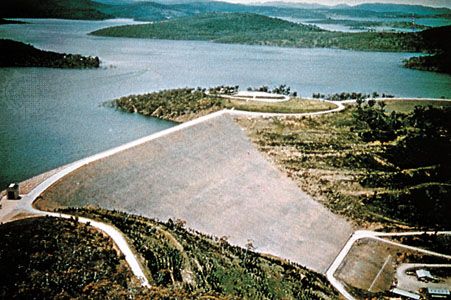
Lake Eucumbene is one of Australia’s largest reservoirs, located in the Eastern Highlands of New South Wales. Situated 55 miles southwest of Canberra, it…
What is Lake Eucumbene?
Lake Eucumbene is one of Australia’s largest reservoirs, located in the Eastern Highlands of New South Wales. Situated 55 miles southwest of Canberra, it serves as the primary storage facility for the Snowy Mountains Hydroelectric Scheme.1
The reservoir is created by a 381-foot-high dam completed in 1958. It is fed by the Eucumbene, Upper Murrumbidgee, and Snowy rivers. Through a complex system of pressure tunnels, the water is regulated to support electric power stations along the Tumut and Murray rivers. Beyond its industrial utility, the lake is a popular destination for tourism and fishing.1
How does the Snowy Mountains Scheme generate electricity?
The Snowy Mountains Hydro-electric Scheme generates electricity by utilizing the high elevation of the Australian Alps to create gravitational potential energy. The process involves several key engineering components:23
- Water Impoundment: Water from the Snowy, Eucumbene, and other rivers is collected and stored in high-elevation reservoirs, such as Lake Eucumbene and Tumut Pond Reservoir.234
- Diversion: Through a vast network of aqueducts and tunnels, water is diverted under the mountains to reach strategic locations.23
- Power Generation: The water is channeled through these tunnels to drive turbines at various hydroelectric power stations. For instance, the Tumut River system alone features four power stations that capture energy as water moves through the reservoirs and dams.34
- Downstream Use: After passing through the turbines to generate electricity, the water is discharged into the Murray and Murrumbidgee rivers, where it is subsequently used for irrigation.34
We could dive deeper into the environmental impact of these diversions or the history of the project’s construction.
What are the environmental impacts of large dams?
Large dams significantly transform natural environments, often leading to complex and contentious ecological and social consequences. Key environmental and social impacts include:
- Disruption of Aquatic Ecosystems: Dams act as physical barriers that impede the migration of spawning fish, such as salmon, often leading to dramatic population declines or the threat of extinction. While technologies like fish passes (ladders and locks) are used to mitigate these effects, their long-term success has been difficult to sustain on many river systems.56
- Sedimentation and Channel Erosion: Reservoirs trap sediment that would otherwise flow downstream, which reduces the reservoir’s storage capacity and shortens its useful life. Conversely, the water released from dams is often “sediment-starved,” which increases its erosive power and causes significant erosion of the stream channel below the dam.78
- Landscape and Habitat Loss: Large-scale projects often inundate vast areas, destroying pristine landscapes, flora, and fauna. This can result in the loss of cultural heritage and the displacement of human populations, sometimes involving the relocation of hundreds of thousands of people.598
- Altered Nutrient Cycles: By preventing seasonal flooding, dams disrupt the natural distribution of nutrient-rich silt, which can force agricultural communities to rely on fertilizers. This chemical runoff can promote harmful algal growth and attract disease-carrying insects.9
What other major rivers are located in the Australian Alps?
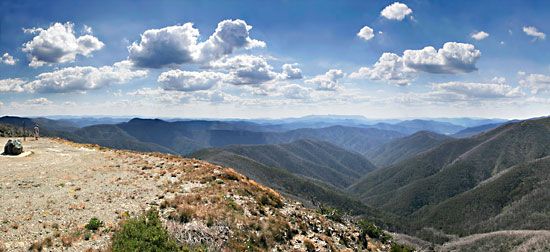
The Australian Alps serve as a critical watershed for several major river systems. The mountains act as a divide, with some rivers flowing inland toward the west and others flowing southeastward toward the coast.11
Key rivers originating in or associated with the Australian Alps include:
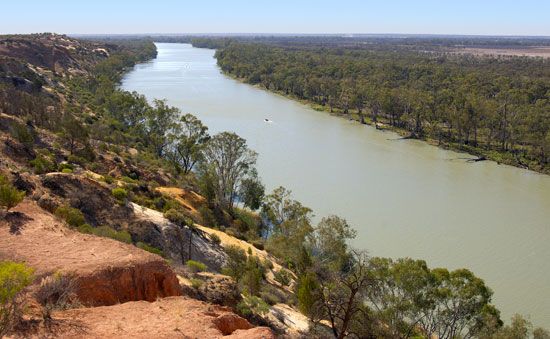
- Murray River: Australia’s principal river, which rises on the slopes of the Snowy Mountains near Mount Kosciuszko and flows westward.23
- Murrumbidgee River: Another major inland-flowing river that rises in the Snowy Mountains.212
- Snowy River: A significant river that rises on the eastern slopes of the Snowy Mountains and flows southeastward to the Bass Strait.213
- Tumut River: A river rising in the Snowy Mountains that plays a vital role in the region’s hydroelectric infrastructure.2
- Tributaries: The Snowy River system is further fed by several tributaries, including the Eucumbene, Thredbo, and Bombala rivers in New South Wales, and the Buchan River in Victoria.13
Sources
- Lake Eucumbene — Encyclopædia Britannica
- Snowy Mountains — Encyclopædia Britannica
- Snowy River — Encyclopædia Britannica
- Tumut River — Encyclopædia Britannica
- dam - Rise of environmental and economic concerns — Encyclopædia Britannica
- dam - Fish passes — Encyclopædia Britannica
- Akosombo Dam — Encyclopædia Britannica
- dam - Construction techniques — Encyclopædia Britannica
- river - Environments of deposition — Encyclopædia Britannica
- reservoir — Encyclopædia Britannica
- Australian Alps — Encyclopædia Britannica
- Murray River — Encyclopædia Britannica
- New South Wales - Drainage — Encyclopædia Britannica
Published on · 3 min read