Bass Strait
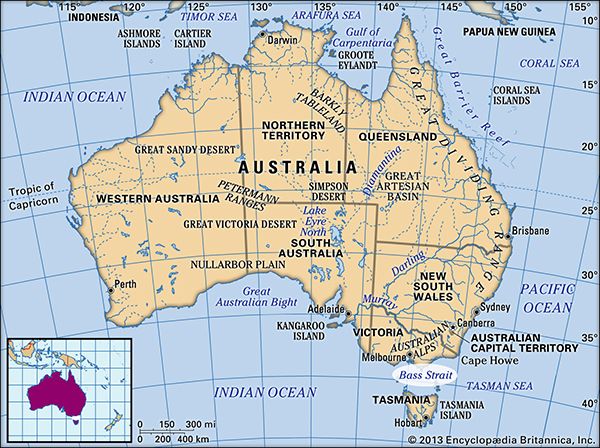
The Bass Strait, a channel separating Victoria, Australia, from Tasmania, serves as a vital hub for several key economic activities:
What are some of the major economic activities associated with the Bass Strait?
The Bass Strait, a channel separating Victoria, Australia, from Tasmania, serves as a vital hub for several key economic activities:
- Petroleum and Natural Gas: The region is a significant site for offshore energy production. Development began following the 1965 discovery of natural gas at the Barracouta field and subsequent oil discoveries at the Halibut and Kingfish fields in 1967. Production in the area, particularly within the Gippsland Basin at the eastern end of the strait, remains a major economic contributor.12
- Transportation and Shipping: The strait is a critical maritime corridor. The state government operates a passenger ferry service connecting Devonport and Melbourne, facilitating essential travel and trade between Tasmania and the mainland. Additionally, the strait is traversed by important shipping lanes.32
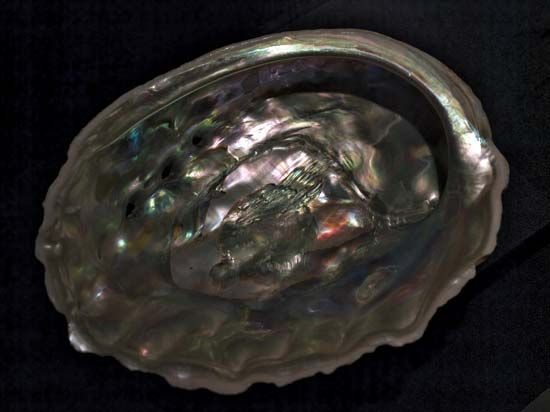
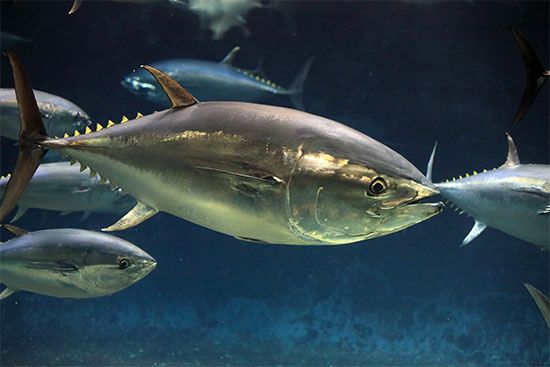
- Fisheries: The temperate waters of the southeast and the area around Tasmania support a commercial fishing industry. These marine ecosystems are significant for both domestic consumption and export, with valuable catches including rock lobsters, abalone, tuna, and various other fin fish and shellfish.42
How does the Bass Strait affect the climate of Tasmania and southern Australia?
The Bass Strait does not independently dictate the climate of Tasmania or southern Australia; rather, its primary influence is as a geographic feature within the broader atmospheric and oceanic systems of the region.
The climate of Tasmania and the surrounding areas is primarily shaped by their location within the belt of strong westerly winds known as the roaring forties. These persistent winds, which sweep across the Southern Ocean, are the dominant factor in the region’s weather patterns and contribute to the storminess often observed in the area.4
While the Bass Strait acts as a channel connecting the Indian Ocean to the Tasman Sea, it is a relatively shallow body of water—typically 180 to 240 feet deep—and does not possess the depth or scale to significantly alter the large-scale oceanic currents or atmospheric circulation that define the temperate climate of Tasmania and southern Australia. Instead, the region’s climate is more directly influenced by the interaction between these westerly winds and the varied topography of the landmasses themselves.415
What role did the Bass Strait play in the early European exploration and settlement of Australia?
The Bass Strait played a pivotal role in the early European exploration of Australia by confirming the geography of the continent and opening new maritime routes. In 1798, the English navigator Matthew Flinders and the surgeon-explorer George Bass proved the existence of the strait, which separates New South Wales from Van Diemen’s Land (now Tasmania).167
Bass had long suspected the strait’s existence based on tidal observations. To confirm this, he and Flinders spent three months circumnavigating Tasmania, a journey that significantly advanced European knowledge of the region’s geography, flora, and fauna. Following this discovery, Flinders successfully persuaded the colonial governor to name the passage Bass Strait in honor of his friend.7
Beyond its geographic significance, the exploration of the surrounding coastal areas by Bass and Flinders—often using a small boat named Tom Thumb—was instrumental in the early European settlement of Australia, as they charted tides and documented resources like coal that were vital to the developing colony.67
How has the Bass Strait influenced the history and development of Tasmania and mainland Australia?
The Bass Strait has been a defining feature in the history and development of both Tasmania and mainland Australia, serving as both a geographic barrier and a vital economic corridor.
Geographic and Historical Significance
Separating Tasmania from the state of Victoria, the Bass Strait was confirmed as a passage in 1798 by Matthew Flinders and George Bass, a discovery that fundamentally altered the understanding of Australian geography. This exploration facilitated early maritime navigation and helped define the insular nature of Tasmania’s development.172
Economic and Modern Development
The strait has become a critical hub for resource extraction and connectivity:
- Energy Resources: Since the 1960s, the discovery of natural gas and oil in the strait has been a cornerstone of regional energy production. Modern infrastructure, including power and natural gas lines, now crosses the strait, supporting the mainland and Tasmanian economies.158
- Transportation: While Tasmania’s insularity once posed significant challenges, the strait is now bridged by essential ferry services between Devonport and Melbourne. Although air travel has largely diminished the historical sense of isolation, the strait remains a vital conduit for trade and tourism.928
Sources
- Bass Strait — Encyclopædia Britannica
- Tasmania - Transportation and telecommunications — Encyclopædia Britannica
- Australia - Forestry and fishing — Encyclopædia Britannica
- Tasman Sea — Encyclopædia Britannica
- Tasmania — Encyclopædia Britannica
- George Bass — Encyclopædia Britannica
- Today in History—February 5: The Life and Disappearance of George Bass — Encyclopædia Britannica
- Bass Strait — Merriam-Webster
- Tasmania - Tasmania since 1950 — Encyclopædia Britannica
Published on · 4 min read