Mount Kosciuszko
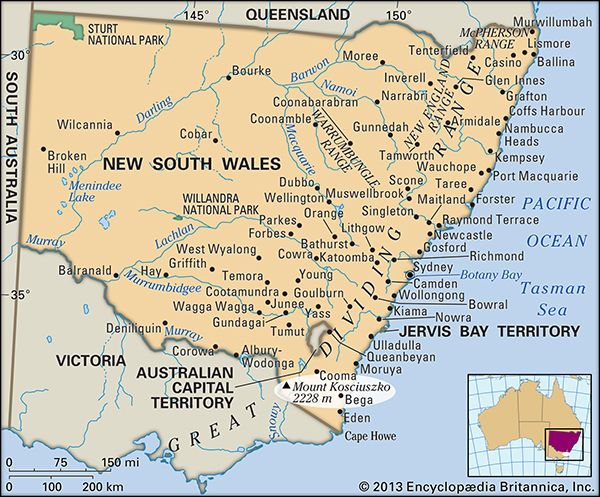
Mount Kosciuszko is the highest peak in Australia, reaching an elevation of 7,310 feet (2,228 metres). It is located within the Snowy Mountains of the…
What is Mount Kosciuszko?
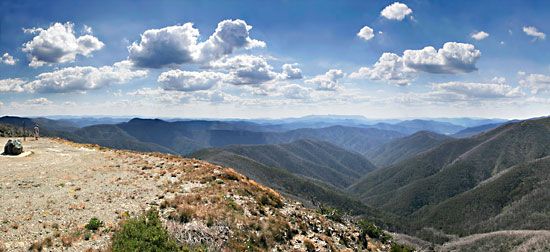
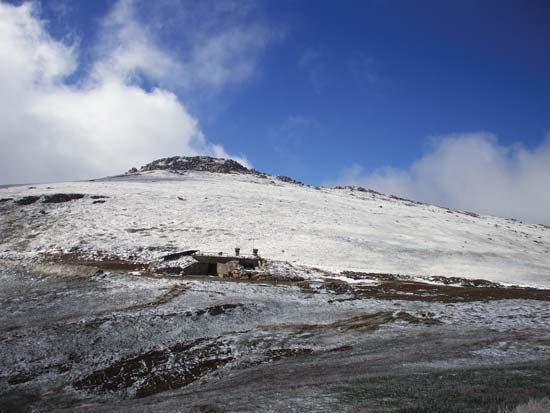
Mount Kosciuszko is the highest peak in Australia, reaching an elevation of 7,310 feet (2,228 metres). It is located within the Snowy Mountains of the Australian Alps in southeastern New South Wales.12
Situated inside Kosciuszko National Park, the mountain is part of a region developed for winter sports and is near other significant peaks, such as Mount Townsend and Mount Twynam. The melting snows from these mountains support the Snowy Mountains Hydro-electric Scheme.1
The peak was named in 1840 by the Polish explorer Paul Strzelecki to honor Tadeusz Kościuszko, a Polish statesman and patriot. It also holds the distinction of being the highest point in the Great Dividing Range.12
Who was Tadeusz Kosciuszko?
Tadeusz Kościuszko (1746–1817) was a prominent Polish military officer and statesman celebrated for his contributions to the American Revolution and his leadership in the struggle for Polish independence.3
American Revolutionary War
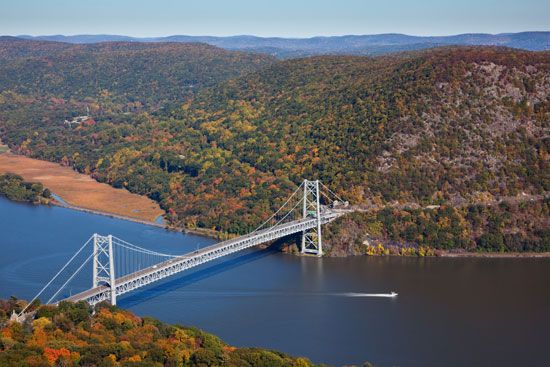
In 1776, Kościuszko traveled to America to support the colonial cause. As an engineer colonel, he was instrumental in planning fortifications, including those at West Point. His strategic work at Fort Ticonderoga and along the Hudson River contributed to the British surrender at Saratoga. He later served under Nathanael Greene in the South and was eventually promoted to brigadier general in the U.S. Army.3
Leadership in Poland
Returning to Poland, Kościuszko led a national insurrection in 1794 against occupying Russian and Prussian forces. He championed social reform, notably issuing the Manifesto of Połaniec to suspend serfdom and improve conditions for peasants. Despite his tactical successes, including the defense of Warsaw, the uprising ultimately failed, leading to the final partition of Poland.3
A principled figure, Kościuszko was known for his commitment to liberty; he famously used his American estate to free and educate enslaved people. His legacy is honored globally, including in the naming of Mount Kosciuszko in Australia.31
What is the Snowy Mountains Hydro-electric Scheme?
The Snowy Mountains Hydro-electric Scheme is a massive hydroelectric project constructed between 1949 and 1974 in the Snowy Mountains of southeastern New South Wales.
Designed to harness the water resources of the Australian Alps, the scheme diverts water from the Murray, Murrumbidgee, Tumut, and Snowy rivers through an extensive network of tunnels and aqueducts. This water is stored in several reservoirs, most notably Lake Eucumbene, to provide both hydroelectric power and irrigation for the region. The project encompasses 16 dams and currently maintains a power generation capacity of 3,740 megawatts.4
We could dive deeper into the environmental impact of these diversions or explore the history of the workers who built the scheme.
What kind of wildlife lives in the Australian Alps?
The provided search results do not contain specific information regarding the wildlife unique to the Australian Alps. While the search results discuss the geography of the Australian Alps and the general flora and fauna of Victoria and the Great Dividing Range, they do not detail the specific animal species that inhabit the alpine environment of this region.
It is important to note that the information provided about animals such as the ibex, chamois, and marmots refers to the European Alps, not the Australian Alps.5
Sources
- Mount Kosciuszko — Encyclopædia Britannica
- Kosciusko, Mount — Merriam-Webster
- Tadeusz Kościuszko — Encyclopædia Britannica
- Snowy Mountains — Encyclopædia Britannica
- Australian Alps — Encyclopædia Britannica
- Alps - Plant and animal life — Encyclopædia Britannica
- Exploring 7 of Earth’s Great Mountain Ranges - Great Dividing Range — Encyclopædia Britannica
- Victoria - Plant and animal life — Encyclopædia Britannica
Published on · 2 min read