Lake Maggiore
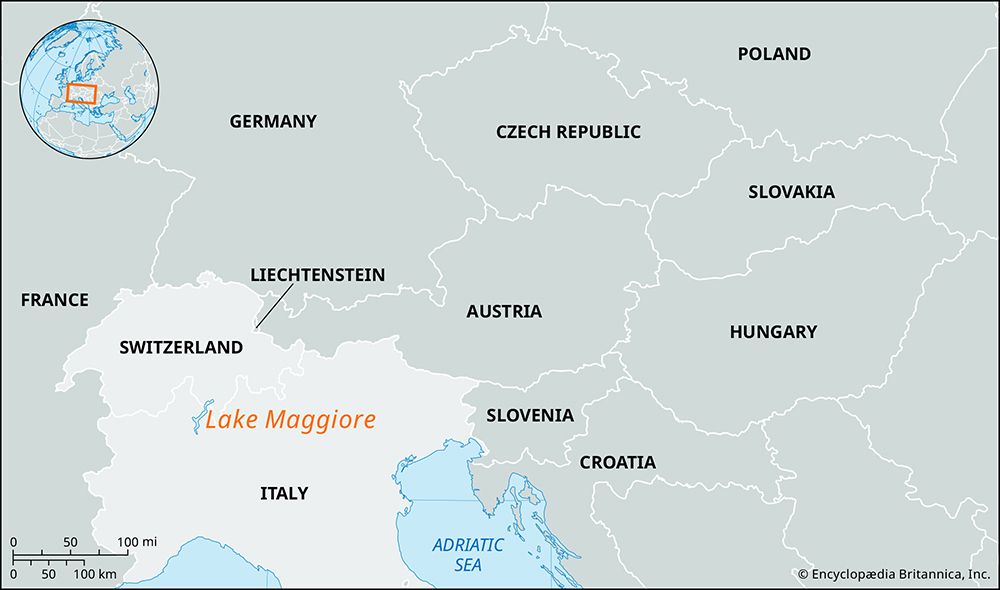
Lake Maggiore is surrounded by several notable towns and cities, primarily serving as popular tourist and health resorts due to the region's mild climate.
What are the major towns and cities situated along the shores of Lake Maggiore?
Lake Maggiore is surrounded by several notable towns and cities, primarily serving as popular tourist and health resorts due to the region’s mild climate.1
The major settlements along the lake include:
- Western Shore (Piedmont, Italy): This side is home to Stresa, a well-known resort town, as well as Verbania, which was formed by the union of Pallanza and Intra. Other significant towns on this shore include Arona and Cannobio.123
- Eastern Shore (Lombardy, Italy): The towns of Luino and Laveno are situated along the eastern coastline.1
- Northern End (Ticino, Switzerland): The town of Locarno is located at the northern tip of the lake.14
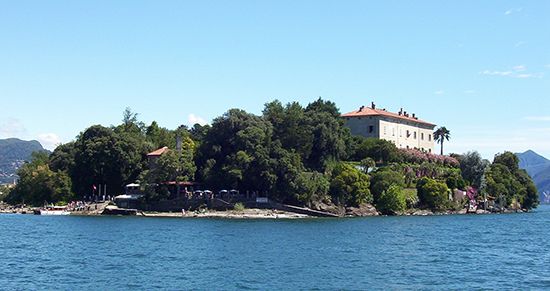
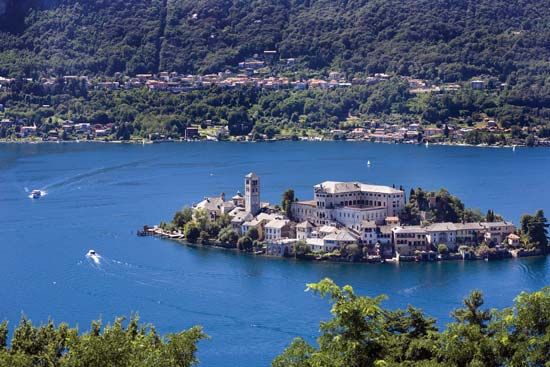
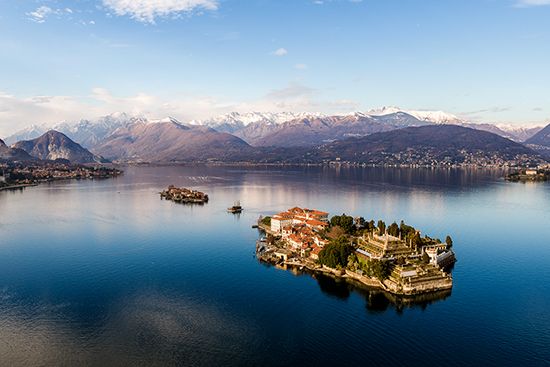
These locations are connected by small steamers that traverse the lake, which is also famous for the Borromean Islands located off the western shore.1
What are some of the popular tourist attractions and activities around Lake Maggiore?
Lake Maggiore offers a variety of attractions and activities centered around its scenic landscape and historic sites.
Popular Attractions and Activities
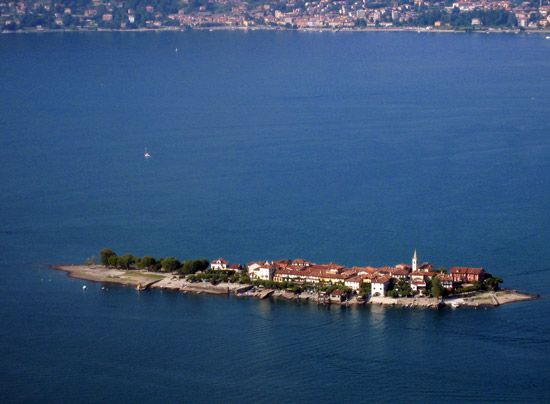
- The Borromean Islands: Located off the western shore near Stresa and Baveno, these islands are a primary destination.16
- Lakeside Exploration: Visitors can travel between the various resort towns—such as Verbania, Locarno, Arona, and Luino—using the small steamers that ply the lake.1
- Outdoor Recreation: The region offers opportunities for fishing, with catches including trout, pike, perch, and shad. Additionally, the area surrounding Mount Mottarone, which rises between Lake Maggiore and Lake Orta, provides scenic vistas and hiking potential.1
What is the origin of Lake Maggiore’s name, and does it have any other names?
The name Lake Maggiore translates to “greater,” a designation that refers to its size in comparison to the neighboring Lake Orta and Lake Varese.1
While the lake is widely known by this name, it is also referred to simply as Maggiore. There are no other common historical or alternative names provided in the current records.7
What are the main geographical features of Lake Maggiore, including its size and depth?
Lake Maggiore is a significant body of water spanning the border between Italy and Switzerland. Its primary geographical features include:
- Dimensions: The lake stretches 34 miles (54 km) in length with a maximum width of 7 miles (11 km). It covers an area of 82 square miles (212 square km).1
- Depth and Elevation: It sits at an elevation of 633 feet (193 meters) above sea level and reaches a maximum depth of 1,220 feet (372 meters).1
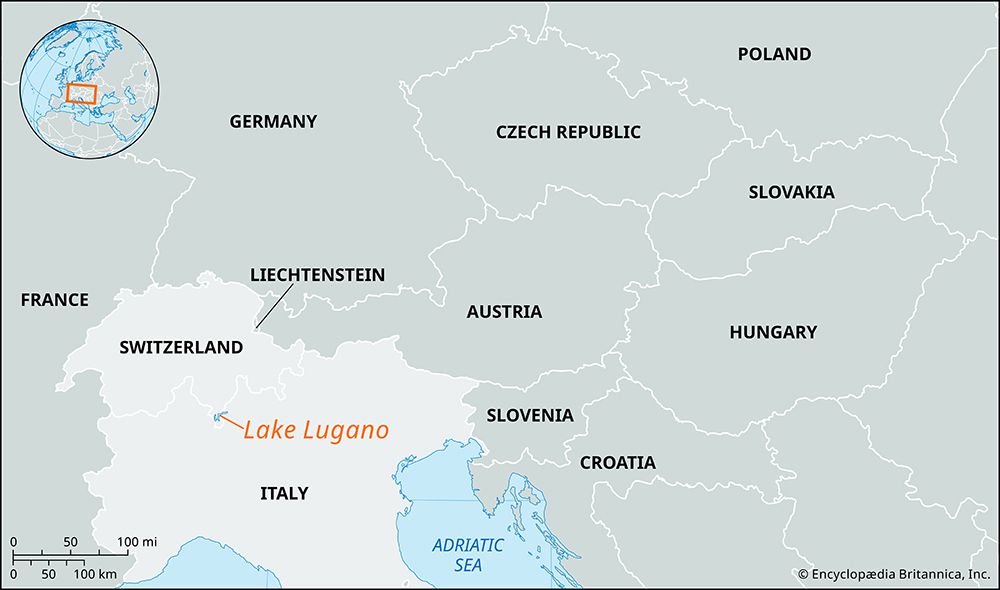
- Hydrology: The Ticino River flows through the lake from north to south. Other major tributaries include the Maggia, the Toce, and the Tresa, which connects it to Lake Lugano.1
- Setting: The lake is bordered by the Swiss Alps to the north and the Lombardian Plain to the south, contributing to its mild climate.1
Sources
- Lake Maggiore — Encyclopædia Britannica
- Verbania — Encyclopædia Britannica
- Locarno — Encyclopædia Britannica
- Stresa — Encyclopædia Britannica
- Lake Lugano — Encyclopædia Britannica
- Borromean Islands — Encyclopædia Britannica
- Maggiore, Lake — Merriam-Webster
Published on · 3 min read