Lake Lugano
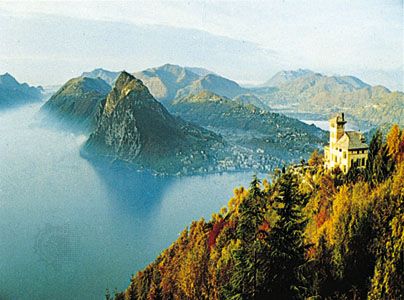
Lake Lugano is a glacial lake situated between Lake Maggiore and Lake Como in the Alps. Spanning 19 square miles (49 square km), the lake is divided between…
What is Lake Lugano?
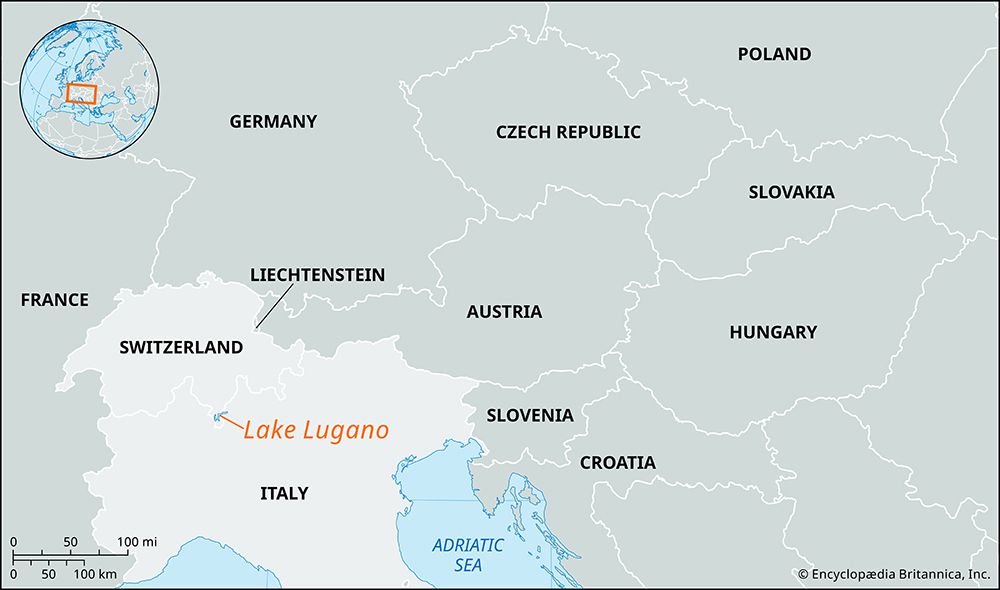
Lake Lugano is a glacial lake situated between Lake Maggiore and Lake Como in the Alps. Spanning 19 square miles (49 square km), the lake is divided between the Ticino canton of Switzerland and the Lombardy region of Italy.12
The lake is characterized by its irregular shape, a maximum depth of 945 feet (288 meters), and steep, wooded shores. It is fed by mountain streams and drained by the Tresa River into Lake Maggiore. A notable feature is the stone dam near Melide, which supports the St. Gotthard railway and road. The largest town on its shores is Lugano, a major center for tourism and finance known for its Italian character and cultural landmarks.13
How do the Alps influence the climate of the region?
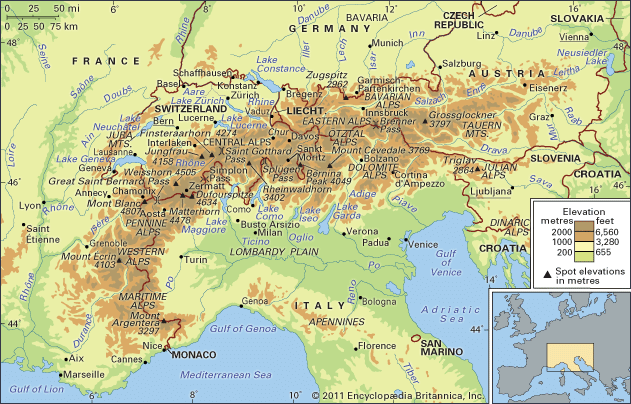
The Alps exert a profound influence on the climate of Europe by acting as a major geographic barrier that separates the marine west-coast climates from the Mediterranean regions of France, Italy, and the Balkans. Because of their arclike shape and significant elevation, they create a unique, highly variable climate characterized by sharp contrasts.41
Key climatic influences include:
- Air Mass Interaction: The region is affected by four primary influences: moist Atlantic air from the west, cold polar air from the north, dry continental air from the east, and warm Mediterranean air from the south.1
- The Foehn Effect: This wind system significantly impacts local temperatures. As air is forced over the mountain crests, it cools and releases precipitation. Upon descending the lee side, the air is compressed and warmed, leading to rapid temperature increases and the quick melting of snow in the affected valleys.15
- Topographic Variation: Elevation and relief create extreme local differences. Valley bottoms are generally warmer and drier than higher elevations, where snow cover can persist for months. Temperature inversions are also common in autumn and winter, often leaving valleys filled with fog and stagnant air while higher altitudes remain sunny and warmer.1
- Barrier Effects: Unlike north-south mountain ranges that block westerly air flow, the east-west orientation of the Alps offers less impediment to general westerly winds, allowing milder maritime conditions to extend further inland.6
What are the characteristics of Lake Maggiore and Lake Como?
Lake Maggiore and Lake Como are two prominent glacial lakes in northern Italy, each defined by distinct physical and geographical characteristics.
Lake Maggiore
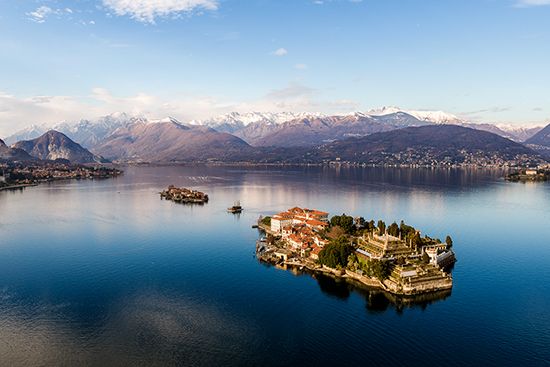
Lake Maggiore is the second-largest lake in Italy, covering 82 square miles (212 square km). It is situated at an elevation of 633 feet (193 meters) and reaches a maximum depth of 1,220 feet (372 meters). The lake is traversed by the Ticino River and is bordered by the Swiss Alps to the north and the Lombardian Plain to the south. It is famous for the Borromean Islands and its mild, warm climate, which supports numerous lakeside resorts like Stresa and Locarno.9
Lake Como
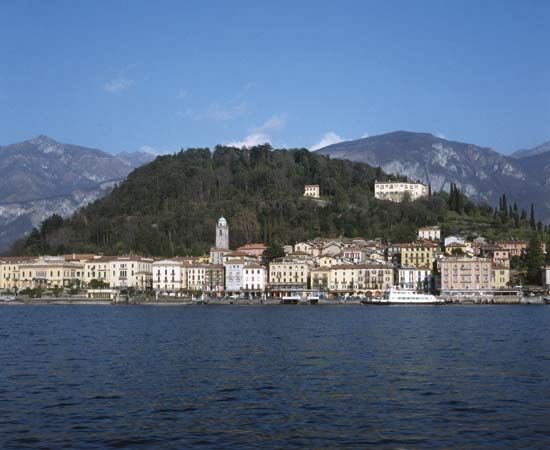
Lake Como covers 56 square miles (146 square km) and lies at an elevation of 653 feet (199 meters). It is notably deeper than Lake Maggiore, with a maximum depth of 1,358 feet (414 meters). The lake is shaped like an inverted “Y” with three distinct branches meeting at the Bellagio Promontory. It is fed by the Adda River and is surrounded by mountains reaching over 8,000 feet. The region is known for its lush vegetation, including olive and pomegranate trees, and its historic villas.9
Why is the St. Gotthard railway line important to Switzerland?
The St. Gotthard railway line is vital to Switzerland because it serves as a primary artery for European trans-Alpine traffic, cementing the country’s key position in continental transit. Its importance is defined by several factors:11
- Strategic Connectivity: The route provides a critical high-speed link between northern and southern Europe, connecting major hubs like Lucerne and Milan, and extending to a mainline connection between Rotterdam and Genoa.1213
- Economic Integration: Historically, the 1882 opening of the original St. Gotthard Tunnel allowed Switzerland to compete with other trans-Alpine routes, fostering economic unification and industrial growth.14
- Modern Capacity: The 2016 completion of the Gotthard Base Tunnel—the world’s longest and deepest railway tunnel—significantly increased transport capacity. By providing a flat, high-speed route, it enables the transit of heavier, longer freight trains, effectively shifting volume from road to rail.1311
- Environmental Benefits: By facilitating this shift to rail, the line helps mitigate the severe air and noise pollution caused by heavy road traffic in sensitive Alpine valleys.1311
Sources
- Lake Lugano — Encyclopædia Britannica
- Lugano, Lake — Merriam-Webster
- Lugano — Encyclopædia Britannica
- Alps — Encyclopædia Britannica
- Alps - Climate of the Alps — Encyclopædia Britannica
- Ticino — Encyclopædia Britannica
- Switzerland - Wind systems — Encyclopædia Britannica
- Atmosphere - Mountain barriers — Encyclopædia Britannica
- Lake Maggiore — Encyclopædia Britannica
- Lake Como — Encyclopædia Britannica
- St. Gotthard Pass — Encyclopædia Britannica
- Gotthard Base Tunnel — Encyclopædia Britannica
- Switzerland - Transportation and telecommunications — Encyclopædia Britannica
- Switzerland - Economic expansion — Encyclopædia Britannica
Published on · 3 min read