Lake Iseo
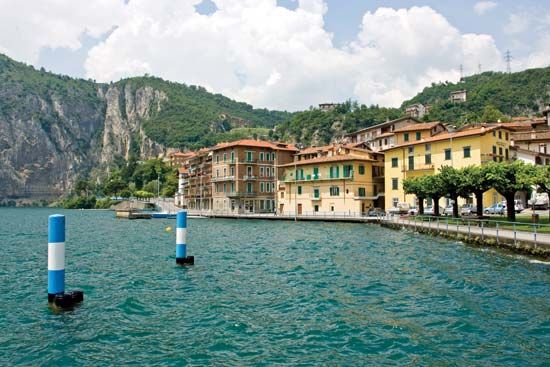
Lake Iseo is situated in the Lombardy region of northern Italy, nestled between the provinces of Bergamo and Brescia at the southern foot of the Alps.
Where is Lake Iseo located in Italy, and what are its key geographical features?
Lake Iseo is situated in the Lombardy region of northern Italy, nestled between the provinces of Bergamo and Brescia at the southern foot of the Alps.1
Geographical Features
- Dimensions and Elevation: The lake sits at an altitude of 610 feet (186 m). It spans 15.5 miles (25 km) in length, reaches a maximum width of 3 miles (5 km), and has a maximum depth of 820 feet (250 m).1
- Hydrology: It is fed by the Oglio River, which enters from the Val Camonica at the northern end near Lovere and exits at Sarnico in the south.1
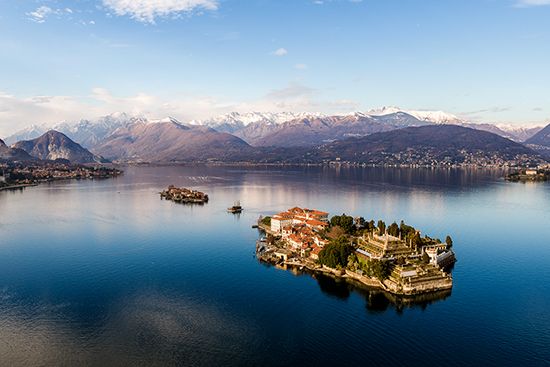
- Islands: The lake features Monte Isola, the largest lacustrine island in Italy, along with the smaller islets of San Paolo and Loreto.1
- Climate and Agriculture: Like other major Alpine lakes, it enjoys a semi-Mediterranean climate, supporting the cultivation of olives, vines, and fruits along its shores.12
What are some of the main towns and attractions around Lake Iseo?
The area surrounding Lake Iseo features several notable towns and historical sites:
- Iseo: Located at the southern end of the lake, this town serves as a popular summer resort for visitors.1
- Lovere: Situated at the northern end of the lake, this town is positioned near the entrance of the Val Camonica, a deep and expansive valley.1
- Sarnico: Found at the southern end of the lake, this town marks the point where the Oglio River exits the basin.1
- Monte Isola: As Italy’s largest lake island, it rises to 1,965 feet (599 m) and is a primary attraction, featuring a chapel at its summit.1
- Islet of San Paolo: Located south of Monte Isola, this site is home to the buildings of a small, disused Franciscan convent.1
- Islet of Loreto: Situated north of Monte Isola, this islet contains a ruined chapel that houses historic frescoes.1
How does Lake Iseo compare in size and depth to other Italian lakes?
Lake Iseo is one of the major glacial lakes of the Italian Alpine foothills, though it is smaller than the largest lakes in the region. It is ranked fourth in size among the primary Italian lakes, following Lake Garda, Lake Maggiore, and Lake Como, and preceding Lake Lugano.1
Size and Depth Comparison
Lake
Surface Area
Maximum Depth
Lake Iseo
24 sq miles (62 sq km)
820 feet (250 m)
Lake Maggiore
82 sq miles (212 sq km)
1,220 feet (372 m)
While Lake Iseo is a significant body of water, it is considerably smaller and shallower than Lake Maggiore, which is the second-largest lake in Italy. Lake Iseo’s dimensions—15.5 miles (25 km) in length and 3 miles (5 km) in width—reflect its status as a smaller, though still prominent, member of the group of lakes formed by Quaternary glacial excavation.241
Are there any notable islands within Lake Iseo, and what is their significance?
Lake Iseo contains three notable islands, each with distinct historical or geographical significance:
- Monte Isola: Located in the center of the lake, this is Italy’s largest lacustrine island, covering an area of 5 square miles (13 square km). It rises to an elevation of 1,965 feet (599 m) and is topped by a chapel.1
- Islet of San Paolo: Situated to the south of Monte Isola, this island is notable for the buildings of a small, disused Franciscan convent.1
- Islet of Loreto: Located to the north of Monte Isola, this islet features a ruined chapel that contains historic frescoes.1
These islands contribute to the unique landscape of the lake, which is situated in the Lombardy region of northern Italy.1
Sources
- Lake Iseo — Encyclopædia Britannica
- Italy - Lakes — Encyclopædia Britannica
- Lake Garda — Encyclopædia Britannica
- Alps - Physiography — Encyclopædia Britannica
- Lake Maggiore — Encyclopædia Britannica
Published on · 3 min read