Borromean Islands
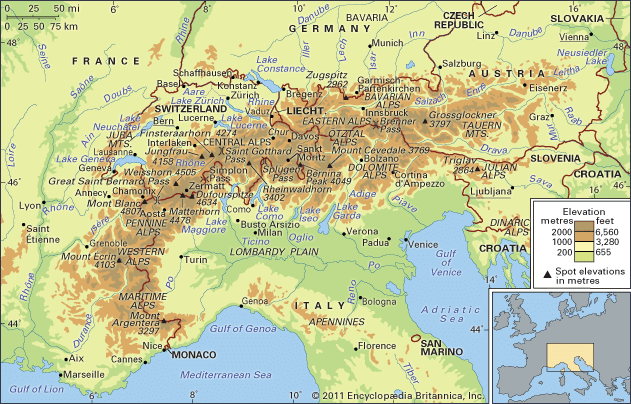
The Borromean Islands are a group of four small islands located in Lake Maggiore in northwestern Italy. Named after the Borromeo family, who have owned them…
What is Borromean Islands?
The Borromean Islands are a group of four small islands located in Lake Maggiore in northwestern Italy. Named after the Borromeo family, who have owned them since the 12th century, these islands are geologic extensions of the Pallanza promontory.1
The group consists of:
- Isola Bella: Famous for its château and elaborate terraced gardens, commissioned by Count Vitaliano Borromeo.1
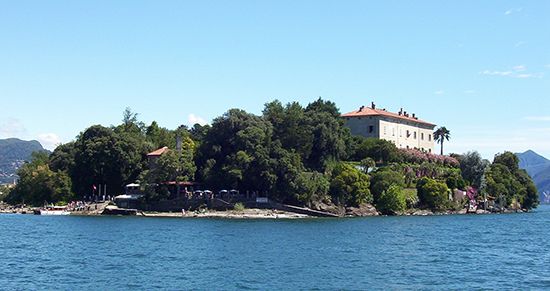
- Isola Madre: The largest of the islands, which features a palazzo and extensive gardens.1
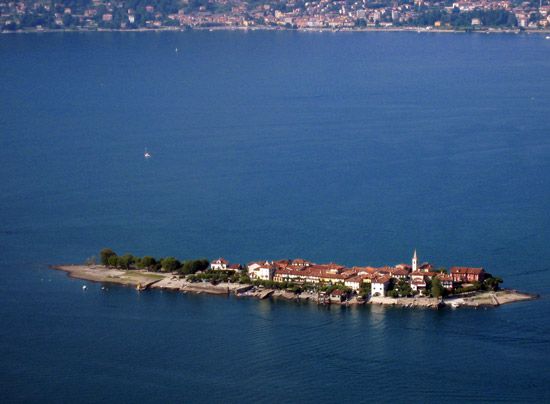
- Isola Superiore (Isola dei Pescatori): The westernmost island, known for its picturesque fishing village.1
- Isola di San Giovanni: The smallest island in the group, located off the coast of Pallanza.1
These islands are situated near the towns of Baveno and Stresa in the Piedmont region.1
What is the history of the Borromeo family?
The Borromeo family is a prominent noble house of Milan with a history spanning several centuries. They have held ownership of the Borromean Islands in Lake Maggiore since the 12th century, and their influence has been deeply intertwined with the political and religious life of northern Italy.1
One of the family’s most significant figures was St. Charles Borromeo, a cardinal and archbishop of Milan who became a central figure of the Counter-Reformation in the 16th century. As a member of this wealthy noble family and the nephew of Pope Pius IV, Charles Borromeo utilized his position to implement reforms within the Roman Catholic Church, including the establishment of seminaries and the rigorous oversight of his diocese.34
Beyond their ecclesiastical contributions, the family is well-known for their architectural and cultural legacy. Count Vitaliano Borromeo, for instance, was responsible for the construction of the château and famous terraced gardens on Isola Bella during the 17th century.1
What makes Lake Maggiore unique in Italy?
Lake Maggiore is unique for several reasons:
- Size and Name: As the second-largest lake in Italy, its name translates to “greater,” reflecting its significant size compared to the neighboring lakes of Orta and Varese.8
- Geography: It is a transboundary lake, with its northern end located in the Swiss canton of Ticino and its southern portion bisected by the Italian regions of Lombardy and Piedmont. It is traversed by the Ticino River and reaches a maximum depth of 1,220 feet (372 meters).8
- The Borromean Islands: The lake is home to the famous Borromean Islands, which are geologic extensions of the Pallanza Promontory. The Borromeo family has been the primary landowner around the lake since the 15th century and continues to hold ownership of these islands and local fishery rights.8
- Climate and Setting: Bordered by the Swiss Alps to the north and the Lombardian Plain, the lake enjoys a warm, mild climate that supports numerous popular resorts.8
How do the gardens on Isola Bella differ from those on Isola Madre?
The gardens on the Borromean Islands are distinct in their design and history. Isola Bella is renowned for its elaborate, terraced gardens, which were constructed by Count Vitaliano Borromeo in the 17th century to complement the island’s grand château.1
In contrast, Isola Madre is the largest of the group and features its own unique palazzo and gardens. While the provided information notes the presence of these gardens on both islands, it does not detail specific botanical or structural differences between the two sites.1
Sources
- Borromean Islands — Encyclopædia Britannica
- list of islands - Italy — Encyclopædia Britannica
- St. Charles Borromeo — Encyclopædia Britannica
- Borghese Family — Encyclopædia Britannica
- Italy - The duchy of Milan — Encyclopædia Britannica
- Borgia Family — Encyclopædia Britannica
- Milan - Feudal and dynastic conflicts — Encyclopædia Britannica
- Lake Maggiore — Encyclopædia Britannica
- Maggiore, Lake — Merriam-Webster
- Lake Lugano — Encyclopædia Britannica
Published on · 3 min read