Lake Malombe
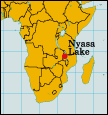
Lake Malombe is a lake located in southern Malawi. Situated within a broken depression that runs northwest from Lake Chilwa to Lake Nyasa, it lies parallel…
What is Lake Malombe?
Lake Malombe is a lake located in southern Malawi. Situated within a broken depression that runs northwest from Lake Chilwa to Lake Nyasa, it lies parallel to the Shire Rift Valley.1
The lake is part of the Shire River drainage system. It is fed by the river approximately 12 miles (19 km) downstream from its exit from Lake Nyasa, and the river continues to flow through Lake Malombe’s southern shore. The lake covers an area of 162 square miles (420 square km) and is relatively shallow, with a depth of 6–8 feet (2–2.5 m).12
Economically, the lake is significant for commercial fishing, though fish populations have faced challenges due to overfishing and improper net usage. Additionally, the lake’s marshy shores are used during the dry season to cultivate rice and corn (maize).13
What is the role of the Shire River in Malawi’s geography?
The Shire River is the most significant river in Malawi, serving as the sole outlet for Lake Nyasa. Spanning 250 miles (402 km), it plays a vital role in the country’s geography, economy, and energy infrastructure.45
Geographic and Economic Significance
- Hydrology: The river flows from Lake Nyasa into Lake Malombe and continues through a diverse landscape of gorges, cataracts, and marshy plains before joining the Zambezi River in Mozambique.4
- Energy: The river is essential for Malawi’s electric power generation. Hydroelectric schemes at Nkula, Tedzani, and Kapichira Falls harness its waters to supply major industrial areas. However, its flow is sensitive to environmental factors; deforestation near its sources can reduce water levels, leading to power shortages.45
- Agriculture: The river supports irrigation and provides fertile land along its banks and marshes, such as Elephant Marsh, which are used for cultivating crops like rice and corn during the dry season. It also serves as a source for commercial fishing.421
How does overfishing impact the ecosystem of Lake Malombe?
Overfishing in Lake Malombe significantly disrupts the lake’s ecological balance, primarily through the mechanism of a trophic cascade.
When predatory fish populations are depleted due to overfishing and the use of illegal, small-mesh nets, the natural food web structure is compromised. In a healthy aquatic ecosystem, top predators help regulate the populations of smaller fish and organisms. The removal of these predators can trigger a cascade of reciprocal changes:
- Population Shifts: The decline of predatory species often leads to an increase in smaller fish or other organisms that were previously kept in check.
- Ecosystem Imbalance: These shifts can alter the biomass and production of phytoplankton and zooplankton, which are fundamental to the lake’s nutrient cycling and water quality.
- Sustainability Concerns: The disregard for breeding season bans and the use of improper gear have caused fish populations to dwindle, threatening the long-term viability of commercial fishing, which is a vital economic activity for the region.612
In response to these pressures, local lakeshore communities have established natural resources committees to help manage fisheries and enforce regulations to protect the ecosystem.2
What are the primary differences between Lake Malombe and Lake Malawi?
Lake Malombe and Lake Malawi (also known as Lake Nyasa) are distinct bodies of water within Malawi’s geography, differing significantly in size, depth, and hydrological role.
Key Differences
- Size and Scale: Lake Malawi is the dominant feature of the country, covering approximately 11,430 square miles (29,600 square km) and extending beyond national borders. In contrast, Lake Malombe is much smaller, covering an area of 162 square miles (420 square km).12
- Depth: Lake Malawi is a deep rift lake, whereas Lake Malombe is quite shallow, with a depth of only 6–8 feet (2–2.5 meters).2
- Hydrological Relationship: Lake Malawi serves as the primary reservoir for the region, while Lake Malombe is situated in the Shire River valley at the northern end of the Shire Rift. The Shire River flows out of Lake Malawi and subsequently feeds into and drains through Lake Malombe before continuing toward the Zambezi River.271
- Economic Contribution: While both are vital for fishing, Lake Malawi is the country’s most significant source of fish, accounting for approximately three-fourths of Malawi’s total catch.3
Sources
- Lake Malombe — Encyclopædia Britannica
- Malawi - Agriculture, forestry, and fishing — Encyclopædia Britannica
- Malawi - Drainage and soils — Encyclopædia Britannica
- Shire River — Encyclopædia Britannica
- Malawi - Resources and power — Encyclopædia Britannica
- trophic cascade — Encyclopædia Britannica
- Malawi - Relief — Encyclopædia Britannica
Published on · 3 min read