Lake Nasser
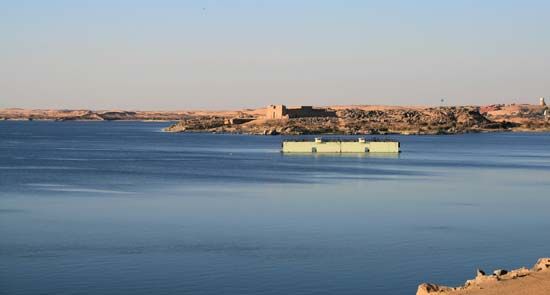
The creation of Lake Nasser in the 1960s threatened numerous significant historical sites with permanent submergence. In response, UNESCO launched a massive…
What historical sites were affected by the creation of Lake Nasser?
The creation of Lake Nasser in the 1960s threatened numerous significant historical sites with permanent submergence. In response, UNESCO launched a massive international campaign to document, excavate, and relocate these treasures.123
Key sites affected include:
- Abu Simbel: The two famous rock-cut temples of Ramses II and Queen Nefertari were meticulously disassembled into 16,000 blocks and reconstructed on higher ground.42
- Philae: This island complex, sacred to the goddess Isis, was relocated to the nearby island of Agilkia.52
- Other Notable Sites:
- Kalabsha: A large Egypto-Roman temple moved approximately 30 miles from its original foundation.2
- Buhen: An Old Kingdom town and Hatshepsut’s temple were relocated.2
- Faras West: Excavators recovered over 100 frescoes from a hidden basilica.2
- Qasr Ibrim: A site that yielded significant artifacts and ancient manuscripts.2
While many structures were saved, some Middle Kingdom mud-brick fortresses near the Second Cataract could not be salvaged due to their construction.2
What kinds of fish and wildlife can be found in and around Lake Nasser?
Lake Nasser, the reservoir created by the Aswan High Dam, has been developed into a significant commercial fishery that supports a variety of freshwater species.67
Fish Species
The lake has been intentionally stocked to support a fishing industry, and several species thrive in its waters:
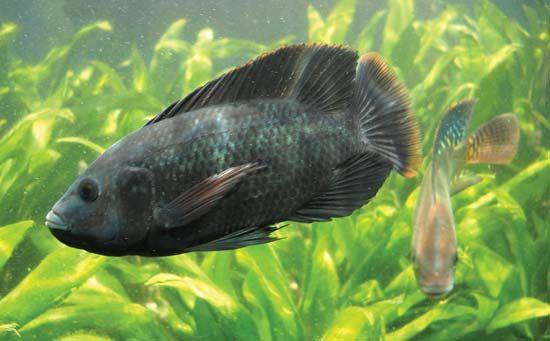
- Tilapia: Specifically the bulṭī (Tilapia nilotica), which is a common, coarse-scaled, spiny-finned fish that grows to a very large size in the lake.1
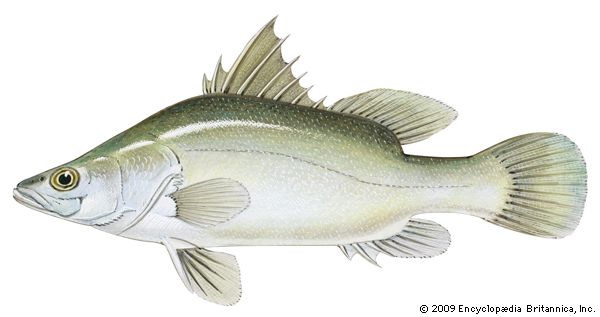
- Nile Perch: A prominent species in the reservoir that can reach weights exceeding 175 pounds.61
While the dam has prevented many migratory fish species from reaching the lake from the lower Nile, the reservoir itself has become a productive environment for these freshwater populations.6
Wildlife
Information regarding wildlife specifically inhabiting the immediate surroundings of Lake Nasser is limited in the provided data. However, it is noted that Nile crocodiles are found in the Nile system south of the Aswan High Dam, though they have not penetrated the lakes of the upper Nile basin. The broader region surrounding the lake is characterized by desert environments, which support various desert animals such as gazelles, foxes, and rodents, though these are not exclusive to the lake’s immediate vicinity.61
How does Lake Nasser contribute to Egypt’s water management and agriculture?
Lake Nasser serves as a critical component of Egypt’s water management and agricultural strategy by providing human control over the Nile River’s annual floodwaters. By impounding these waters, the Aswan High Dam allows for the release of water on demand, ensuring a reliable supply for irrigation throughout the year.17
The reservoir’s impact on agriculture includes:
- Expansion of Arable Land: The controlled discharge of water has brought over 800,000 acres of new land under irrigation and converted 700,000 acres from seasonal flood irrigation to perennial irrigation, allowing for multiple harvests per year.19
- Land Reclamation: The availability of stored water has facilitated large-scale desert reclamation projects, such as the New Valley project, which aims to pump water from the lake to cultivate previously unproductive desert regions.19
However, this management comes with trade-offs. Because the dam traps the Nile’s nutrient-rich silt within the reservoir, downstream farmlands no longer receive natural fertilization, necessitating a heavy reliance on artificial fertilizers to maintain productivity.7
How was Lake Nasser formed, and what was its purpose?
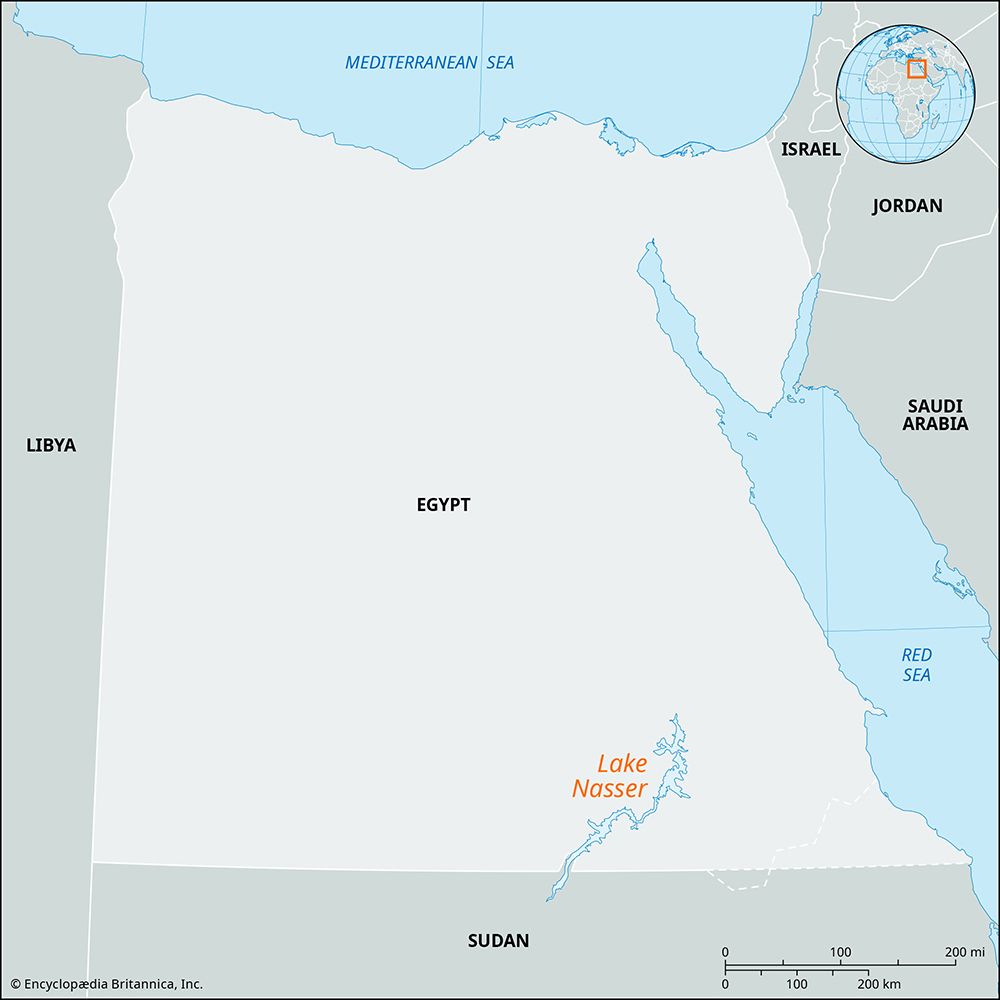
Lake Nasser was formed by the construction of the Aswan High Dam across the Nile River. Built during the 1960s and inaugurated in 1971, the dam impounds the river’s waters to create a massive reservoir that extends approximately 320 km into Egypt and 160 km into Sudan.17
The primary purposes of the lake and the dam include:
- Water Management: Providing human control over the Nile’s annual floodwaters, allowing for regulated discharge to ensure a consistent water supply.7
- Agricultural Expansion: Enabling the conversion of land from seasonal flood irrigation to perennial irrigation and facilitating the cultivation of hundreds of thousands of acres of new land.17
- Energy Production: Generating significant hydroelectric power through the dam’s turbines.7
- Economic Support: Supporting a fishing industry and improving navigation along the river.17
The creation of the lake necessitated the relocation of thousands of people and the monumental task of dismantling and moving historical sites like Abu Simbel to protect them from submersion.17
Sources
- Lake Nasser — Encyclopædia Britannica
- Philae — Encyclopædia Britannica
- Abu Simbel — Encyclopædia Britannica
- World Heritage site - The Nubian preservation campaign — Encyclopædia Britannica
- World Heritage site - Origins of the World Heritage Convention — Encyclopædia Britannica
- Nile River - Plant and animal life — Encyclopædia Britannica
- Aswan High Dam — Encyclopædia Britannica
- Egypt - Plant and animal life — Encyclopædia Britannica
- Egypt - Agriculture and fishing — Encyclopædia Britannica
Published on · 3 min read