Nile Crocodile
The Nile crocodile (Crocodylus niloticus) is a large, aggressive reptile native to the freshwater lakes, rivers, and swamps of Africa and Madagascar. As the…
What is a Nile crocodile?
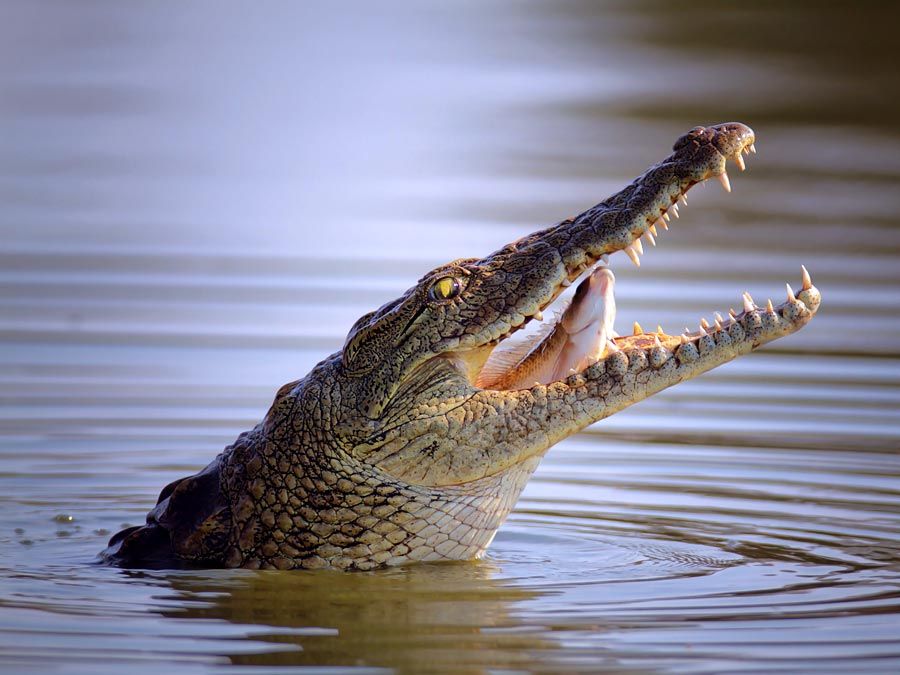
The Nile crocodile (Crocodylus niloticus) is a large, aggressive reptile native to the freshwater lakes, rivers, and swamps of Africa and Madagascar. As the largest crocodile in Africa, it is an apex predator that can reach lengths of up to 6 meters (19.7 feet) and weights exceeding 680 kg (1,500 pounds).1
These crocodiles are known for their powerful jaws and thick, armored skin. While they primarily consume fish, they are opportunistic hunters that also prey on birds and mammals, including large animals like wildebeest and young elephants. They are also responsible for hundreds of human deaths annually, as they often hunt near the water’s edge.1
Despite their fearsome reputation, the International Union for Conservation of Nature currently lists the species as of least concern, though they face ongoing threats from habitat loss, water pollution, and retaliatory hunting.1
Where does the Nile crocodile live?
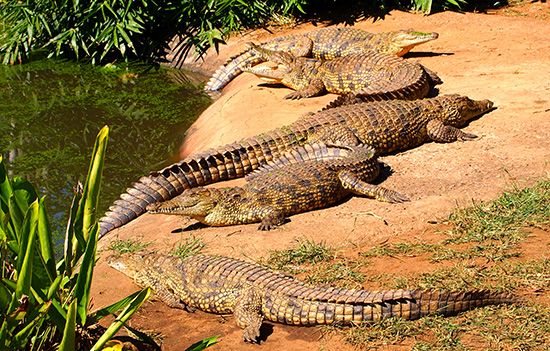
The Nile crocodile (Crocodylus niloticus) is primarily found throughout most of Africa, with the notable exception of the Sahara Desert, as well as in Madagascar.13
Within these regions, they inhabit a variety of aquatic environments, including:
- Freshwater habitats: They are commonly found in lakes, rivers, and swamps.13
- Brackish waters: They are also known to frequent brackish environments.13
While they are widespread throughout the Nile River system, they have not yet penetrated the lakes of the upper Nile basin.4
What does a Nile crocodile look like?
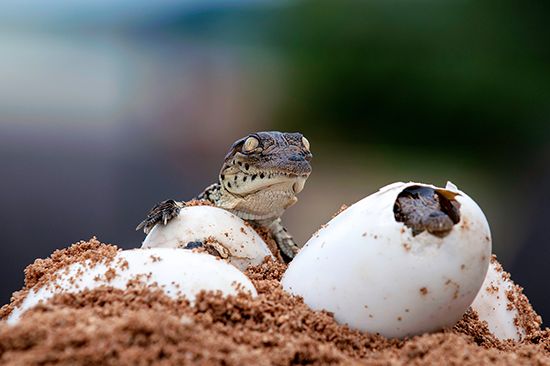
The Nile crocodile is a large, powerful reptile characterized by a robust, armored appearance. Adults typically measure between 4 and 4.5 meters (13.1 to 14.8 feet) in length, though exceptional individuals can reach up to 6 meters (19.7 feet) and weigh over 680 kg (1,500 pounds).5
Key physical features include:
- Skin and Armor: Their skin is very thick and features a regular pattern of scales, with prominent, bony plates covering their backs.](https://www.britannica.com/science/scale-zoology), with prominent, bony plates covering their backs.5
- Head and Jaws: They possess a long, powerful snout equipped with strong jaws. The specific proportions of the snout and the arrangement of scales are primary identifiers for the species.51
- Body Structure: They have a long tail and short legs with clawed, webbed toes, which aid in their movement through aquatic environments.5
Males are generally larger than females, and both sexes exhibit the characteristic reptilian build that makes them highly effective apex predators in their habitats.5
What do Nile crocodiles eat?
The Nile crocodile is an apex predator with a diverse diet that changes as it matures.1
- Adult Diet: While a large portion of the diet for most adults consists of fish, they are opportunistic feeders that also consume birds, other crocodiles, and various mammals. Their mammalian prey includes wildebeest and other antelopes, and they are capable of taking down prey as large as young elephants. Additionally, they feed on carrion and have been known to attack humans.1
- Young Diet: Juvenile crocodiles feed on smaller items, including fish, crustaceans, amphibians, and other reptiles.1
To hunt land animals, the crocodile typically floats motionlessly near the water’s edge, lunging suddenly to seize its prey and dragging it underwater to drown it. If the prey is particularly large, the crocodile may grip portions of the animal and rotate its body rapidly to tear the meat apart.17
Sources
- Nile crocodile — Encyclopædia Britannica
- Nile crocodile — Merriam-Webster
- Nile River - Plant and animal life — Encyclopædia Britannica
- 7 Crocodilian Species That Are Dangerous to Humans — Encyclopædia Britannica
- crocodile - Size range and diversity of structure — Encyclopædia Britannica
- crocodile - Life cycle — Encyclopædia Britannica
- crocodile - Behavior — Encyclopædia Britannica
Published on · 3 min read