Tilapia
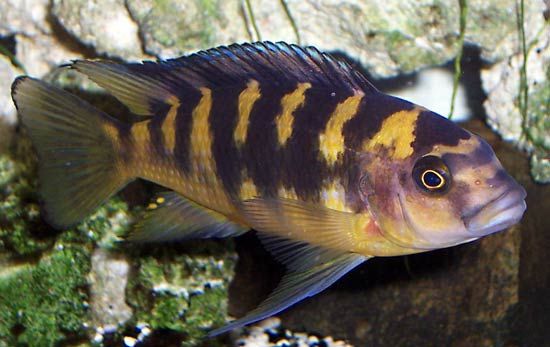
Tilapia is a common name for several species of fish within the Cichlidae family, primarily native to freshwater habitats in Africa.
What is tilapia?
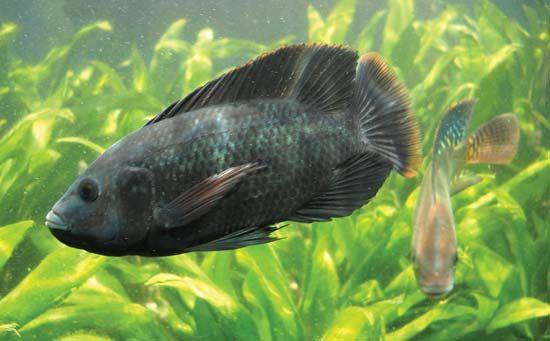
Tilapia is a common name for several species of fish within the Cichlidae family, primarily native to freshwater habitats in Africa.1
These fish are highly valued in aquaculture due to their commercial advantages, which include rapid growth, disease resistance, and a diet consisting of easily accessible algae and zooplankton. Their cultivation dates back to ancient Egyptian civilization, and they are now raised globally in diverse environments, ranging from tanks to ponds.12
While historically classified under the genus Tilapia, the group is now categorized based on reproductive behavior:
- Mouth-brooding genera: Includes Sarotherodon and Oreochromis.1
- Substrate-spawning genera: Includes Tilapia, which deposit eggs on the bottoms of lakes and ponds.1
The most widely farmed species is the Nile tilapia (Oreochromis niloticus).12
What is the difference between mouth-brooding and egg-laying fish?
The primary difference between mouth-brooding and typical egg-laying (oviparous) fish lies in the level of parental care and the environment in which the embryos develop.
Egg-Laying (Oviparous) Fish
Most bony fishes are oviparous, meaning they lay eggs that are fertilized externally. This process typically involves:34
- External Development: Eggs are often scattered in open water, attached to the substratum, or placed among aquatic plants.34
- High Mortality: Because these eggs are often left unprotected or are vulnerable to environmental factors and predators, they generally face a high mortality rate.3
- Quantity: To compensate for the high risk, these species often produce a large number of eggs—sometimes numbering in the millions—to ensure that at least some offspring survive.34
Mouth-Brooding Fish
Mouth-brooding is a specialized form of parental care where one or both parents incubate the eggs within their oral cavity. Key features include:546
- Protection and Aeration: By holding the eggs in the mouth, the parent provides a secure environment that protects the developing embryos from predators while ensuring constant aeration.6
- Extended Care: After the eggs hatch, the young (fry) may continue to use the parent’s mouth as a refuge, fleeing into it when danger approaches and swimming out once the threat has passed.46
- Investment: This strategy allows for higher survival rates of the offspring, though it typically involves a smaller number of eggs compared to species that do not provide such intensive care.34
How does aquaculture help provide food for the world?
Aquaculture serves as a vital global food source by supplementing natural supplies of aquatic organisms, currently providing nearly half of the world’s total food fish supply. As the world’s fastest-growing form of food production, it functions as an aquatic equivalent to agriculture, allowing for the controlled rearing of fish, shellfish, and seaweed in environments ranging from natural ponds and coastal cages to artificial tanks.789
The industry helps meet increasing global demand through several key mechanisms:
- Efficiency and Innovation: Advances in technology and the use of genetically modified species allow for faster growth cycles and more efficient production of common food sources like cod, tilapia, and salmon.7910
- Diversification: Beyond high-priced species, aquaculture increasingly focuses on low-energy systems for carp and catfish, as well as aquaponics, which integrates fish farming with plant cultivation.7
- Resource Management: Ocean ranching helps restock natural populations, while farming reduces the pressure on wild stocks, though the latter remains a subject of debate regarding the use of wild-caught fish for feed.710
What are other common types of fish raised in aquaculture?
Beyond the most economically prominent species like carp, trout, salmon, and tilapia, a wide variety of other fish are raised through aquaculture to meet global food demands.117
Commonly farmed species include:
- Sturgeon: Often raised for both meat and their role in caviar production.1112
- Catfish: Widely cultivated in low-energy systems, particularly in the United States.117
- Marine and Brackish Varieties: This category includes sea bass, milkfish, mullet, redfish, and striped bass.11
- Cod: Increasingly farmed as technological advancements make the cultivation of common food fish more efficient.13
- Eels: Raised commercially due to their high market value.12
In addition to these finfish, aquaculture encompasses a broad range of shellfish, such as oysters, mussels, scallops, clams, shrimp, prawns, and lobsters.7914
Sources
- tilapia — Encyclopædia Britannica
- aquaculture - Tilapia — Encyclopædia Britannica
- mouthbreeder — Encyclopædia Britannica
- How do fish reproduce? — Encyclopædia Britannica
- perciform - Life history — Encyclopædia Britannica
- Reproductive behaviour - Parental care — Encyclopædia Britannica
- aquaculture — Encyclopædia Britannica
- 18 Questions About Farming Answered - What is a fish farm? — Encyclopædia Britannica
- Did you know? — Merriam-Webster
- aquaculture - Trout and salmon — Encyclopædia Britannica
- aquaculture - Fish farming — Encyclopædia Britannica
- shellfish — Encyclopædia Britannica
- commercial fishing - General characteristics — Encyclopædia Britannica
- aquaculture - Mollusks — Encyclopædia Britannica
Published on · 3 min read