Nile Perch
The Nile perch (Lates niloticus) is a large freshwater fish belonging to the family Centropomidae. Native to the Nile and other African rivers and lakes, it…
What is Nile perch?
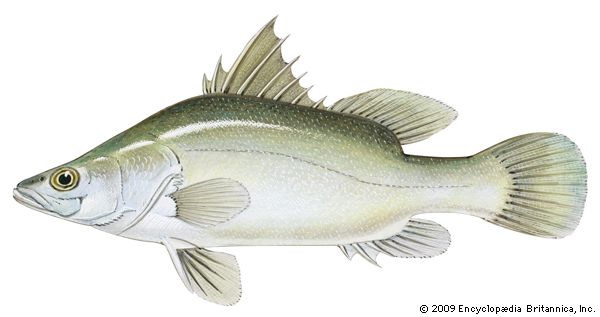
The Nile perch (Lates niloticus) is a large freshwater fish belonging to the family Centropomidae. Native to the Nile and other African rivers and lakes, it is a powerful predator characterized by an elongated body, a protruding lower jaw, a rounded tail, and two dorsal fins. Its coloration is typically greenish or brownish on the upper body and silvery below.1
Depending on the environment, these fish can reach significant sizes, with some specimens growing up to 2 meters (6.6 feet) in length and weighing as much as 200 kg (440 lbs).12
The species is also known for its ecological impact. In 1954, the Nile perch was introduced into Lake Victoria, where it became an invasive species. As a voracious predator, it has caused significant ecological damage by drastically reducing the populations of native cichlid fishes.13
What are cichlid fishes and why are they important to Lake Victoria?
Cichlids are a diverse family of freshwater fishes (Cichlidae) comprising more than 1,300 species. They are primarily found in tropical America, mainland Africa, Madagascar, and southern Asia, with a particularly high concentration of species in the major African lakes. Physically, they are typically deep-bodied with a single nostril on each side of the head and a discontinuous lateral line. They are well-known for their complex mating behaviors, including nest defense and “mouthbreeding,” where parents carry eggs in their mouths until they hatch.4
In Lake Victoria, cichlids are ecologically significant because they represent a massive, unique, and endemic portion of the lake’s biodiversity, with between 100 and 200 species historically present. However, their importance has been severely impacted by the 1954 introduction of the Nile perch. As a powerful, invasive predator, the Nile perch has caused a dramatic decline in cichlid populations, leading to significant ecological disruption within the lake.135
How do invasive species disrupt local ecosystems?
Invasive species disrupt local ecosystems primarily by outcompeting native organisms for essential resources such as food, water, and living space. Because these nonnative species often lack natural predators in their new environments, they can establish rapidly growing populations that overwhelm indigenous species.67
The mechanisms of disruption include:
- Predation: Invasive predators can be so efficient at hunting that they cause local prey populations to decline or face extinction.67
- Resource Competition: Invasive plants and animals may monopolize resources, effectively replacing native species and reducing overall biodiversity6.7
- Disease Transmission: Invasive species often act as vectors for parasites and pathogens, spreading diseases to native populations that lack natural resistance.68
- Habitat Alteration: Some invaders physically transform their surroundings, such as plants that create dense thickets blocking sunlight or animals that degrade grazing lands.789
Ultimately, these disruptions can lead to the collapse of local food chains and cause significant economic harm to human communities that rely on these biological resources.68
What other animals live in the Nile River basin?
The Nile River basin supports a diverse array of animal life, ranging from large mammals and reptiles to numerous fish and bird species.
Mammals and Reptiles
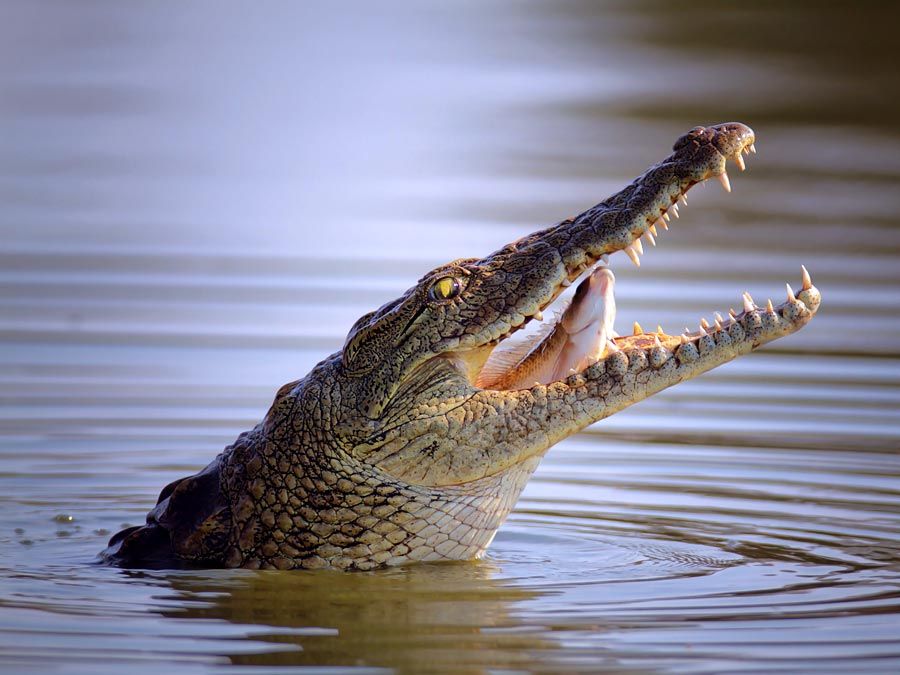
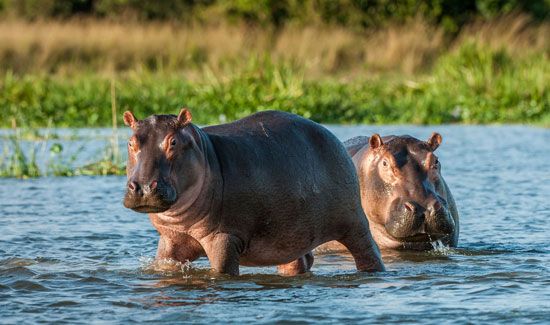
The hippopotamus is a notable inhabitant, though its range is now largely restricted to the swampy Al-Sudd region and areas further south. Reptiles are also prominent, including the Nile crocodile, which is found throughout most of the river, and the soft-shelled turtle, known for its hydrodynamic, flattened shell. Additionally, three species of monitor lizard and approximately 30 species of snakes, over half of which are venomous, inhabit the basin.112
Fish and Birds
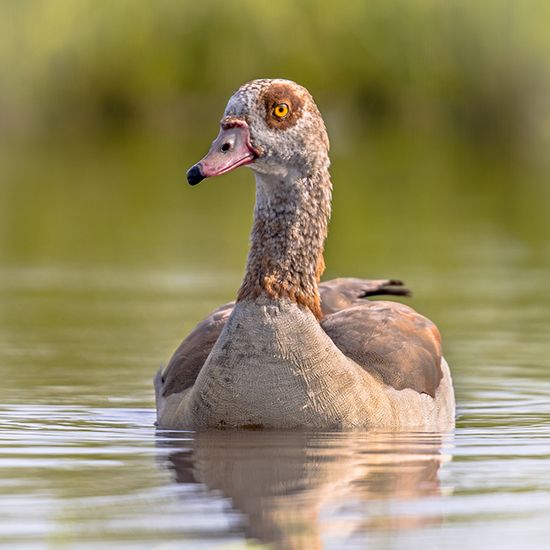
The river system is home to a wide variety of fish, such as the Nile perch, catfish, tigerfish, lungfish, and various species of tilapia. Among birds, the Egyptian goose is common in the northern Nile valley, where it thrives in wetlands and open grassy areas.11212
Sources
- Nile perch — Encyclopædia Britannica
- 11 Fascinating Nile River Plants and Animals — Encyclopædia Britannica
- Lake Victoria — Encyclopædia Britannica
- cichlid — Encyclopædia Britannica
- East African lakes - Plant and animal life — Encyclopædia Britannica
- invasive species — Encyclopædia Britannica
- habitat loss — Encyclopædia Britannica
- invasive species - A global problem — Encyclopædia Britannica
- Wetland - Disturbances caused by humans — Encyclopædia Britannica
- invasive species - Solutions — Encyclopædia Britannica
- Nile River - Plant and animal life — Encyclopædia Britannica
- Egyptian goose — Encyclopædia Britannica
Published on · 3 min read