Lake Nemi
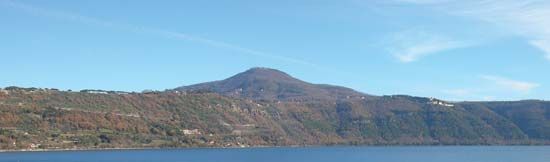
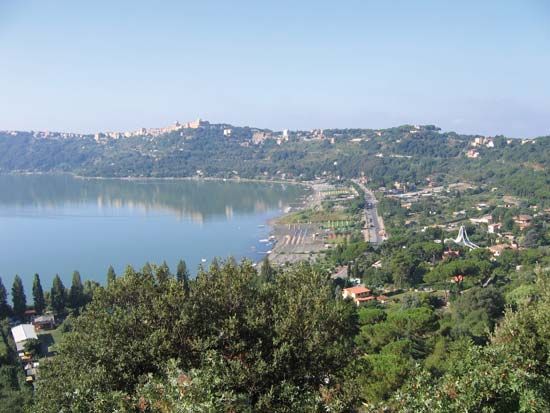
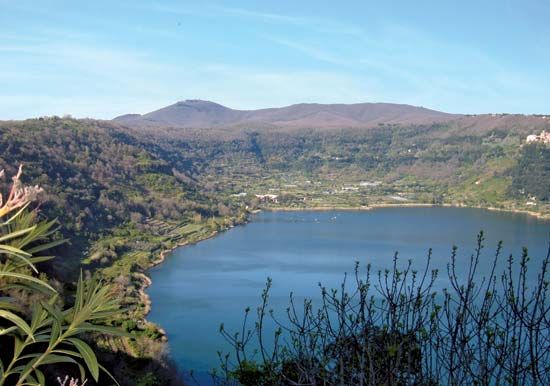
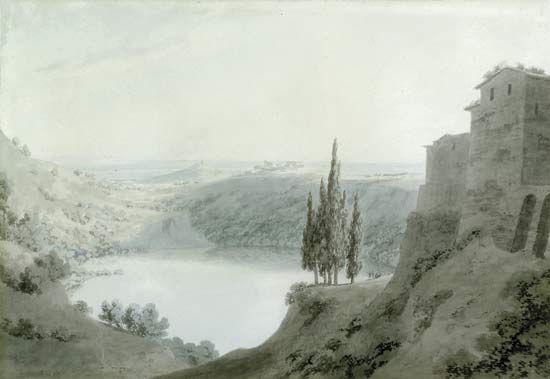
Lake Nemi is a crater lake situated in the Lazio region of central Italy. It is located within the Alban Hills, a volcanic area positioned approximately 15…
Where is Lake Nemi located in Italy, and what are its geographical features?
Lake Nemi is a crater lake situated in the Lazio region of central Italy. It is located within the Alban Hills, a volcanic area positioned approximately 15 miles (24 km) southeast of Rome.12
Geographically, the lake lies in the outer ring of the ancient Alban crater, east of Lake Albano. Its features include:1
- Dimensions: The lake has a circumference of about 3.5 miles (5.5 km) and reaches a depth of 110 feet (34 m).1
- Drainage: It is drained by a tunnel approximately 2 miles (3 km) long.1
- Historical Context: Known in antiquity as Lacus Nemorensis or the “Mirror of Diana,” the lake is associated with a sacred grove and temple dedicated to the goddess Diana. It is also famous for the discovery of two large Roman pleasure ships commissioned by the emperor Caligula, which were recovered in the 1920s after the lake’s water level was lowered.1
Can you explain the discovery and excavation of the Nemi ships in the 20th century?
The discovery and recovery of the Nemi ships represent a significant, albeit tragic, chapter in 20th-century archaeology. While the existence of two large Roman galleys on the lake floor had been known for centuries, early attempts to raise them failed. In 1895, the site was raided by divers who removed many valuable artifacts from the wrecks.1
A successful recovery effort finally took place in the 1920s, when the water level of Lake Nemi was systematically lowered to expose the vessels. The excavation revealed two massive pleasure ships commissioned during the reign of the emperor Caligula. The smaller ship measured 210 by 66 feet, while the larger vessel reached 233 by 80 feet.1
Following their recovery, many artifacts salvaged from the ships were moved to museums in Rome. Tragically, the ships themselves were destroyed when they were burned by the retreating German army on May 31, 1944, during World War II.1
What mythological connections does Lake Nemi have, particularly with the goddess Diana?
Lake Nemi held profound mythological significance in antiquity, serving as the site of the famous grove of Diana Nemorensis (“Diana of the Wood”). Because of this sacred association, the lake was often referred to as the Speculum Dianae, or “Mirror of Diana.”31
Diana, the Roman goddess of the hunt and wild animals, was worshipped here as a fertility deity who aided women with conception and childbirth. Her cult at the lake was closely linked to two other figures:3
- Egeria: A water spirit and protectress of pregnant women who shared guardianship of childbirth with Diana.34
- Virbius: A hero identified as the Roman counterpart to Hippolytus. According to tradition, he served as the first priest of Diana’s cult at Aricia.3
The cult was defined by a unique and violent custom: the priest of the grove, known as the King of the Wood, was required to be a runaway slave who attained his position by slaying his predecessor in combat.3
What is the historical significance of Lake Nemi in Roman times?
Lake Nemi, located in the Alban Hills near Rome, held significant historical and religious importance in ancient times. Known as Lacus Nemorensis or the “Mirror of Diana,” it was the site of a temple and sacred grove dedicated to the goddess Diana. This shrine served as a vital religious center for the Latin League, and its cult was famously associated with the unique, violent tradition of the “King of the Wood,” a priest who had to be a runaway slave and secure his position by killing his predecessor in combat.13
Beyond its religious role, the lake is historically notable for the two massive pleasure ships commissioned by the emperor Caligula. These vessels, which measured up to 233 by 80 feet, were recovered in the 1920s after the lake level was lowered. While they provided invaluable insight into Roman maritime engineering, the ships were tragically destroyed by fire during World War II.1
Sources
- Lake Nemi — Encyclopædia Britannica
- Alban Hills — Encyclopædia Britannica
- Diana — Encyclopædia Britannica
- Egeria — Encyclopædia Britannica
- Golden House of Nero — Encyclopædia Britannica
Published on · 3 min read