Lough Allen
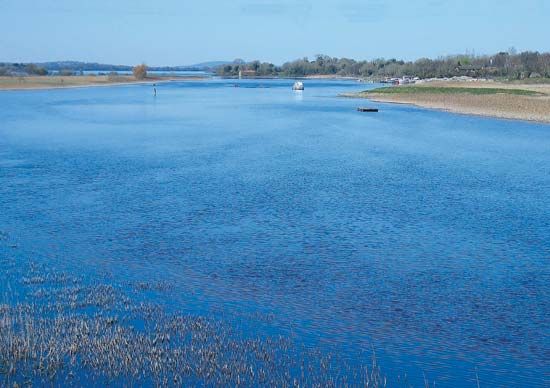
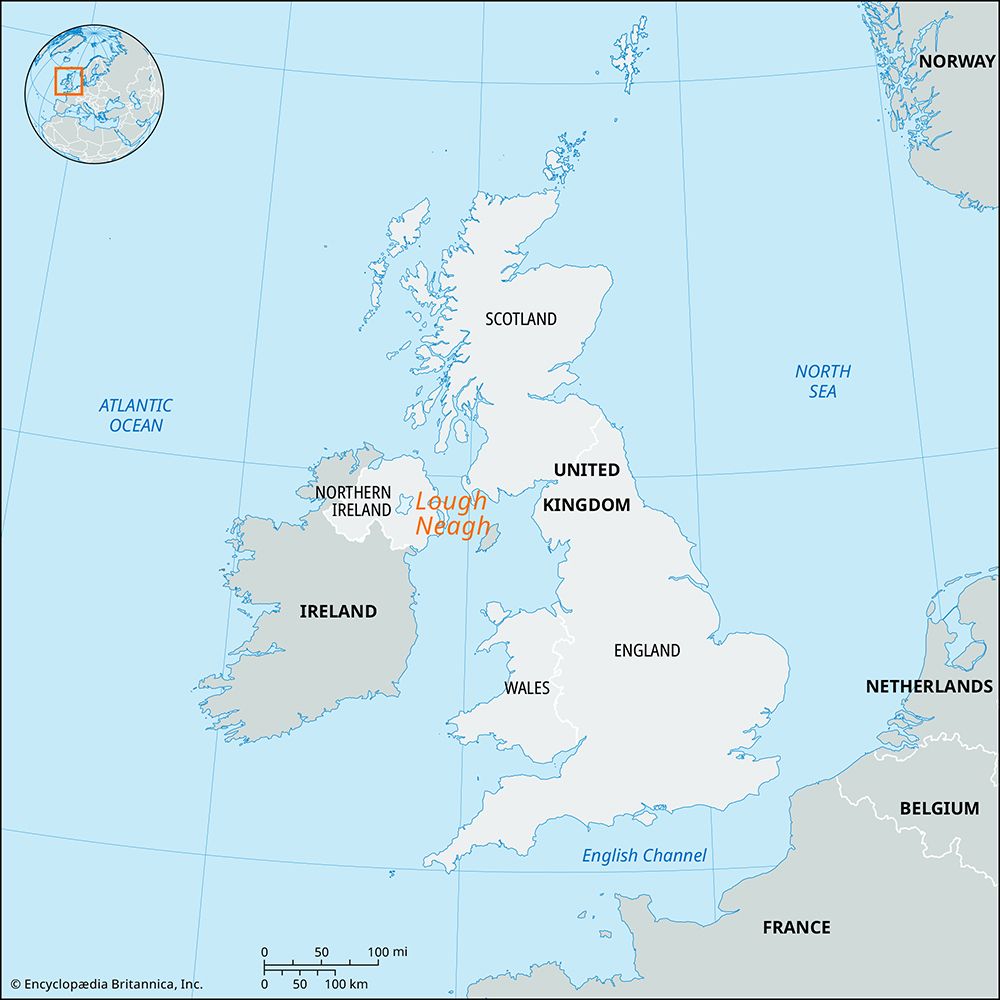
Lough Allen is a lake situated on the River Shannon within the Irish counties of Leitrim and Roscommon. Measuring approximately 8 miles (12.8 km) in length…
What is Lough Allen?
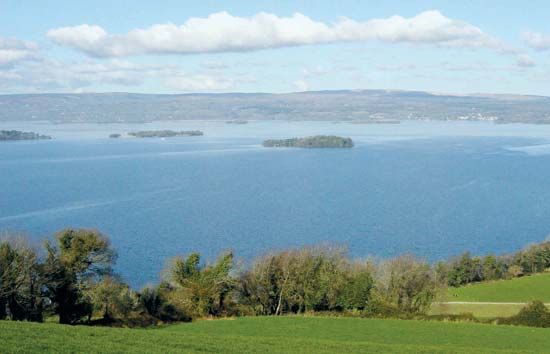
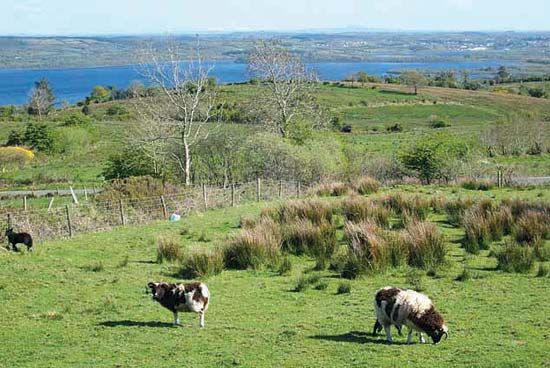
Lough Allen is a lake situated on the River Shannon within the Irish counties of Leitrim and Roscommon. Measuring approximately 8 miles (12.8 km) in length and 3 miles (4.8 km) at its widest point, the lake is framed by mountainous terrain, including the Iron Mountains to the east and hills exceeding 1,400 feet to the west.1
The lough contains several small islands, such as Inishmagrath, which features the ruins of an early Christian church, and Tarmon, home to the remains of St. Patrick’s Church. Historically, the surrounding Arigna Mountains and valley were sites for coal and iron mining. As part of the River Shannon system, the lake serves as a significant feature of Ireland’s longest river, which flows through the central lowlands.12
What are the other major lakes along the River Shannon?
Beyond Lough Allen, the River Shannon widens into two other major lakes as it flows south through Ireland’s central lowlands:
- Lough Ree: Located downstream from Lough Allen, this lake separates the counties of Longford and Westmeath from County Roscommon. It is characterized by an irregular shoreline featuring deep bays and shallow inlets, and it is well-known for its fishing and numerous islands containing ancient church ruins.23
- Lough Derg: Situated further south at the boundary of counties Tipperary, Galway, and Clare, this is a significant body of water spanning 37 square miles. It serves as a vital part of the river’s hydroelectric infrastructure, with its waters feeding the Ardnacrusha power station. A fish ladder at its outlet also supports salmon migration.24
How do drumlins shape the landscape of Ireland?
Drumlins are oval or elongated hills formed by the movement of glacial ice sheets over till or rock debris. The term itself is derived from the Gaelic word druim, meaning “rounded hill” or “mound”.56
In Ireland, these features significantly shape the landscape, particularly in low-lying regions where they occur in vast clusters. Their presence has a profound impact on the local environment in the following ways:5
- Drainage Disruption: Drumlins are often arranged in dense belts that disrupt natural water flow. This interference frequently results in the formation of small lakes, swamps, and marshy hollows between the hills.57
- Topographic Character: By creating a landscape of “swarms” of low ridges, drumlins contribute to the gentle, undulating nature of many Irish lowlands.7
- Geological Legacy: The presence of these glacial features is a testament to Ireland’s history of glaciation, which has been a primary force in defining the country’s diverse and scenic terrain.8
What is the historical significance of the River Shannon’s canal system?
The canal system connected to the River Shannon was historically vital for Irish transportation and commerce. During the early 19th century, the Grand Canal and the Royal Canal served as essential links across the central lowlands, connecting the river to Dublin and the Irish Sea.210
The Grand Canal, constructed starting in 1755 and reaching the Shannon by 1804, proved more successful than the Royal Canal, which was built between 1789 and 1817 and eventually sold to a railway company in 1846. These waterways facilitated both passenger services and freight transport, with steamers operating on the Shannon and horse-drawn boats navigating the canals.2
However, the rise of rail competition led to the cessation of passenger services by the 1850s. While commercial traffic eventually declined, the canals have since been repurposed for tourism and pleasure craft, with restoration projects like the Shannon-Erne waterway in the 1990s helping to revitalize interest in these historic routes.210
Sources
- Lough Allen — Encyclopædia Britannica
- River Shannon — Encyclopædia Britannica
- Lough Ree — Encyclopædia Britannica
- Lough Derg — Encyclopædia Britannica
- drumlin — Encyclopædia Britannica
- Ireland - Relief — Encyclopædia Britannica
- Ireland - Soils — Encyclopædia Britannica
- Northern Ireland - Drainage — Encyclopædia Britannica
- drumlin — Merriam-Webster
- Ireland - Waterborne traffic — Encyclopædia Britannica
Published on · 3 min read