Lake Ohrid
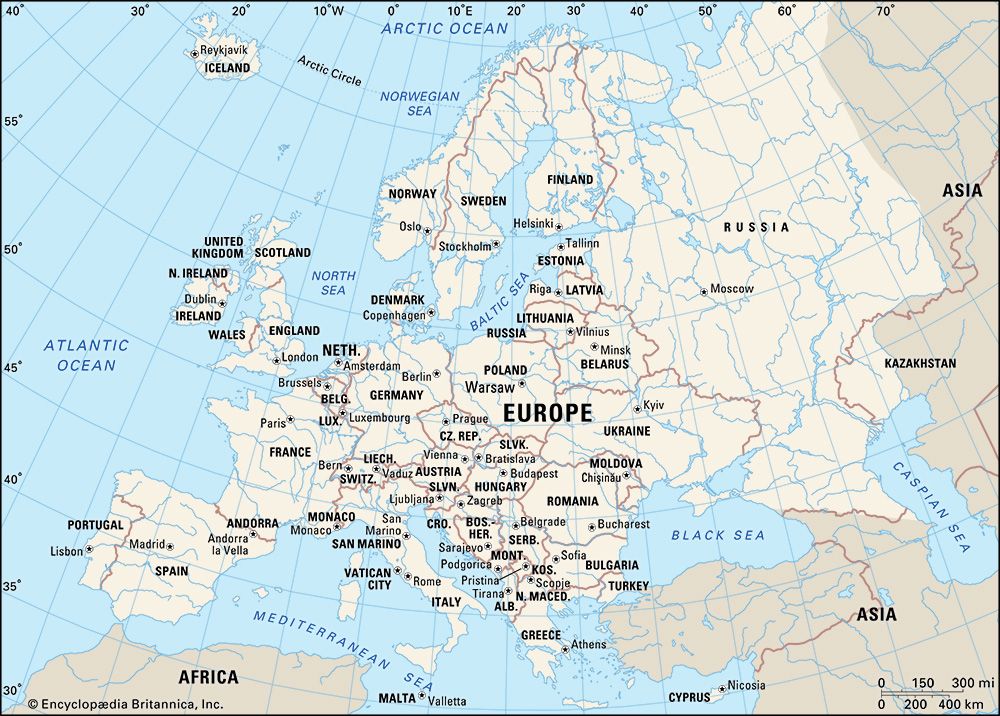
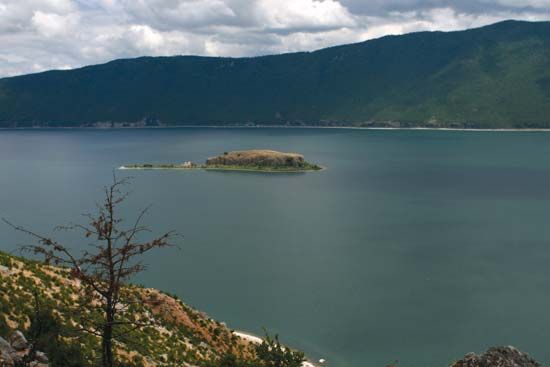
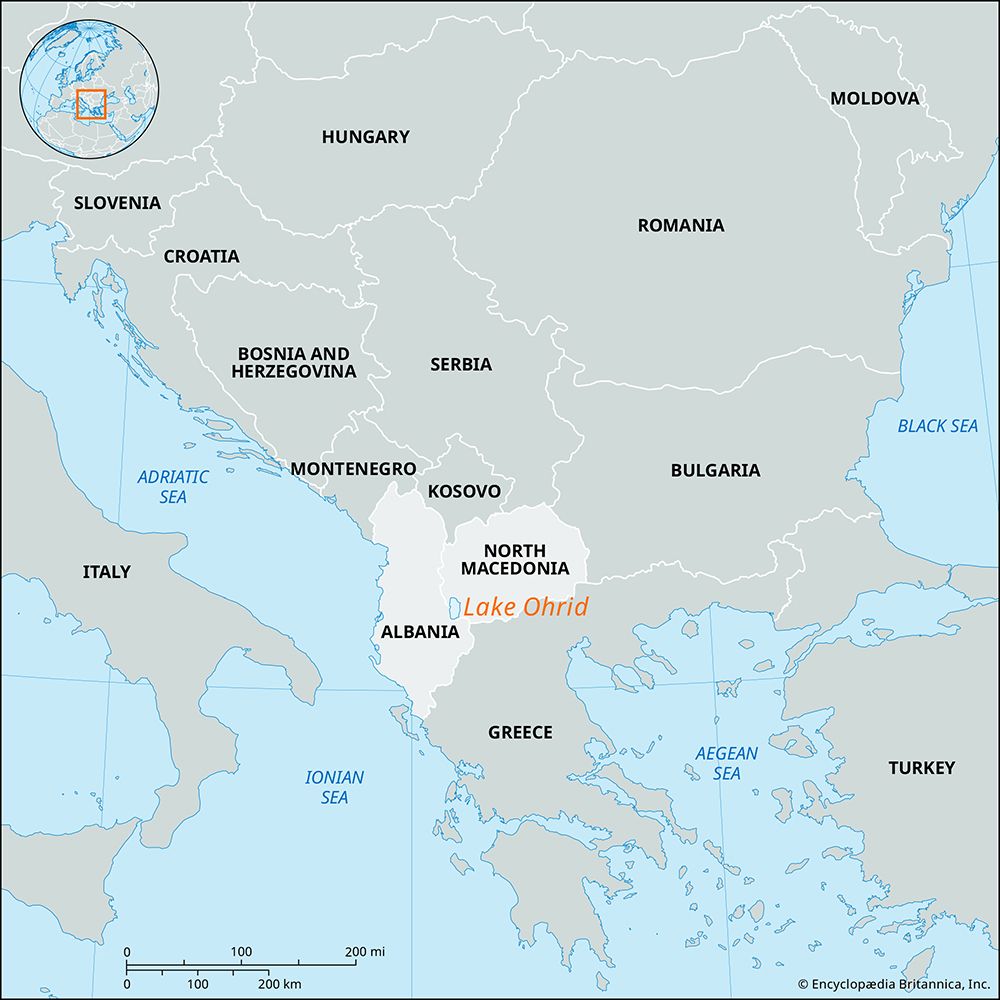
Lake Ohrid is a scenic lake located on the border of North Macedonia and Albania in southeastern Europe. Covering an area of 134 square miles (347 square…
What is Lake Ohrid?
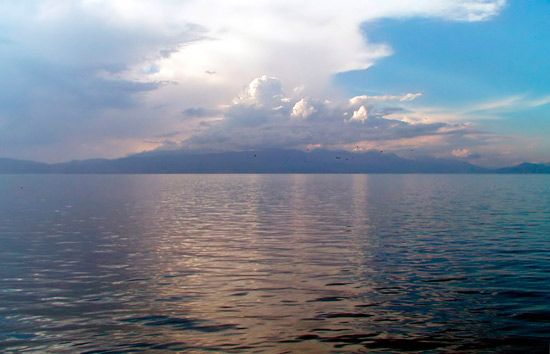
Lake Ohrid is a scenic lake located on the border of North Macedonia and Albania in southeastern Europe. Covering an area of 134 square miles (347 square km), it holds the distinction of being the deepest lake in the Balkans, reaching a depth of 938 feet (286 meters).1
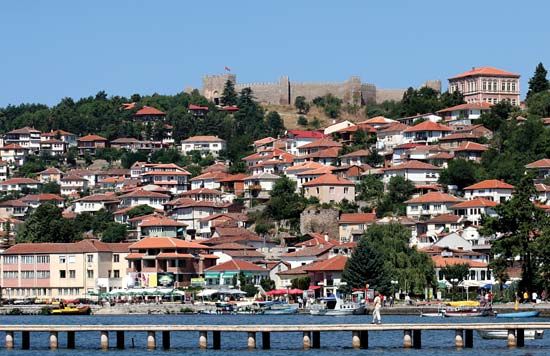
The lake is hydrologically linked to Lake Prespa via underground channels. Renowned for its natural beauty, the area features numerous beaches and historic sites, including the town of Ohrid, which serves as a major resort and cultural hub. The region is historically significant, housing ancient structures such as medieval churches and a fortress that dates back to the time when the area served as a capital for a Bulgarian tsar. Today, the local economy is supported by tourism, fishing, and agriculture.123
What unique species live in Lake Ohrid?
Sorry, the Britannica knowledge base does not contain this information.
How do underground channels connect Lake Ohrid and Lake Prespa?
Lake Ohrid and Lake Prespa are connected by subterranean channels that facilitate the movement of water between the two basins.21
Because Lake Prespa sits at a higher elevation—approximately 2,800 feet (853 meters) above sea level—water naturally flows through these underground passages toward the lower-lying Lake Ohrid, which is located to the northwest of Lake Prespa. This hydrological link is a defining feature of the region’s geography, as Lake Prespa itself is primarily fed by various underground streams.21
What is the historical significance of the town of Ohrid?
The town of Ohrid, located in modern-day North Macedonia, holds significant historical importance as a center of ancient civilization and Slavic culture. Originally a Greek colony known as Lykhnidos, it became a strategic post on the Roman Via Egnatia.
Ohrid’s cultural legacy is most notably tied to St. Clement, who established the first Slavic school of higher learning there. Alongside St. Naum, he translated the Scriptures into Slavonic, fostering the development of early Slavic literature and literacy. The town is home to numerous medieval landmarks, including the 11th-century St. Sophia’s Church and the monastery of St. Panteleimon.3
Politically, Ohrid served as the capital of the first Bulgarian Empire following the fall of Preslav in 971. It remained a vital seat of power until the Byzantine emperor Basil II secured a decisive victory over Tsar Samuel in 1014, leading to the end of Bulgarian independence in 1018.4
Sources
- Lake Ohrid — Encyclopædia Britannica
- Lake Prespa — Encyclopædia Britannica
- Ohrid — Encyclopædia Britannica
- Bulgaria - Reign of Simeon I — Encyclopædia Britannica
- Byzantine Empire - Relations with the Slavs and Bulgars — Encyclopædia Britannica
Published on · 2 min read