Lake Superior Provincial Park
Lake Superior Provincial Park is a protected area located on the eastern shore of Lake Superior in central Ontario, Canada. Established in 1944, the park…
What is Lake Superior Provincial Park?
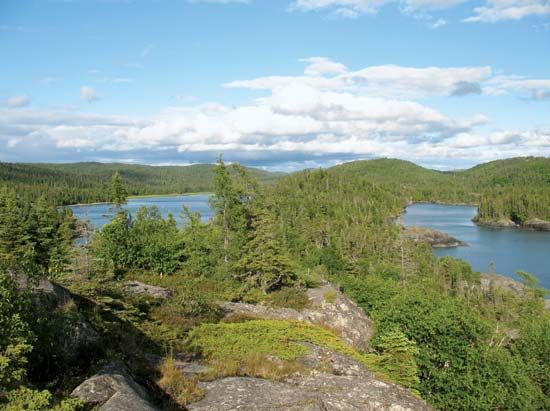
Lake Superior Provincial Park is a protected area located on the eastern shore of Lake Superior in central Ontario, Canada. Established in 1944, the park spans 595 square miles (1,540 square km) and was created to preserve the region’s rugged shoreline and pink granitic hills.1
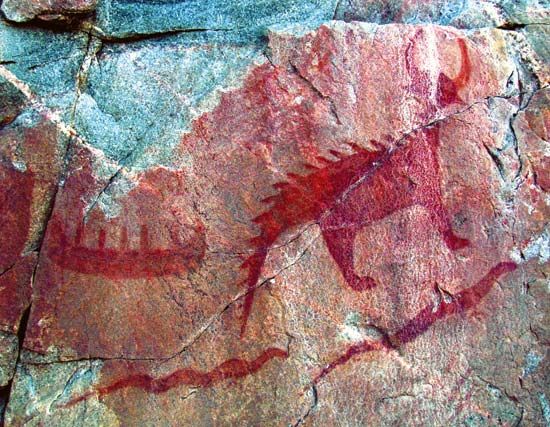
The park is home to diverse wildlife, including moose, bear, white-tailed deer, and red squirrels, which inhabit forests of maple, poplar, and spruce. A significant cultural feature of the park is the Agawa pictographs, which are ancient rock paintings created by First Nations peoples. Visitors can also enjoy various recreational activities, such as hiking the park’s many trails or fishing in its numerous lakes and rivers.1
What are the Agawa pictographs and why are they significant?
The Agawa pictographs are ancient rock paintings located within Lake Superior Provincial Park in Ontario, Canada. These artworks are highly significant because they were created by First Nations peoples over the course of many millennia, serving as a profound historical and cultural record of the region’s Indigenous inhabitants.1
What is the Canadian Shield and how did it shape this landscape?
The Canadian Shield is a vast geologic continental shield that serves as the continental interior, or craton, of North America. Covering approximately half of Canada, it is the largest mass of exposed Precambrian rock on Earth.345
Geologic History and Landscape
The region is composed of ancient crystalline rocks shaped by billions of years of uplift, mountain building (orogeny), and erosion. While these tectonic processes formed the foundation, the modern landscape was primarily sculpted by glaciers during the Pleistocene Epoch.45
The movement of ice across the surface had a profound impact:
- Scouring: Glaciers stripped away the mantle of weathered rock, leaving behind a “rock-knob” landscape of smoothed hills.45
- Hydrology: The ice carved irregular basins that, upon melting, created a vast network of hundreds of thousands of lakes, swamps, and rivers.45
- Deposits: Glacial activity left behind erratics, eskers, and clay belts, which define much of the current terrain.4
The shield is rich in minerals, including gold, silver, and copper, found within deformed greenstone belts4. Due to thin, acidic soil, the region remains sparsely populated, characterized largely by taiga forests.65
How do animals like moose and bear survive in this climate?
Animals like moose and black bears have developed specialized strategies to survive the harsh winters of the taiga and boreal regions.
Moose Survival Strategies
Moose are well-adapted to cold climates and rely on specific feeding and behavioral patterns to maintain their energy balance through the winter:
- Dietary Shifts: While they consume aquatic plants and broad-leaved trees in summer, moose switch to woody twigs and buds during winter. In deep snow, they may also consume conifers like fir and yew.89
- Energy Conservation: In areas with deep snow, moose create “moose yards”—a system of packed trails that allow them to move more easily and conserve energy.9
- Predator Defense: To protect themselves from wolves when snow hinders their movement, moose seek out hard, level ground or dense conifers to defend their vulnerable areas.9
Black Bear Survival Strategies
Black bears rely on physiological preparation to survive the winter fasting period:
- Dormancy: Black bears become dormant during the winter, spending the season in dens such as rock crevices, hollow trees, or underground burrows.10
- Fat Accumulation: Before winter, bears must accumulate large quantities of body fat by feeding heavily on fruits and mast (such as acorns and beechnuts) during late summer and fall. This stored energy is critical for surviving the winter fast and provides the necessary energy for spring emergence when food is scarce.10
- Reproductive Timing: Through delayed implantation, female bears ensure that cubs are born in the safety of the winter den, allowing them to emerge in the spring when food is more abundant.11
Sources
- Lake Superior Provincial Park — Encyclopædia Britannica
- Sibley Provincial Park — Encyclopædia Britannica
- Canadian Shield: Top Questions — Encyclopædia Britannica
- Canada - The Canadian Shield — Encyclopædia Britannica
- Canadian Shield — Encyclopædia Britannica
- North America - 3.0 to 2.6 billion years ago — Encyclopædia Britannica
- Pukaskwa National Park — Encyclopædia Britannica
- Taiga - Mammals — Encyclopædia Britannica
- Canada - Forest regions — Encyclopædia Britannica
- moose — Encyclopædia Britannica
- Saskatchewan - Plant and animal life — Encyclopædia Britannica
- black bear — Encyclopædia Britannica
- bear - Natural history — Encyclopædia Britannica
Published on · 3 min read