Point Pelee National Park
Point Pelee National Park is a protected area located in southeastern Ontario, Canada. Established in 1918, the park covers 6 square miles (16 square km) and…
What is Point Pelee National Park?
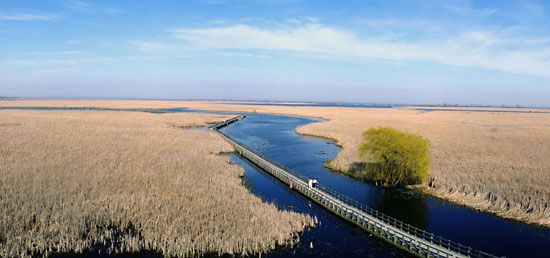
Point Pelee National Park is a protected area located in southeastern Ontario, Canada1. Established in 1918, the park covers 6 square miles (16 square km) and consists of a wedge-shaped sandspit that extends into Lake Erie.1
This unique geography includes a large cattail marsh, as well as a variety of forest trees, shrubs, and fruit-bearing bushes. The park is particularly notable for being situated along a major flyway for migratory birds, including wild ducks, Canada geese, and swans, which utilize the marshland as a sanctuary. Additionally, the park is home to the southernmost point of mainland Canada.12
Why is Point Pelee considered a major migratory flyway?
Point Pelee is considered a major migratory flyway primarily because of its unique geography and the sanctuary it provides to birds. As a wedge-shaped sandspit extending into Lake Erie, the park acts as a natural funnel for various species, including wild ducks, Canada geese, and swans.1
The park’s extensive marshland serves as a critical stopover, offering essential food and shelter for birds during their seasonal journeys. Because of this concentration of avian life, the area is widely recognized as a premier location for bird-watching during the spring and fall migration periods.13
What makes the marshland ecosystem so important for wildlife?
Marshland ecosystems are among the most productive natural systems on Earth, often described as the “kidneys of the landscape” due to their vital role in maintaining environmental health. Their importance to wildlife stems from several key functions:1
- Habitat and Biodiversity: As transition zones between terrestrial and aquatic environments, marshes provide essential food and shelter for a wide array of plants, algae, and animals. Consequently, they often support higher biodiversity than adjacent ecosystems and serve as critical refuges for rare or endangered species.1
- Nutrient Cycling: Marshes act as important sinks for inorganic nutrients and atmospheric carbon, playing a major role in global nutrient cycling.1
- Water Management: These ecosystems naturally collect, filter, store, and release water. This capacity helps recharge groundwater aquifers, cleanse polluted waters, and mitigate the impacts of flooding in surrounding areas.1
- Sanctuary for Migratory Species: For birds such as wild ducks, geese, and swans, marshes provide necessary stopover points that offer the food and protection required to survive long seasonal migrations.41
What other national parks are located in Ontario?
In addition to Point Pelee, Ontario is home to several other national parks that showcase the province’s diverse landscapes:
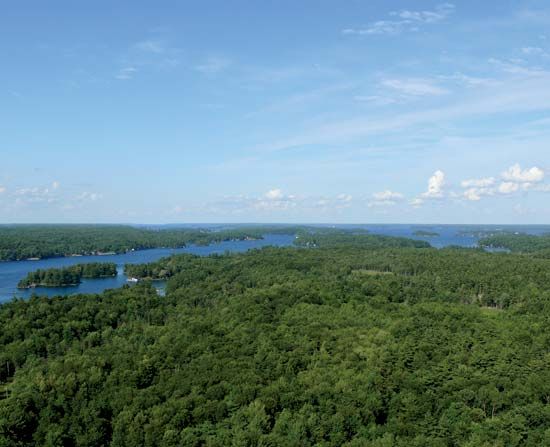
- Thousand Islands National Park: Located in southeastern Ontario on the St. Lawrence River, this park encompasses a mainland reservation, 18 forested islands, and 80 rocky islets.1
- Bruce Peninsula National Park: Situated on the Bruce Peninsula, this park features the rugged terrain of the Niagara Escarpment and extends into the waters of Lake Huron and Georgian Bay.10
- Fathom Five National Marine Park: Located off the tip of the Bruce Peninsula near Tobermory, this park protects the offshore waters and includes features such as Flowerpot Island.10
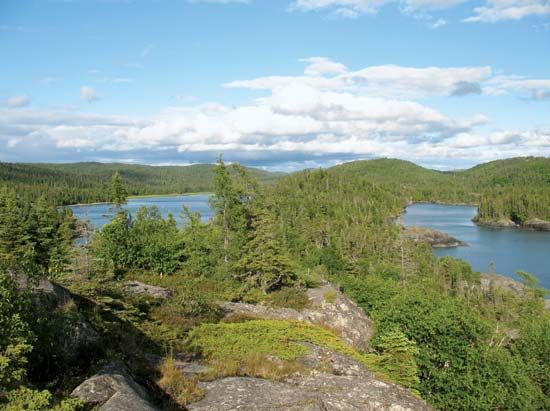
- Pukaskwa National Park: As the largest national park in Ontario, it is located on the northeastern shore of Lake Superior and features rugged Canadian Shield wilderness.11
Note that while Lake Superior Provincial Park is a significant protected area in Ontario, it is classified as a provincial park rather than a national park.12
Sources
- Point Pelee National Park — Encyclopædia Britannica
- Point Pelee National Park — Merriam-Webster
- Great Lakes - Plant and animal life — Encyclopædia Britannica
- Marsh — Encyclopædia Britannica
- Wetland - Wetland functions and ecosystem benefits — Encyclopædia Britannica
- mangrove: Top Questions — Encyclopædia Britannica
- Salt marsh — Encyclopædia Britannica
- Wetland - Disturbances caused by humans — Encyclopædia Britannica
- Wetland - Freshwater marshes — Encyclopædia Britannica
- Thousand Islands National Park — Encyclopædia Britannica
- Canada - Sports and recreation — Encyclopædia Britannica
- Bruce Peninsula — Encyclopædia Britannica
- Pukaskwa National Park — Encyclopædia Britannica
- Lake Superior Provincial Park — Encyclopædia Britannica
Published on · 2 min read