Pukaskwa National Park
Pukaskwa National Park is a wilderness reservation located in central Ontario, Canada, along the northeastern shore of Lake Superior. Established in 1971, it…
What is Pukaskwa National Park?
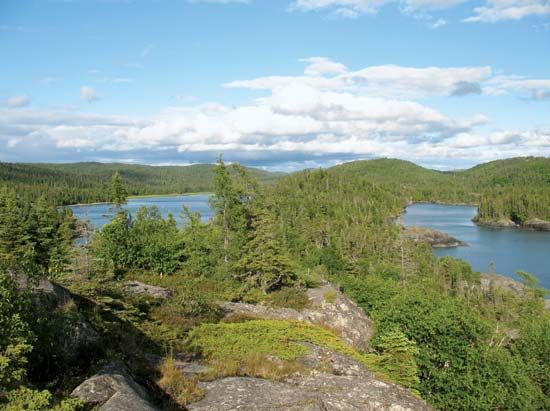
Pukaskwa National Park is a wilderness reservation located in central Ontario, Canada, along the northeastern shore of Lake Superior1. Established in 1971, it is the largest national park in the province, covering 725 square miles (1,878 square km).12
The park is characterized by its rugged Canadian Shield landscape, featuring 50 miles (80 km) of shoreline marked by rocky coves, islets, and dramatic cliffs, alongside numerous small lakes and streams. The region supports diverse wildlife, including moose, woodland caribou, black bears, timber wolves, and various furbearers like lynx and marten. Its vast forests are composed primarily of white and black spruce, jack pine, poplar, and birch. Additionally, the area contains sites of archaeological interest, where excavations have uncovered prehistoric Indigenous remains.2
What is the Canadian Shield and why is it important?
The Canadian Shield is one of the world’s largest geologic continental shields, covering approximately 8 million square kilometers (3 million square miles) across Canada and parts of the United States. Centered on Hudson Bay, it represents the largest mass of exposed Precambrian rock on Earth.34
Geological Significance
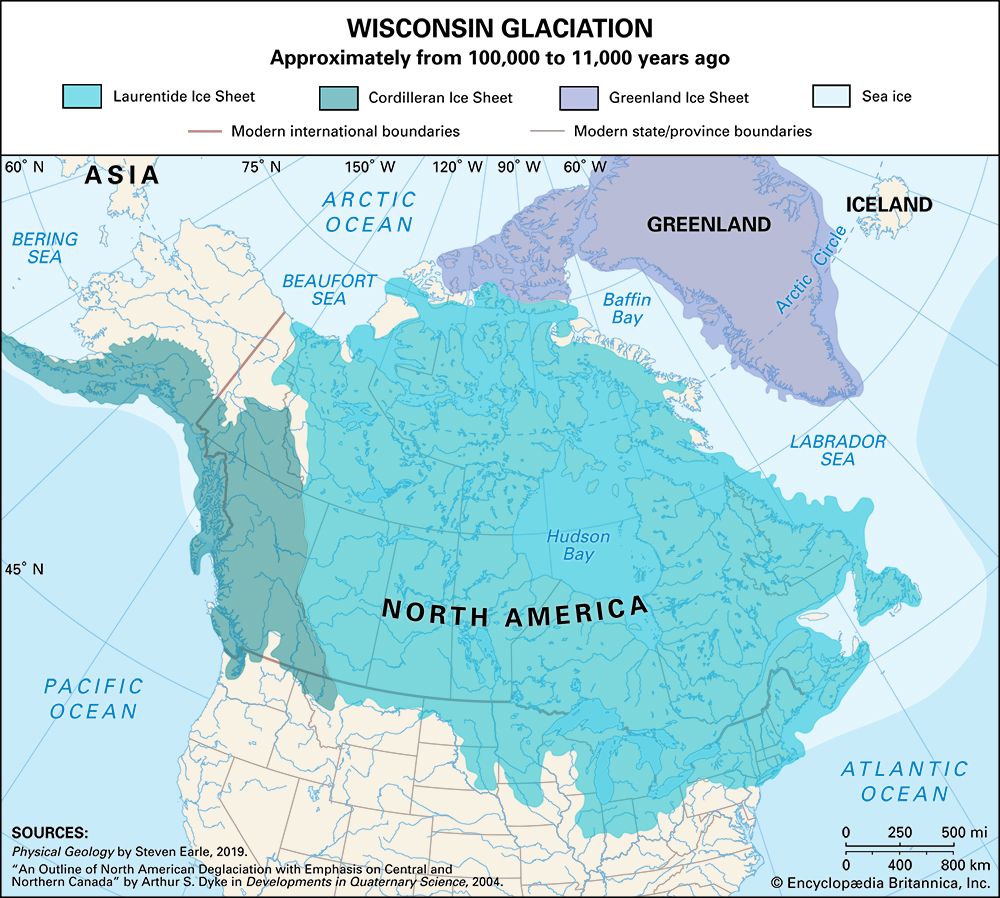
The region is composed of ancient crystalline rocks shaped by billions of years of uplift, mountain building, and erosion. Its current landscape was heavily modified during the Pleistocene Epoch by massive glaciers, which stripped away weathered soil and carved out the basins that now hold hundreds of thousands of lakes and swamps.science/lake) and swamps.34
Economic Importance
The Canadian Shield is a cornerstone of Canada’s economy due to its vast mineral resources. It contains significant deposits of gold, silver, copper, nickel, and uranium, among others. The exploitation of these minerals has historically driven the development of infrastructure, such as roads and railways, in Canada’s northlands, though this industrial activity has often resulted in environmental damage.56
How does the climate of Lake Superior affect the park’s ecosystem?
The climate of Lake Superior significantly influences the ecosystem of Pukaskwa National Park by acting as a thermal regulator for the surrounding region. Because the lake is a massive body of water, it absorbs large quantities of heat during warmer months and releases that heat slowly during colder months.17
This process creates a moderating effect on the local climate, resulting in cooler summers and warmer winters than would otherwise be experienced in this northern latitude. By warming the air in winter and cooling it in summer, the lake helps stabilize the environment along its shoreline, which supports the park’s diverse boreal forest and wildlife populations, including moose, woodland caribou, and various furbearers.1897
Additionally, the lake’s influence on moisture and air stability can lead to significant winter precipitation, which is a defining characteristic of the region’s climate patterns.78
What are some of the prehistoric cultures that lived in this region?
The region surrounding the northeastern shore of Lake Superior, including areas such as Pukaskwa National Park, has been home to Indigenous peoples for several thousand years. Archaeological excavations in these areas have uncovered evidence of prehistoric remains, providing insight into the long-standing human presence in the region.113
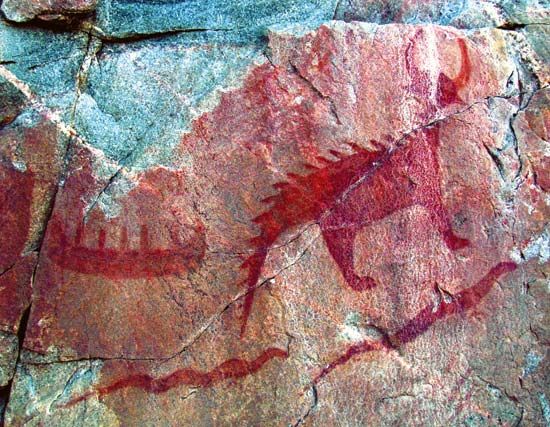
While specific cultural labels for the earliest prehistoric inhabitants of this exact wilderness are often categorized under broader regional groupings, the area is historically associated with Anishinaabeg peoples, as well as other First Nations groups who engaged in hunting, gathering, and fishing. Evidence of these cultures is preserved in the landscape, such as the Agawa pictographs found in Lake Superior Provincial Park, which are rock paintings created by Indigenous peoples over many millennia.1314
These societies were part of a wider network of Indigenous cultures in Canada, which included 12 major language groups such as the Algonquian and Iroquoian peoples, who developed sophisticated social, political, and trade institutions across the continent.4
Sources
- Pukaskwa National Park — Encyclopædia Britannica
- Pukaskwa National Park — Merriam-Webster
- Canada - The Canadian Shield — Encyclopædia Britannica
- Canadian Shield — Encyclopædia Britannica
- Canada - Minerals — Encyclopædia Britannica
- Canadian Shield: Top Questions — Encyclopædia Britannica
- Great Lakes: Top Questions — Encyclopædia Britannica
- lake - Problems and effects — Encyclopædia Britannica
- lake - Lake extinction — Encyclopædia Britannica
- Lake Superior — Encyclopædia Britannica
- Superior Upland — Encyclopædia Britannica
- Great Lakes - Hydrology and climate — Encyclopædia Britannica
- Canada - Precontact aboriginal history — Encyclopædia Britannica
- Minnesota - European settlement — Encyclopædia Britannica
- Lake Superior Provincial Park — Encyclopædia Britannica
Published on · 3 min read