Lake Te Anau
Lake Te Anau is located in the southwest of the South Island of New Zealand. As the largest of the Southern Lakes, it covers an area of 133 square miles (344…
Where is Lake Te Anau located in New Zealand, and what are its key geographical features?
Lake Te Anau is located in the southwest of the South Island of New Zealand. As the largest of the Southern Lakes, it covers an area of 133 square miles (344 square km) and occupies a valley shaped by glacial erosion.1
Key geographical features include:
- Dimensions and Depth: The lake is approximately 38 miles (61 km) long and 6 miles (10 km) wide, with a maximum depth of 906 feet (276 m), which places its bed below sea level.1
- Extensions: It features four distinct western extensions known as the Worsley Arm and the North, Middle, and South fjords.1
- Hydrology: It is fed by the Clinton and Eglinton rivers and drains through the Waiau River, which supports hydroelectric power generation1.2
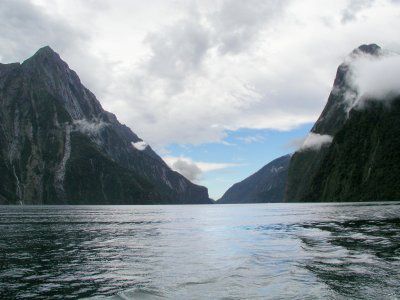
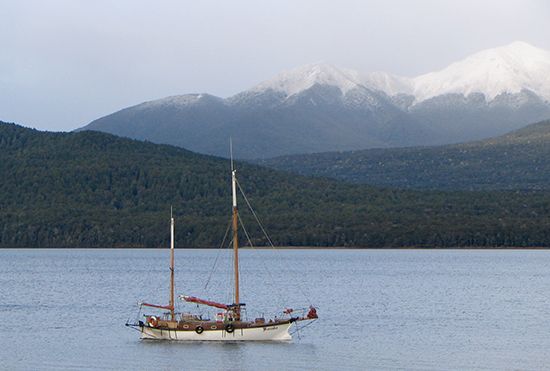
- Setting: The lake is situated in an alpine environment, bordered by forested mountains to the west and farmlands to the east.1
The region is also significant for its biodiversity, serving as a habitat for the rare, flightless takahe.12
How has Lake Te Anau been featured in literature, art, or films about New Zealand?
Sorry, the Britannica knowledge base does not contain information regarding how Lake Te Anau has been featured in literature, art, or films.
The available records focus on the lake’s geography, its role in hydroelectric power generation, its discovery by Europeans, and its significance as a habitat for the takahe.12
What is the geological history of Lake Te Anau, and how was it formed?
Lake Te Anau was formed through the process of glacial erosion. The lake occupies a valley that was significantly deepened by the action of glaciers over time.1
This geological history resulted in a basin that reaches a maximum depth of 906 feet (276 m), which places the lake’s bed 220 feet (67 m) below sea level, even though its surface elevation sits at 686 feet (209 m) above sea level. The surrounding landscape, characterized by the rugged terrain of Fiordland, reflects the intense glacial activity that shaped much of the southwestern South Island of New Zealand.13
How does Lake Te Anau contribute to New Zealand’s tourism industry?
Lake Te Anau serves as a vital hub for New Zealand’s tourism industry, primarily centered on the town of Te Anau, which acts as the main entry point for the expansive Fiordland National Park.12
The region’s appeal to visitors is driven by its superb alpine setting, which offers a variety of recreational activities:
- Outdoor Recreation: The lake is a popular destination for fishing and various aquatic sports.12
- Gateway to Wilderness: As the primary headquarters for Fiordland National Park, the town provides access to iconic hiking trails, mountaineering, and rock climbing opportunities.2
- Scenic Exploration: Visitors utilize the area for scenic flying trips and as a transit point for travel to Milford Sound.2
- Natural Heritage: The area is renowned for its unique biodiversity, including the rare takahe, and its proximity to the Te Wahipounamu World Heritage site.12
Sources
- Lake Te Anau — Encyclopædia Britannica
- Fiordland National Park — Encyclopædia Britannica
- Fiordland — Merriam-Webster
- Lake Pukaki — Encyclopædia Britannica
- Wakatipu Lake — Encyclopædia Britannica
Published on · 2 min read