Takahe
The takahe (Porphyrio hochstetteri) is a rare flightless bird native to New Zealand. Belonging to the Rallidae family, this striking species is known for its…
What is Takahe?
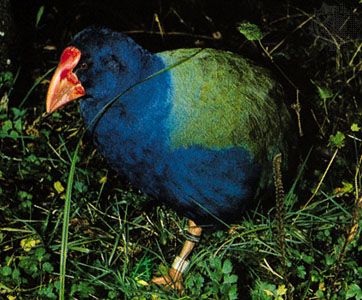
The takahe (Porphyrio hochstetteri) is a rare flightless bird native to New Zealand. Belonging to the Rallidae family, this striking species is known for its brilliant blue and coppery-green plumage, large red bill, and a distinctive red frontal shield on its forehead.1
Once believed to be extinct in the late 1800s, the bird was famously rediscovered in 1948 within remote valleys on the South Island. Today, the takahe is classified as an endangered species by the International Union for Conservation of Nature, with fewer than 250 mature individuals remaining in protected areas. These birds primarily feed by stripping seeds from grasses and nest on the ground, typically laying two eggs at a time.1
Why did scientists think the takahe was extinct?
Scientists believed the takahe was extinct in the late 1800s because the bird had vanished from its known habitats and was not sighted for decades. This led to the widespread assumption that the species had died out entirely. It was not until 1948 that the bird was unexpectedly rediscovered in several remote valleys on the South Island of New Zealand.1
The species remains critically rare today, with fewer than 250 mature individuals surviving, leading the International Union for Conservation of Nature to classify it as an endangered species.1
What other flightless birds are native to New Zealand?
New Zealand is home to several unique flightless birds that have evolved in isolation, often lacking natural terrestrial predators until the arrival of humans and invasive species.
Notable Flightless Birds of New Zealand
- Kiwi: These chicken-sized, nocturnal birds belong to the genus Apteryx. They are famous for their long, flexible bills with nostrils at the tip, hairlike feathers, and vestigial wings. There are five recognized species, including the tokoeka kiwi, the little spotted kiwi, and the brown kiwi.34
- Kakapo: Also known as the owl parrot, this is a giant, nocturnal, and flightless parrot. It is one of the world’s rarest birds, characterized by its owl-like face and ducklike walk.5
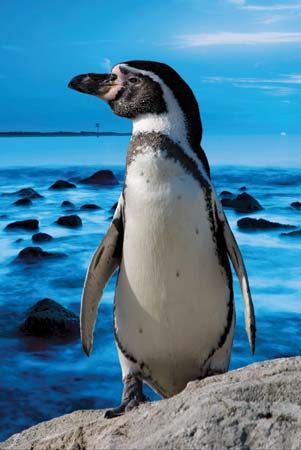
- Penguins: Several species of penguins inhabit the region, including the Snares penguin and the Fiordland penguin. While they are flightless, they have evolved into highly efficient swimmers.67
Extinct Species
New Zealand was once home to the moas, a group of fast-running flightless birds that ranged significantly in size. Unfortunately, all 11 known species were hunted to extinction by the ancestors of the Maori people between 1250 and 1350.8
How do conservationists protect the takahe from predators?
Conservationists protect the takahe primarily by managing their habitat on small, isolated islands to ensure they remain free from invasive predators. Because the takahe is a flightless bird that nests on the ground, it is extremely vulnerable to introduced mammals such as rats, cats, and ferrets, which have historically decimated native populations.14
While specific details for the takahe are limited in the provided text, conservation strategies for similar endangered New Zealand species, such as the kakapo, involve relocating birds to predator-free offshore sanctuaries. These protected environments are essential for the survival of species that cannot defend themselves against non-native predators.4
Sources
- Takahe — Encyclopædia Britannica
- takahe — Merriam-Webster
- Kiwi — Encyclopædia Britannica
- Kakapo: Top Questions — Encyclopædia Britannica
- Did you know? — Merriam-Webster
- Flightless bird — Encyclopædia Britannica
- Snares penguin — Encyclopædia Britannica
- Fiordland penguin — Encyclopædia Britannica
Published on · 2 min read