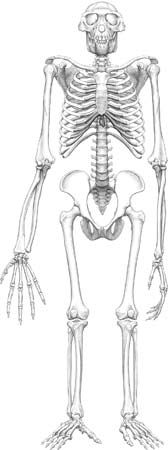
Le Moustier
The Neanderthal remains discovered at Le Moustier date to between 40,000 and 50,000 years ago. The site, which serves as the type site for the Mousterian…
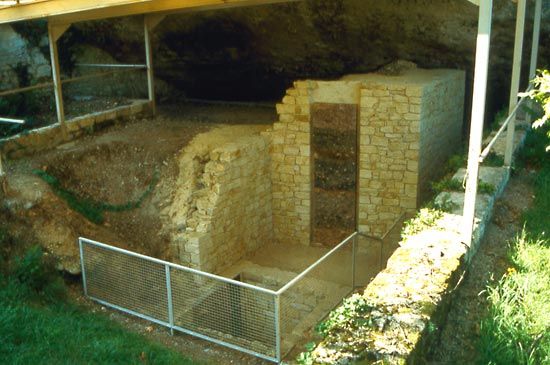
How old are the Neanderthal remains found at Le Moustier, and what do they tell us about Neanderthal life?
The Neanderthal remains discovered at Le Moustier date to between 40,000 and 50,000 years ago. The site, which serves as the type site for the Mousterian industry, has provided invaluable insights into Neanderthal biology and development.1
The two fossils recovered—an adolescent (Le Moustier 1) and a newborn (Le Moustier 2)—have been instrumental in understanding how adult Neanderthal features, such as the characteristic midface projection and robust limb bones, emerge during growth. Beyond biology, the site is significant for its evidence of burial practices, which suggest symbolic and ritualistic behavior.12
More broadly, research at Le Moustier and other sites indicates that Neanderthals possessed advanced tool technologies, maintained organized domestic hearths, and engaged in a division of labor. Their complex cognitive abilities are further evidenced by the use of pigments, ornaments, and potential musical instruments.2
What is the significance of Le Moustier in the field of archaeology and anthropology?
Le Moustier is a site of immense significance in paleoanthropology and archaeology, primarily serving as the type site for the Mousterian industry. This industry, characterized by sophisticated flake tool technology, is closely associated with Neanderthal populations across Europe and Asia.13
The site is equally vital for its contribution to our understanding of Neanderthal biology. The discovery of two immature fossils—an adolescent (Le Moustier 1) and a newborn (Le Moustier 2)—has provided researchers with a unique window into Neanderthal growth patterns. By analyzing these remains, scientists have established how distinct adult features, such as the characteristic midface projection and robust limb structure, develop throughout maturation.1
Furthermore, Le Moustier is recognized as one of the key locations providing evidence of burial practices among Neanderthals. These findings are critical to the anthropological study of Neanderthals, as they suggest the presence of symbolic and ritualistic behaviors, reflecting a level of cognitive complexity that extends beyond basic survival.2
What evidence of Neanderthal diet and food preparation has been uncovered at Le Moustier?
While specific dietary analysis of the remains found directly at Le Moustier is limited in the provided records, the site is the type site for the Mousterian industry, which provides a clear picture of how Neanderthals processed food throughout their range.
Archaeological evidence from Mousterian sites indicates that Neanderthals utilized a variety of specialized tools for food preparation, including:
- Processing Tools: Neanderthals created distinct tool kits for domestic tasks, such as scrapers for tanning hides and tools specifically designed to kill and process animals.
- Cutting and Preparation: Burins were used for cutting into wood and bone, while other implements served to sharpen spears used for hunting large game like mammoths and wooly rhinoceros.
- Cooking: Neanderthals maintained domestic hearths where they likely cooked plant foods and meat over fires. Evidence suggests they may have mixed medicinal plants with other plant foods during preparation.
- Dietary Breadth: While their diets were heavily meat-based, dental calculus and fossilized fecal matter indicate they also consumed significant amounts of plant matter, fish, and aquatic mollusks.
How has the interpretation of Le Moustier findings changed over time since its discovery?
The interpretation of findings at Le Moustier has evolved significantly since the site’s initial 19th-century excavations, shifting from a focus on basic typology to a nuanced understanding of Neanderthal biology and behavior.1
- From Type Site to Biological Archive: Initially, Le Moustier gained prominence in the 1860s as the type site for the Mousterian industry, defining a specific Paleolithic stone tool culture. Later, the discovery of two immature fossils (Le Moustier 1 and 2) transformed the site into a critical laboratory for studying Neanderthal growth patterns, allowing scientists to map how adult features—such as midface projection—develop during maturation.1
- Recovery and Re-evaluation: The history of the fossils themselves reflects the changing nature of archaeological curation. After being lost or displaced following World War II, the re-identification of Le Moustier 2 in 2002 allowed for modern, high-precision analysis that was not possible at the time of its 1914 discovery.1
- Behavioral Complexity: Modern interpretations have moved beyond viewing Neanderthals as simple “cavemen.” Evidence from Le Moustier and similar sites now supports the view that Neanderthals engaged in burial practices, suggesting symbolic and ritualistic cognitive functions that were previously underestimated.4
Sources
- Le Moustier — Encyclopædia Britannica
- Neanderthal - Neanderthal culture — Encyclopædia Britannica
- Stone tool industry — Encyclopædia Britannica
- Mousterian industry — Encyclopædia Britannica
- fire: Top Questions — Encyclopædia Britannica
- Stone Age - Middle Paleolithic — Encyclopædia Britannica
- Neanderthal — Encyclopædia Britannica
Published on · 3 min read