Leptolepis
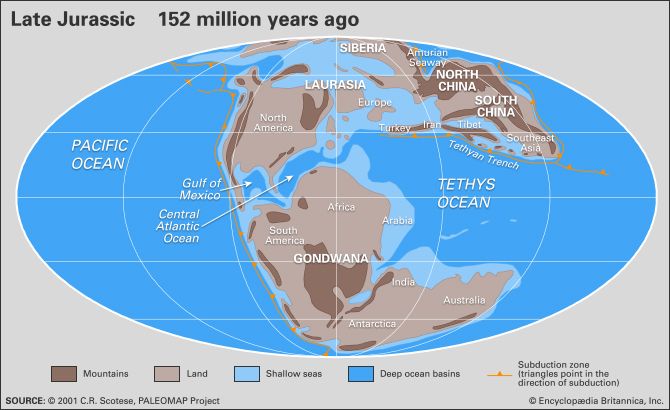
Leptolepis is a genus of small, herring-like marine fishes that were abundant during the Jurassic Period (approximately 200 million to 146 million years ago).
What is Leptolepis?
Leptolepis is a genus of small, herring-like marine fishes that were abundant during the Jurassic Period (approximately 200 million to 146 million years ago).1
These fish are significant in evolutionary biology because they represent an anatomical intermediate between primitive holosteans and more advanced teleosts, the group that comprises the majority of modern fish species. Characterized by their thin scales and nearly homocercal (symmetrical) tails, Leptolepis served as the type genus for the family Leptolepidae. While they are most strongly associated with the Jurassic, some fossil evidence suggests the genus may have originated earlier and persisted longer than that period alone.12
What are the main differences between holosteans and teleosts?
Holosteans and teleosts represent two distinct evolutionary stages within the class Actinopterygii, or ray-finned fishes. While holosteans served as an important evolutionary bridge, teleosts represent the most advanced group of bony fishes, comprising the vast majority of living species today.13
The primary differences between these two groups include:
- Tail Structure: A defining characteristic of teleosts is the fully developed homocercal tail, where the upper and lower lobes are symmetrical, providing superior swimming efficiency. In contrast, holosteans typically possess a hemiheterocercal tail, which is externally symmetrical but retains a slight upward turn of the body lobe.134
- Jaw and Feeding Apparatus: Teleosts possess a more efficient feeding and gill-ventilating apparatus compared to their holostean ancestors. While holosteans achieved an evolutionary advance by freeing the upper jaw from the cheek bones—allowing for greater movement and stronger jaw muscles—teleosts further refined these structures to support diverse feeding strategies.14
- Scales: Holosteans primitively feature thick, rhomboidal (diamond-shaped) scales, though some groups evolved thinner, rounded scales. Teleosts generally exhibit thinner, overlapping scales, which contribute to their overall body plan optimized for maximum swimming efficiency.41
- Evolutionary Status: Holosteans are considered a group of mixed origin that does not represent a single lineage; only two groups survive today, the bowfin and gars. Teleosts, having arisen from extinct holostean ancestors like the Pholidophoriformes, have undergone massive radiation and represent the pinnacle of bony fish evolution.1
How do scientists use fossils to trace the evolution of fish?
Scientists trace the evolution of fish primarily by studying the fossil record and applying the principles of comparative anatomy. Because fossilized fish are often represented only by their bony remains, ichthyologists focus heavily on osteology to identify structural changes over time.67
Key methods and insights include:
- Structural Comparison: Scientists compare the skeletons of extinct and extant species to identify homologous structures—body parts that share a common evolutionary origin despite differences in current function. This allows researchers to map how specific groups replaced older, less efficient ones as they adapted to new environments.63
- Tracking Functional Advances: Paleontologists look for specific anatomical markers of increased efficiency, such as the transition from heterocercal (asymmetrical) tails to homocercal (symmetrical) tails, or the evolution of more mobile, protractile jaws. These changes indicate a shift toward better swimming and feeding capabilities.8
- Taxonomic Classification: By analyzing external features like teeth, fin rays, and scale patterns, scientists categorize fish into evolutionary lineages. This helps clarify the relationships between groups, such as the transition from primitive chondrosteans to holosteans and eventually to modern teleosts.87
While the fossil record remains fragmentary, these comparative studies provide a framework for understanding the successive replacement of fish groups over hundreds of millions of years.6
What other marine animals lived during the Jurassic Period?
The Jurassic Period hosted a diverse array of marine life, characterized by the “Mesozoic Marine Revolution,” an evolutionary arms race between predators and prey that drove significant diversification.12
Marine Vertebrates
Beyond the bony and cartilaginous fishes, such as the massive Leedsichthys, the Jurassic seas were dominated by large marine reptiles:1314
- Ichthyosaurs: Fast-swimming predators with sleek profiles and exceptionally large eyes.13
- Plesiosaurs: Including both short-necked pliosaurs—some of the largest carnivores of the era—and long-necked elasmosaurs.13
- Crocodiles: Large marine species inhabited these environments as well.13
Invertebrates and Protists
Marine ecosystems were heavily populated by mollusks, echinoderms, and new planktonic groups:12
- Cephalopods: Shelled ammonites and squidlike belemnites were highly common.12
- Crustaceans: The first true crabs and lobsters appeared, alongside radiating ostracods.12
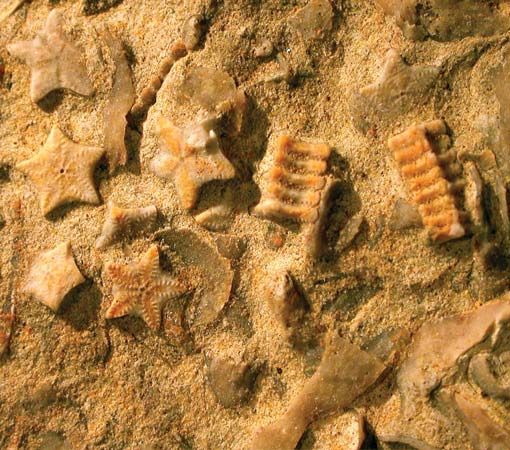
- Echinoderms: Crinoids, sea urchins, and starfish were abundant, with some urchins evolving to burrow into sediment.12
- Plankton: Coccolithophores and foraminifera radiated rapidly, fundamentally changing ocean geochemistry.12
Sources
- Leptolepis — Encyclopædia Britannica
- Leptolepis — Merriam-Webster
- fish - Actinopterygii: ray-finned fishes — Encyclopædia Britannica
- teleost — Encyclopædia Britannica
- holostean - Skeletal features — Encyclopædia Britannica
- fish - Evolution and paleontology — Encyclopædia Britannica
- chondrichthyan - Evolution — Encyclopædia Britannica
- fish - Distinguishing taxonomic features — Encyclopædia Britannica
- protacanthopterygian - Evolutionarily important taxonomic characters — Encyclopædia Britannica
- Comparative anatomy — Encyclopædia Britannica
- fish - Sarcopterygii: fleshy-finned fishes — Encyclopædia Britannica
- Jurassic Period - Vertebrates — Encyclopædia Britannica
- Jurassic Period - Marine life — Encyclopædia Britannica
- Jurassic Period - Protists and invertebrates — Encyclopædia Britannica
Published on · 3 min read