Jurassic Period
During the Jurassic Period, the Earth experienced a generally warm paleoclimate characterized by an expanded tropical zone and a reduced temperature gradient…
What were the key changes in climate and sea levels during the Jurassic Period?
During the Jurassic Period, the Earth experienced a generally warm paleoclimate characterized by an expanded tropical zone and a reduced temperature gradient between the Equator and the poles. Global temperatures were likely elevated due to increased volcanic and seafloor-spreading activity, which released significant amounts of carbon dioxide, a greenhouse gas. There is no evidence of polar ice caps or major glaciation during this time.12
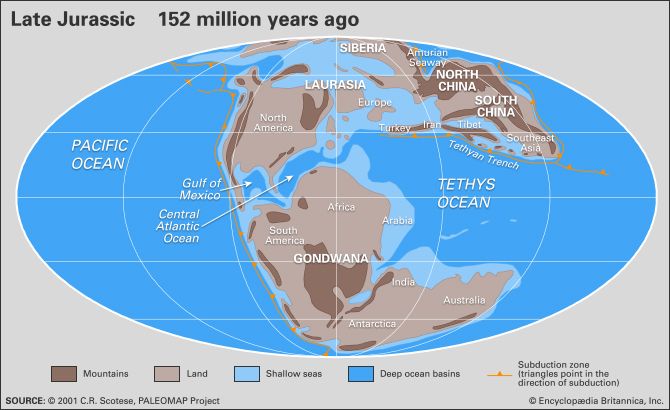
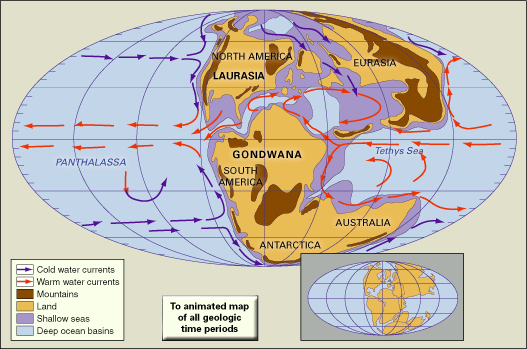
Regional climate varied significantly; large salt deposits indicate areas of high aridity, while extensive coal deposits point to humid environments. The Tethys Sea played a crucial role in distributing warm tropical waters globally.1
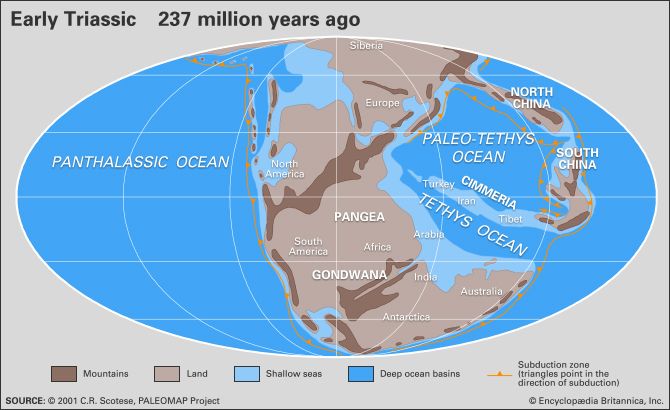
Regarding sea levels, evidence suggests a general increase from the Early to Late Jurassic. Because major glaciation was absent, these fluctuations were likely driven by thermal expansion of seawater or tectonic activity, such as seafloor spreading. However, distinguishing between global sea-level changes and local tectonic shifts remains difficult due to the significant geological activity occurring across continental margins during the breakup of Pangea.2
What is the Jurassic Period, and when did it occur in Earth’s history?
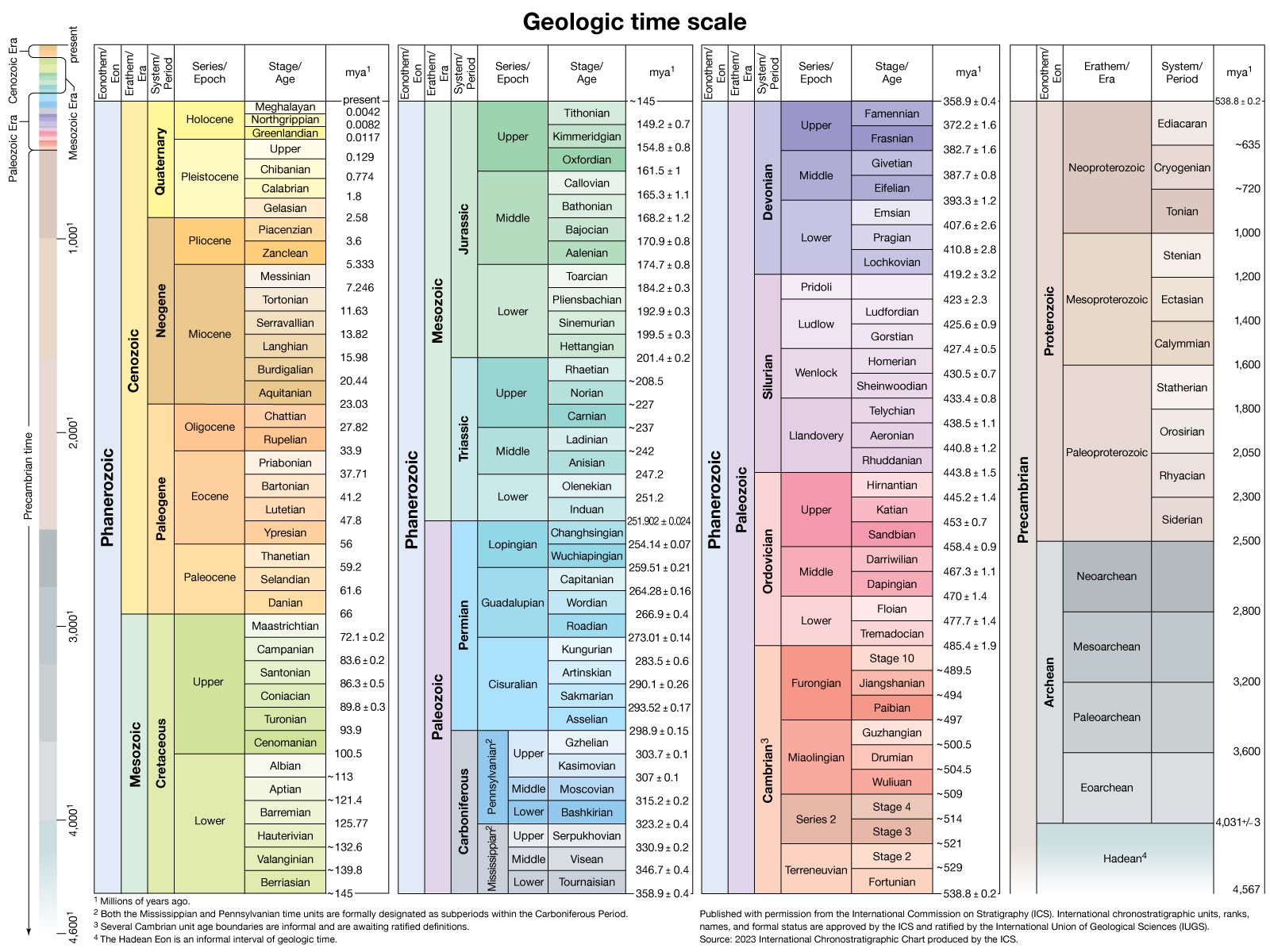
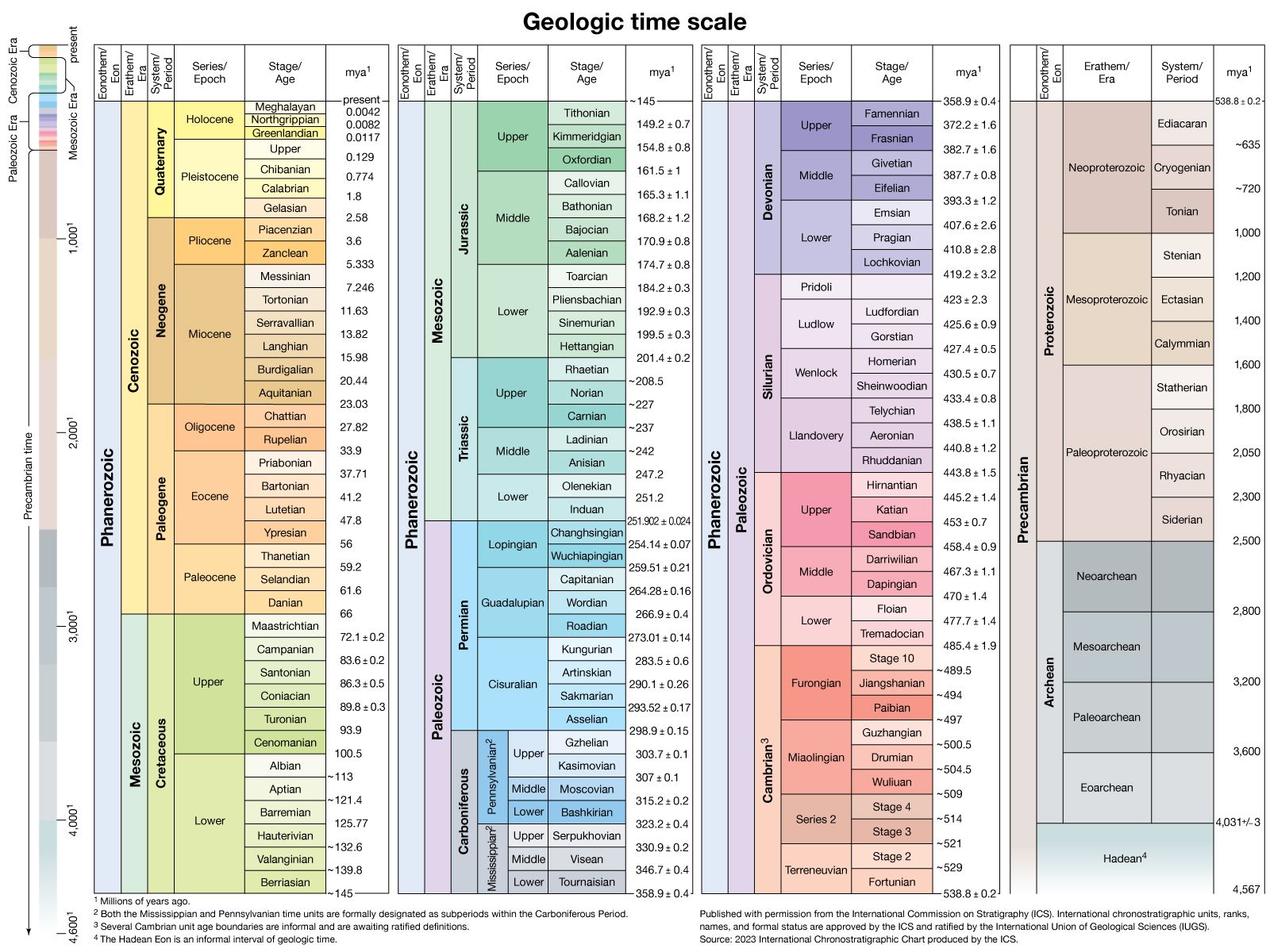
The Jurassic Period was the second of three periods that comprised the Mesozoic Era. It spanned from approximately 201.3 million to 145 million years ago, following the Triassic Period and preceding the Cretaceous Period.56
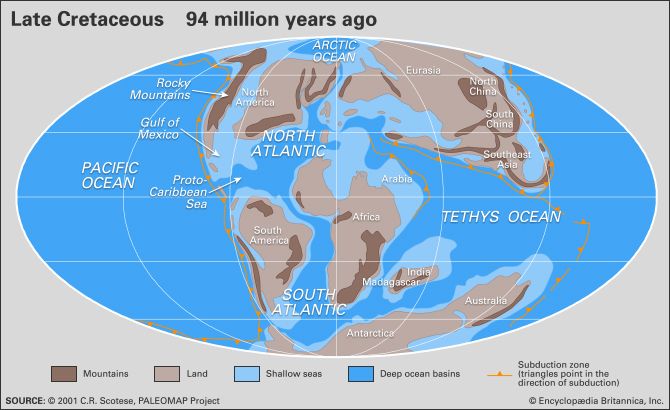
The period was defined by significant global transformations, most notably the fragmentation of the supercontinent Pangea. This tectonic activity initiated the development of the central Atlantic Ocean and the Gulf of Mexico. Heightened plate tectonic movement during this time also triggered widespread volcanism and major mountain-building events, such as the formation of the Rocky Mountains and the Andes.51
Biologically, the Jurassic was a time of recovery and diversification following a massive extinction event at the end of the Triassic. While dinosaurs and pterosaurs dominated terrestrial ecosystems, the oceans thrived with diverse reef communities and large marine predators. Notably, this period also saw the first appearance of birds.56
How do scientists use fossils to date and understand the Jurassic Period?
Scientists use fossils to date and understand the Jurassic Period primarily through the study of index fossils and the development of biozones. Because the Jurassic was a time of rapid evolutionary change, certain organisms—particularly those with hard body parts—evolved quickly, were geographically widespread, and were abundant, making them ideal for defining specific intervals of geologic time.78
The Role of Index Fossils
Ammonites, which are extinct, shelled cephalopods, are the most significant tools for dating Jurassic strata. Their shells possess elaborate, distinct suture lines that allow for easy identification. Because ammonites evolved rapidly and were widely distributed across various marine environments, they allow geologists to correlate rock layers across different regions and divide the Jurassic into fine-scale time intervals. Other organisms, such as ostracods and certain bivalves, are also used as index fossils to assist in this process.81
Biochronology and Zones
Building on the concept of faunal succession, paleontologists like Carl Albert Oppel refined the dating process by establishing biozones. By documenting the first and last appearances of various species, scientists can create a detailed biochronology. This method allows for:
- Temporal Correlation: Comparing overlapping species ranges to determine the relative age of rock layers.1
- Spatial Understanding: Mapping the distribution of ancient life (biofacies) to understand environmental conditions.1
While ammonites are the primary standard for these zones, their effectiveness can be limited by regional environmental preferences, such as the distinction between the tropical Tethyan realm and the cooler boreal realm.9210
How does the Jurassic Period fit into the larger context of the Mesozoic Era?
The Jurassic Period serves as the middle interval of the Mesozoic Era, a major geologic era of the Phanerozoic Eon often referred to as the “age of the dinosaurs.” Spanning from 201.3 million to 145 million years ago, it is positioned between the Triassic Period and the Cretaceous Period.6613
Within the broader context of the Mesozoic, the Jurassic represents a critical phase of transition. While the era as a whole was characterized by a generally warm climate and the gradual breakup of the supercontinent Pangea, the Jurassic specifically saw the acceleration of these tectonic shifts, leading to the formation of the central Atlantic Ocean and the Gulf of Mexico.5613
Biologically, the Jurassic was a period of recovery following the mass extinction that ended the Triassic. It facilitated the diversification of many modern vertebrate and invertebrate groups, the dominance of dinosaurs and pterosaurs on land, and the first appearance of birds. This era of “middle life” ultimately set the stage for the final Mesozoic period, the Cretaceous, before the mass extinction that concluded the era 66 million years ago.5136
Sources
- Jurassic Period - Paleoclimate — Encyclopædia Britannica
- Jurassic Period - Paleogeography — Encyclopædia Britannica
- Pangea: Top Questions — Encyclopædia Britannica
- Jurassic Period - Ocean basins — Encyclopædia Britannica
- Jurassic Period — Encyclopædia Britannica
- A Journey Through Time Since the Precambrian - Jurassic Period: 201.3 million to 145 million years ago — Encyclopædia Britannica
- index fossil — Encyclopædia Britannica
- Jurassic Period - Protists and invertebrates — Encyclopædia Britannica
- geochronology - Stages and zones — Encyclopædia Britannica
- Jurassic Period - Eurasia and Gondwana — Encyclopædia Britannica
- Cretaceous Period - Correlation — Encyclopædia Britannica
- Tithonian Stage — Encyclopædia Britannica
- Mesozoic Era — Encyclopædia Britannica
- Tertiary Period - Major subdivisions of the Tertiary System — Encyclopædia Britannica
Published on · 4 min read