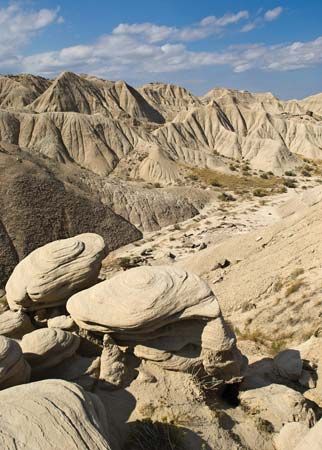
Little Missouri National Grassland
The Little Missouri National Grassland, located in western North Dakota, is the largest designated national grassland in the United States. While much of the…
How has oil and gas development impacted the Little Missouri National Grassland?
The Little Missouri National Grassland, located in western North Dakota, is the largest designated national grassland in the United States. While much of the region—characterized by its midgrass prairie, badlands, and diverse wildlife—remains in a natural, unaltered state, the area serves multiple purposes beyond conservation and recreation.
In addition to providing grazing land for cattle and hosting significant archaeological and paleontological sites, the grassland contains hundreds of active oil wells. These industrial operations coexist with the landscape’s role as a habitat for various species, including elk, pronghorn, bighorn sheep, and numerous birds of prey.1
While the presence of these wells is a noted feature of the land’s current usage, the provided information does not detail specific environmental or ecological impacts resulting from this development.
How does the Little Missouri National Grassland contribute to North Dakota’s economy and agriculture?
The Little Missouri National Grassland plays a multifaceted role in the economy and agricultural landscape of western North Dakota.
Agricultural Contributions
The grassland serves as a vital resource for the regional livestock industry by providing extensive grazing land for cattle. This use of the land aligns with the broader agricultural character of North Dakota, where grasses are essential for protecting soil from erosion and supporting pasture-based systems.12
Economic Contributions
Beyond its agricultural utility, the area contributes to the state’s economy through industrial and recreational activities:
- Energy Production: The region contains hundreds of active oil wells, which represent a significant industrial presence within the grassland.1
- Recreation and Tourism: The land supports various outdoor activities, including hiking, canoeing, fishing, and hunting, which draw visitors to the region.1
- Scientific and Cultural Value: The presence of archaeological sites related to Native Americans and early pioneers, alongside significant paleontological deposits—such as dinosaur skeletons and petrified wood—adds unique value to the area.1
What conservation efforts are in place to protect the Little Missouri National Grassland?
The Little Missouri National Grassland is managed by the U.S. Forest Service, a federal agency within the U.S. Department of Agriculture tasked with the conservation and stewardship of the nation’s grasslands and forests.
The agency’s management approach is guided by the principle of ecological sustainability, which seeks to maintain the health, diversity, and productivity of these lands for the long term. Under the Multiple-Use Sustained-Yield Act of 1960, the Forest Service is required to balance various land uses—including conservation, recreation, and resource management—to ensure that the environment remains resilient for future generations.1
Specific conservation practices employed by the Forest Service include:
- Balanced Resource Management: Integrating conservation efforts with other land uses to prevent the degradation of natural resources.1
- Fire Ecology: Utilizing prescribed burns to support ecosystem health, moving away from older policies of total fire suppression.1
- Localized Stewardship: Decentralized management through regional offices and ranger districts allows for decisions tailored to the specific flora, fauna, and ecosystems of the grassland.1
What are the main ecological features and wildlife found in the Little Missouri National Grassland?
The Little Missouri National Grassland is a diverse prairie region characterized by several distinct ecological features and a wide variety of wildlife.
Ecological Features
Much of the grassland remains in a natural, unaltered condition, encompassing a variety of landscapes:
- Topography: The region is defined by midgrass prairie, rugged badlands, and prominent buttes.
- Hydrology: Woody patches are found along the streams that traverse the area, contributing to the diversity of the habitat.
- Atmosphere: The openness of the terrain allows for nearly constant wind to blow across the landscape without obstruction.
Wildlife
The grassland provides a habitat for a diverse array of animal species, including:
- Mammals: Prairie dogs, elk, pronghorn, deer, bighorn sheep, coyotes, and jackrabbits.
- Birds: Eagles, falcons, pheasants, grouse, and wild turkeys.
In addition to its living ecosystems, the area is rich in historical and scientific interest, containing archaeological sites related to Native Americans and early pioneers, as well as significant deposits of aquatic fossils, petrified wood, and dinosaur skeletons.1
Sources
- Little Missouri National Grassland — Encyclopædia Britannica
- North Dakota - Plant and animal life — Encyclopædia Britannica
- U.S. Forest Service — Encyclopædia Britannica
- Missouri River — Encyclopædia Britannica
- Little Missouri River — Encyclopædia Britannica
Published on · 3 min read