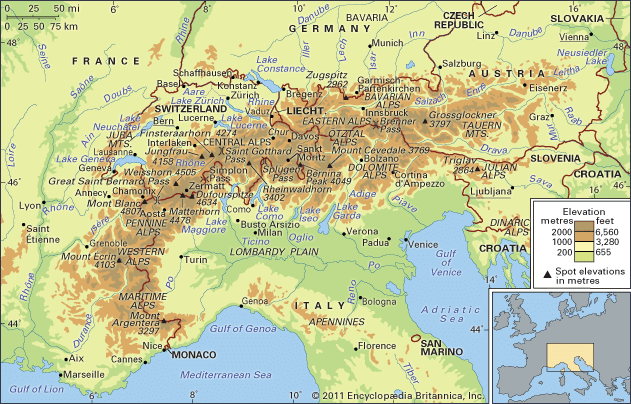
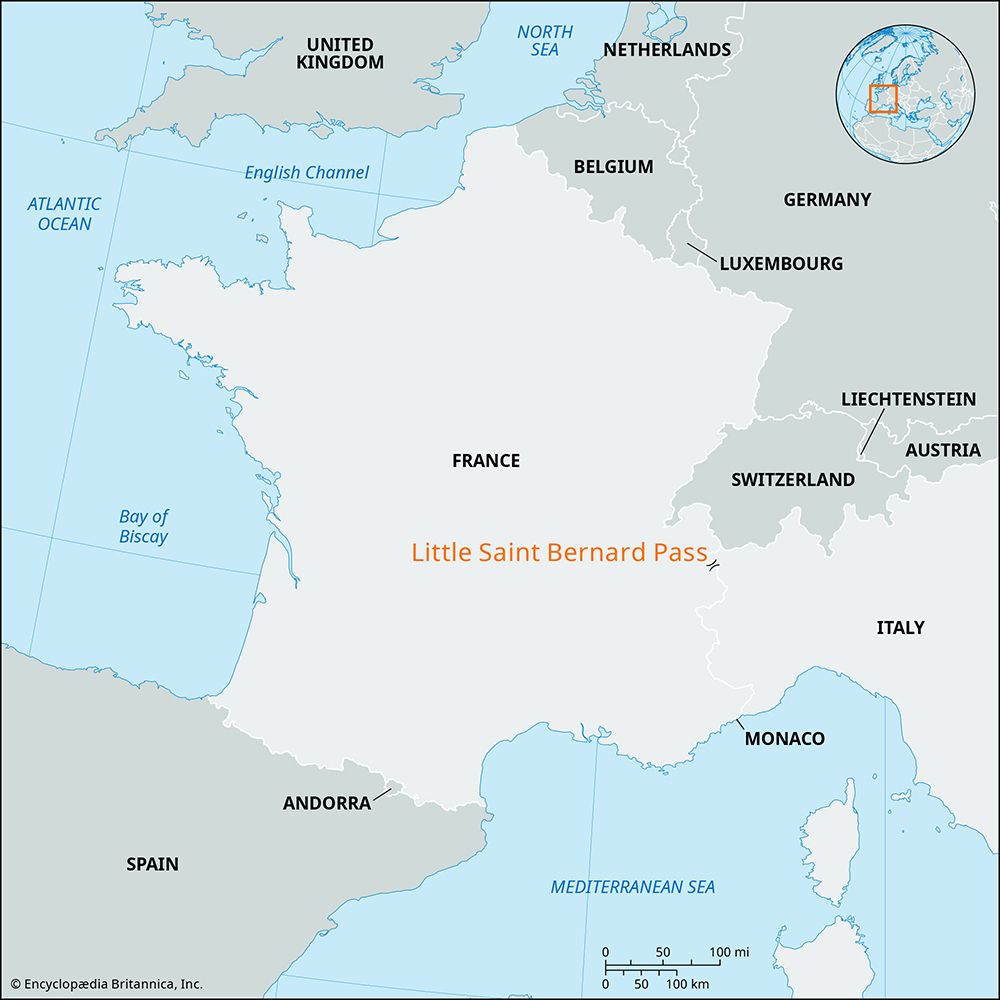
Little Saint Bernard Pass
The Little Saint Bernard Pass has served as a vital corridor through the Alps for centuries. Historically, it was the primary route into Gallia Comata until…
How has the Little Saint Bernard Pass been used for transportation throughout history?
The Little Saint Bernard Pass has served as a vital corridor through the Alps for centuries. Historically, it was the primary route into Gallia Comata until the Montgenèvre Pass opened in 77 BCE. Some scholars suggest that Hannibal utilized this pass during his march toward Rome in 218 BCE.1
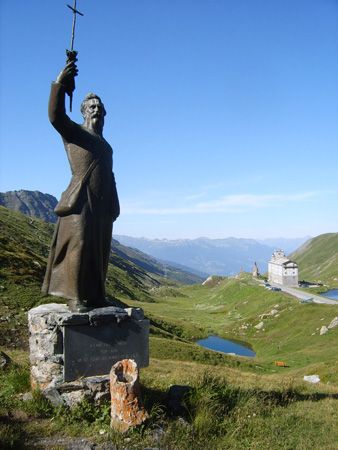
The pass is steeped in mythology; its ancient name, Alpis Graia, was linked to the legend of Hercules crossing the mountains while returning from Spain. To support travelers, a hospice was established at the summit in the 11th century by St. Bernard of Aosta.1
Today, the pass functions as a modern transportation link, connecting Bourg-Saint-Maurice in France with Morgex in the Valle d’Aosta, Italy. While it previously sat directly on the border, the Treaty of Paris in 1947 adjusted the territorial boundaries in the region.1
Are there any interesting legends or cultural associations related to the Little Saint Bernard Pass?
The Little Saint Bernard Pass is rich in both mythological and historical associations. Its ancient name, Alpis Graia (meaning “Greek pass”), is linked to the legend of the Greek hero Hercules. According to this tradition, Hercules crossed the Alps via this route while returning from Spain with the oxen of the giant Geryon, although some scholars note that the geography of the legend may better align with the Maritime Alps.1
Culturally, the pass is deeply connected to Saint Bernard de Menthon, who founded a hospice at the summit in the 11th century to protect pilgrims traveling to Rome. His legacy is further immortalized by the St. Bernard dog breed, which was named after the hospices and became famous for rescuing travelers in the treacherous mountain conditions. In 1923, Pope Pius XI honored this connection by naming Saint Bernard the patron saint of mountain climbers.13
What are some notable features or landmarks along the Little Saint Bernard Pass?
The Little Saint Bernard Pass, situated at an elevation of 7,178 feet (2,188 meters) between the Mont Blanc Massif and the Graian Alps, features several notable historical and cultural landmarks:
- The Hospice: Located just southwest of the pass, this facility was founded in the 11th century by Saint Bernard of Aosta. It was established to provide shelter and assistance to pilgrims and travelers navigating the treacherous, high-altitude terrain.21
- Ancient Routes: The pass served as the primary route into Gallia Comata until the opening of the Montgenèvre Pass in 77 BCE. It is also historically associated with the legendary crossing of Hannibal in 218 BCE.2
- Mythological Associations: Known in antiquity as Alpis Graia (“Greek pass”), the site is linked to the legend of Hercules, who was said to have crossed the Alps here while returning from Spain.2
How did the Little Saint Bernard Pass play a role in military campaigns throughout history?
The Little Saint Bernard Pass has served as a strategic corridor for military movement since antiquity. Its most famous historical association is with the Carthaginian general Hannibal, whom some scholars identify as having led his army across the pass in 218 BCE during his campaign against Rome.1
Beyond this legendary crossing, the pass functioned as the primary military and trade route over the Alps into Gallia Comata. It maintained this status as a vital gateway for Roman forces and regional transit until the opening of the Montgenèvre Pass in 77 BCE, which provided an alternative route.1
The pass remained a significant geopolitical boundary for centuries, situated directly on the border between France and Italy until the Treaty of Paris in 1947 adjusted the territorial lines in the region.1
Sources
- Little Saint Bernard Pass — Encyclopædia Britannica
- Great St. Bernard Pass — Encyclopædia Britannica
- Saint Bernard de Menthon — Encyclopædia Britannica
- Saint Bernard — Encyclopædia Britannica
Published on · 3 min read