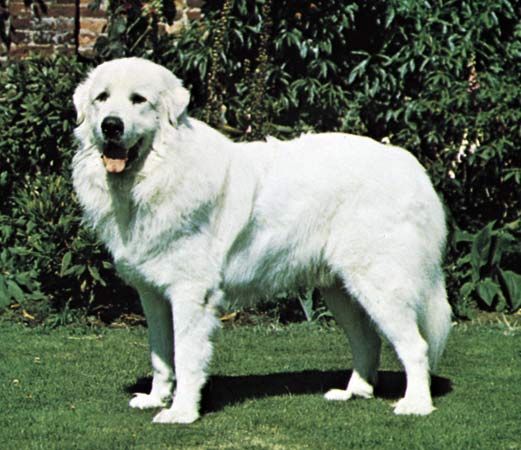
Saint Bernard
The Saint Bernard is widely recognized for its calm, easygoing, and affectionate temperament, making it a gentle companion for family members of all ages.…
How do Saint Bernard dogs interact with children and other pets?
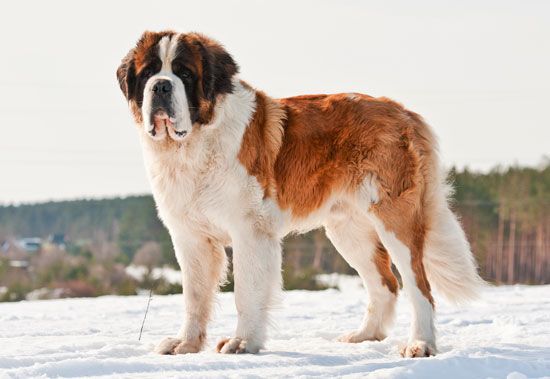
The Saint Bernard is widely recognized for its calm, easygoing, and affectionate temperament, making it a gentle companion for family members of all ages. While the breed is often depicted in popular culture as a “nanny dog” for children, its massive size and strength can make it difficult for children to manage safely.1
Regarding other animals, Saint Bernards are generally good with household pets, including both dogs and cats. However, they may not always interact well with unfamiliar dogs.1
It is important to note that while these traits are common generalizations, individual dogs may vary in their behavior and temperament. Because of their significant size and strength, any interactions between a Saint Bernard and young children or other pets should always be supervised to ensure the safety of everyone involved.1
What is the historical origin and purpose of the Saint Bernard breed?
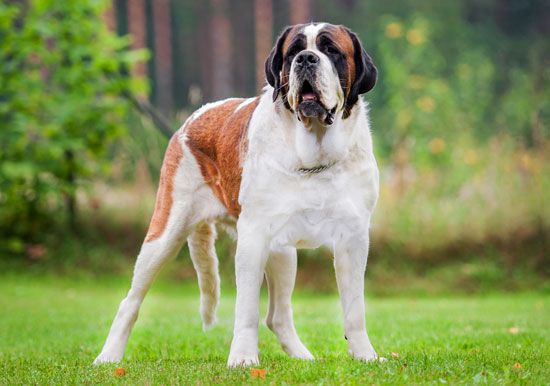
The Saint Bernard originated in the Pennine Alps along the border of Switzerland and Italy. The breed is named after Saint Bernard de Menthon, who established hospices at the Great and Little St. Bernard passes to assist travelers navigating the treacherous, avalanche-prone mountain terrain.1
Monks at these hospices developed the breed during the 16th and 17th centuries. Initially, they were utilized as guard dogs, but they were later trained for rescue work to locate lost or troubled travelers. The breed is believed to have descended from mastifflike dogs introduced to Europe by the ancient Romans. Beyond their famous rescue history, Saint Bernards have also served as cattle, draft, and guard dogs.1
While they are iconic for their rescue service, the popular image of them carrying brandy casks is a myth, originating from an 1820 painting by artist Edwin Landseer.1

What are the typical temperament and personality traits of Saint Bernard dogs?
The Saint Bernard is characterized by a calm, easygoing, and affectionate temperament. As a low-energy, slow-moving breed, it is generally demonstrative toward family members and maintains a friendly disposition toward strangers.1
While the Saint Bernard is not typically a natural watchdog or protection dog, its massive size and deep bark are often sufficient to intimidate potential intruders; notably, the breed does not bark without reason. In terms of training, these dogs learn quickly, though they tend to respond in a methodical manner.1
Although their gentle nature makes them suitable companions for people of all ages, their significant size and strength can make them difficult for children or seniors to manage. Furthermore, while they are generally good with other household pets, they may not always interact well with unfamiliar dogs. As with all breeds, these traits are generalizations, and individual dogs may exhibit variations in their specific personality and behavior.1
Are there any famous Saint Bernard dogs in popular culture or history?
Several Saint Bernards have achieved fame throughout history and popular culture:
- Barry: The most legendary rescue dog in the breed’s history, Barry served at the Great St. Bernard hospice between 1800 and 1814. He is credited with saving approximately 40 lives, a feat that led to the traditional Swiss nickname for the breed, the “Barryhund.”1
- Nana: In Walt Disney’s 1953 animated classic Peter Pan, the Darling children are cared for by a Saint Bernard named Nana, who serves as their nursemaid.1
- Beethoven: The breed gained significant modern popularity through the Beethoven film franchise, which famously depicted the Saint Bernard as a lovable “nanny dog.”1
- Cujo: In a notable departure from the breed’s gentle reputation, horror novelist Stephen King featured a rabid Saint Bernard as the antagonist in his novel Cujo, which was later adapted into a 1983 film.1
Sources
- Saint Bernard — Encyclopædia Britannica
- Saint Bernard — Merriam-Webster
Published on · 3 min read